
If you are comparing shower quotes on installation price alone, you are seeing about half the picture.
This article breaks down the full 15-year cost of ownership for the four shower systems most commonly installed in Colorado homes: fiberglass, acrylic panels, ceramic tile, and premium solid surface systems including KOHLER LuxStone, The Onyx Collection, and Samuel Müeller.
We account for the upfront quote, but also for cleaning time, routine maintenance, repairs, and resale impact. The results are not what most homeowners expect. Premium solid surface carries the highest price on day one and the lowest total cost by year fifteen.
We have also published our methodology and our assumptions, including the places where we are estimating rather than citing hard data. If you want to check our math, you should be able to.
Why We Chose a 15-Year Window
Fifteen years is roughly when budget shower materials reach the end of their useful life. It is the point at which cracking, discoloration, grout failure, or surface wear typically forces a homeowner into either significant repair or full replacement.
That makes it a fair comparison point. Anything shorter flatters cheap materials by ending the clock before their weaknesses show. Anything longer starts to flatter premium materials, since a solid surface system installed today will likely still be in service well past year fifteen.
Fifteen years is the window where the two approaches can be compared honestly.
The Question We Hear Most
If you have collected several bathroom remodeling quotes in Colorado, you have probably noticed that they are not close to each other. Two quotes for what looks like the same bathroom can differ by thousands of dollars.
So homeowners ask us, directly and often:
"Why is your quote higher than the other contractors we have talked to?"
It is a fair question, and this article is our answer to it.
Most of the people asking are planning to stay in their homes for years rather than months. They are busy professionals, growing families, and empty nesters who do not want to do this twice. Many are also thinking ahead about aging in place, and want a bathroom that stays safe and low maintenance for decades.
For those homeowners, there is a pattern worth knowing about: the least expensive bathroom remodel is frequently the most expensive one.
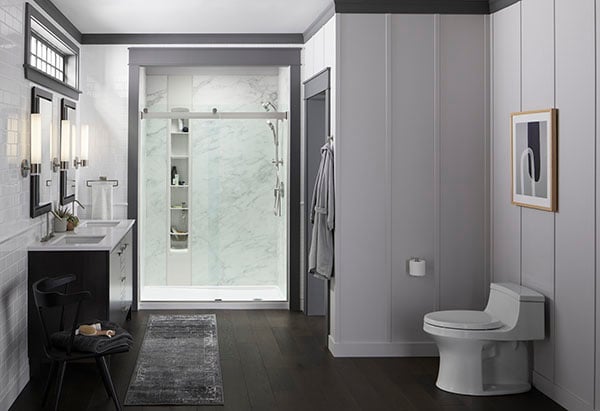
A Bathroom Remodel Is a System, Not a Product
Most homeowners believe they are comparing finishes when they review remodeling quotes. Tile against panels. Acrylic against solid surface.
But bathrooms do not fail because of how they look. They fail because water never stops working.
A shower is a water management system installed in the smallest, wettest room in your house. Materials, installation method, waterproofing, and ventilation all determine whether that system holds or quietly fails behind the walls. Two bathrooms that look identical on day one can perform very differently by year eight.
When quotes vary significantly, it is usually because the contractors are pricing genuinely different systems, not just different surfaces.

What "Cheaper" Actually Costs
Lower quotes rarely come from efficiency alone. More often they reflect tradeoffs that are not obvious at signing.
Budget remodels tend to rely on:
- Materials that require frequent cleaning, sealing, or eventual replacement
- Installations that depend heavily on grout, caulk, and seams
- Limited or short term warranties
- Less specialized labor
Tile is the clearest example. The tile itself can be affordable. Grout is porous, absorbs moisture, traps minerals, and breaks down over time. Homeowners spend real money every year on cleaning, resealing, recaulking, and mold prevention, and considerably more of their own time.
Acrylic and fiberglass cost less upfront but are more prone to staining, cracking, discoloration, and flexing. Repairs on both are often impossible without replacing the panel or the unit.
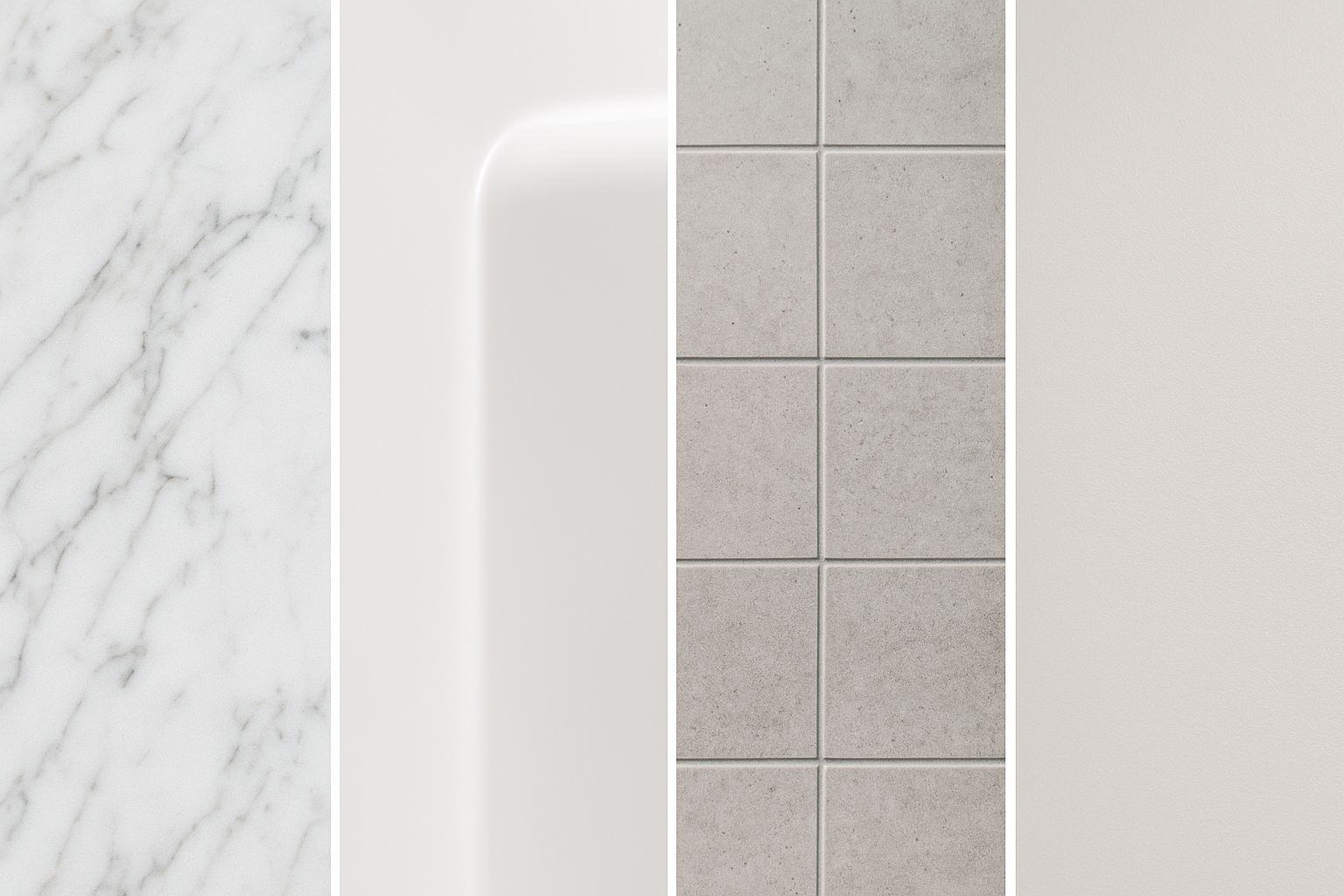
Shower Wall Materials, Compared
Shower walls take more abuse than any other surface in the house. Here is how the common options perform over time.
Premium Solid Surface Systems
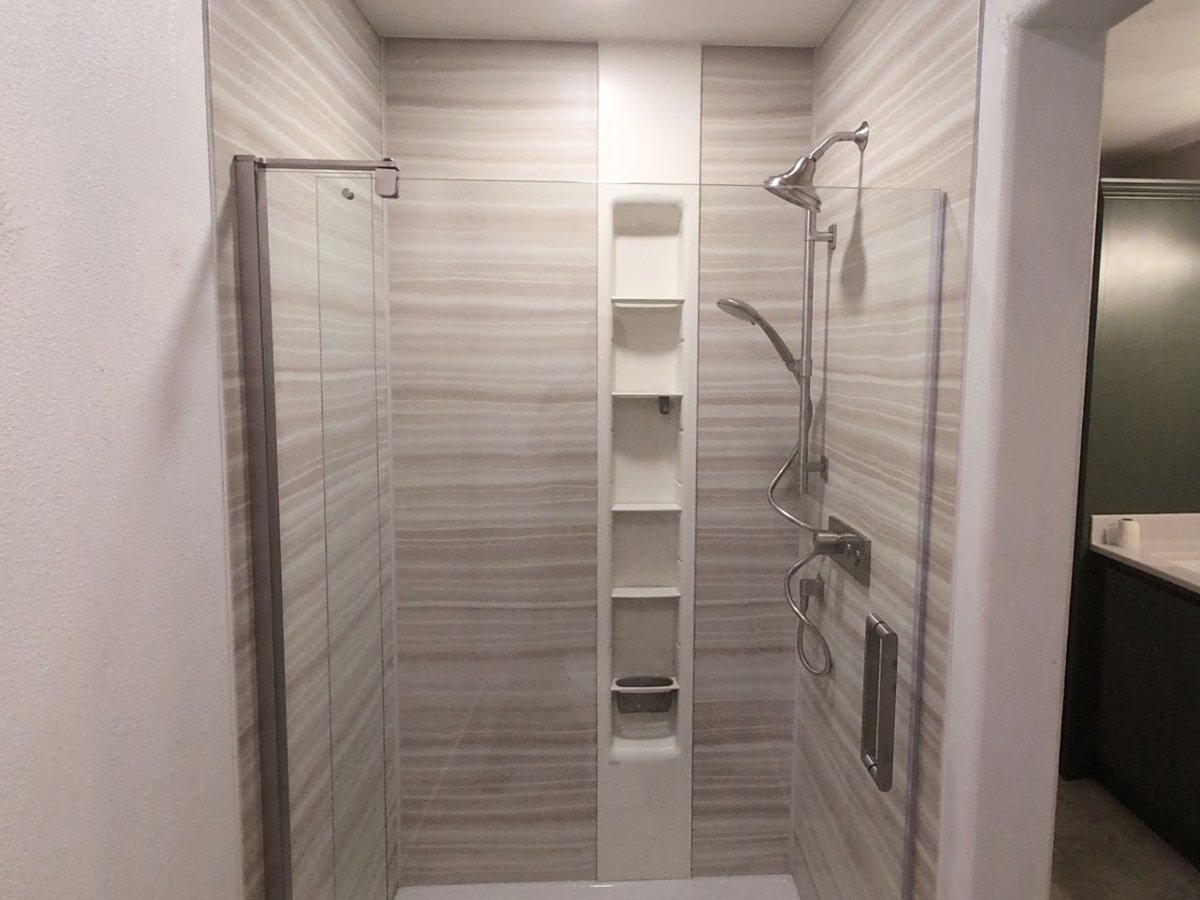
KOHLER LuxStone Wall Systems
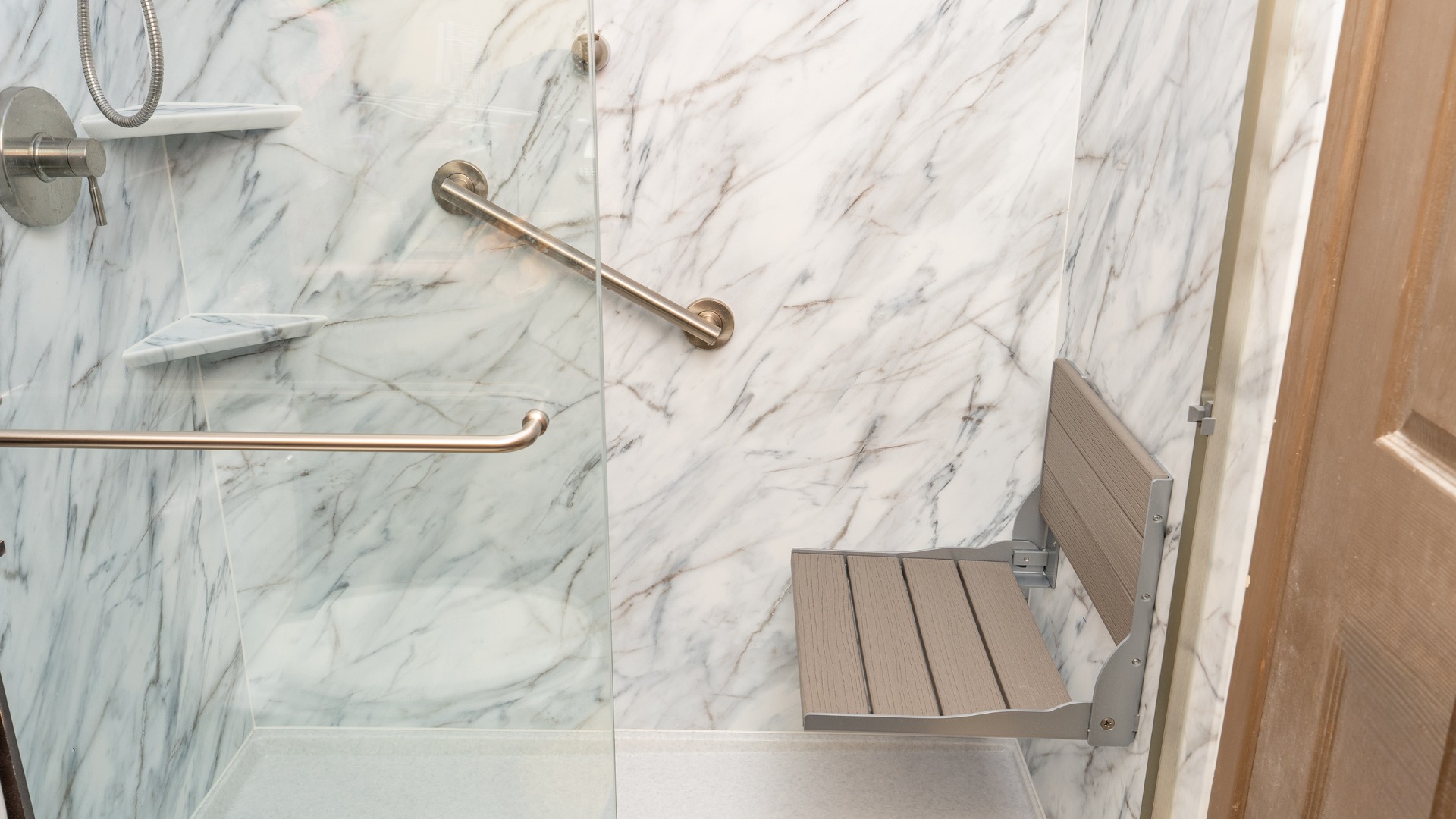
LuxStone panels are made from crushed natural stone and resin, producing a completely non-porous surface. There are no grout lines to absorb moisture and no sealing requirement. The panels are engineered to read like natural stone while removing the failure points that come with tile.
Homeowners choose LuxStone because it resists mold and mildew, cleans in seconds, holds its color, and carries a limited lifetime warranty.
The Onyx Collection
Onyx shower systems are compression molded solid surface panels, made to order for each installation. The material is naturally antimicrobial and highly resistant to impact and wear. Custom sizing does not carry a premium upcharge, damage can usually be repaired rather than replaced, and the warranty is among the strongest available.
Samuel Müeller Shower Systems
Samuel Müeller offers a solid surface option built around contemporary design. The smooth, bacteria resistant surface suits homeowners who want a clean modern look without giving up long term performance.
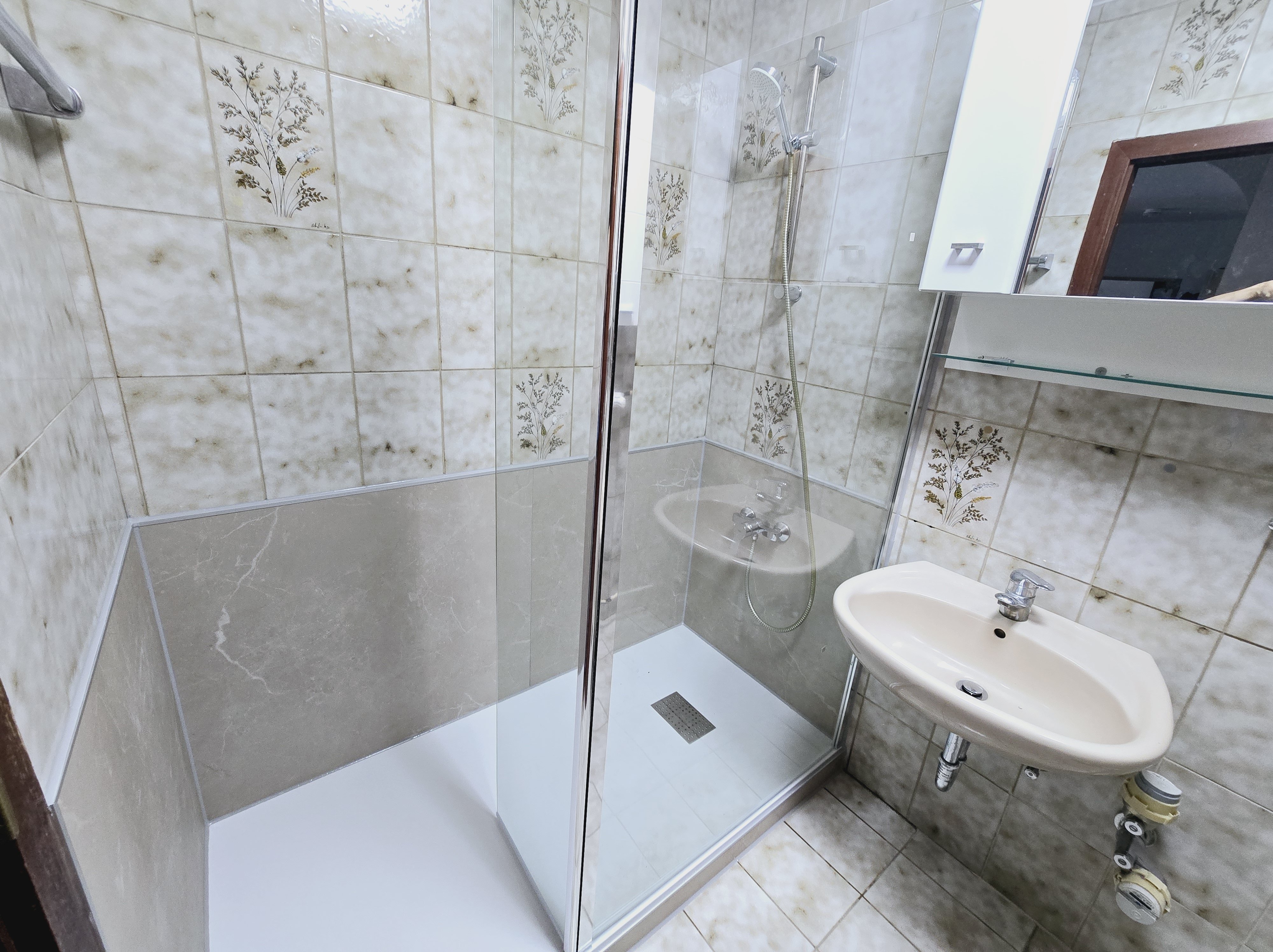
Ceramic Tile
Tile offers more design flexibility than any other option. Its long term performance depends almost entirely on grout integrity, waterproofing, and installation quality, and that is where problems tend to originate.
Writing in the ASHI Reporter, the publication of the American Society of Home Inspectors, a veteran inspector estimates that roughly 75 percent of the tiled showers he has inspected show some issue, most of them moisture related. He attributes the high failure rate primarily to installers who lack training in proper shower waterproofing, noting that until recently he was not aware certified tile installers existed.
That is one inspector's field estimate rather than a national study, and we want to be clear about that. But it matches what we see in Colorado homes, and it points at the real risk with tile: the material is fine, and the installation is where things go wrong.
Structural movement adds a second layer of risk. As Colorado homes settle on expansive soils, rigid tile assemblies are less forgiving than flexible ones. Cracked grout lines and compromised waterproofing frequently trace back to movement, particularly where an installation lacks proper movement joints.
A few other things worth knowing:
- Grout needs resealing on a schedule. Sealer manufacturers generally recommend resealing a primary, everyday shower about once a year, with lower use guest bathrooms going one to two years between applications (Custom Building Products).
- Water hardness shortens that interval in parts of Colorado. Denver Water classifies its own supply as soft to moderately hard, so many Denver homeowners are in reasonable shape. Homes drawing from deep aquifer wells in southern Douglas County, Highlands Ranch, and out onto the eastern plains commonly test in the hard to very hard range, where mineral content breaks down sealer faster.
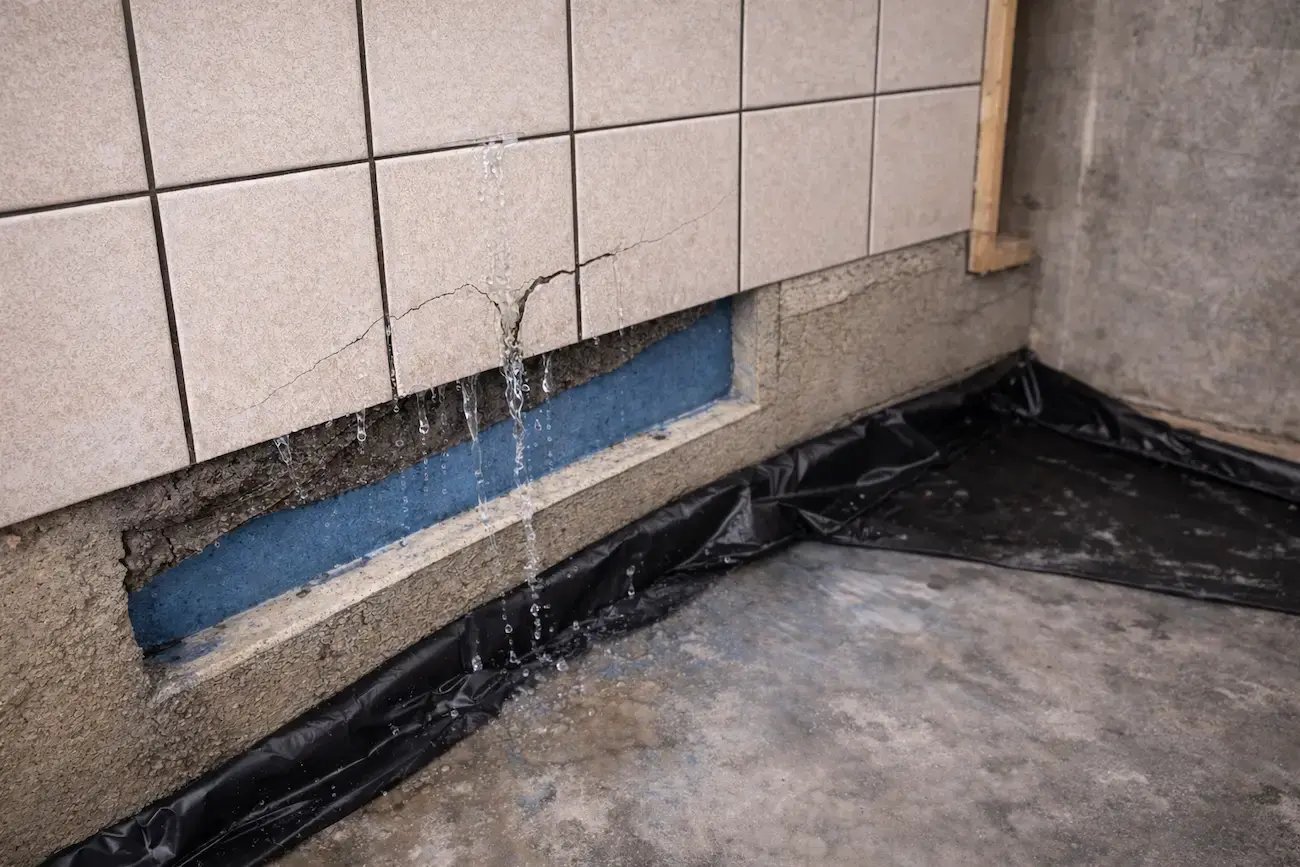
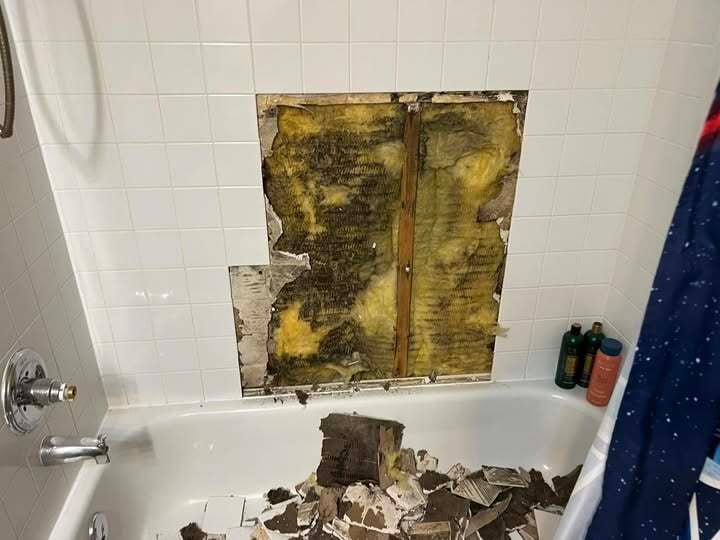
- Water damage often goes undetected. By the time it surfaces, repairs commonly run from $3,000 to $16,000 or more.
- Installer certification varies widely. Most tile installers are not formally certified in shower waterproofing systems.
Tile is not a poor choice. It is a maintenance heavy and installation sensitive one, and when either of those is overlooked the problems show up later and cost more.
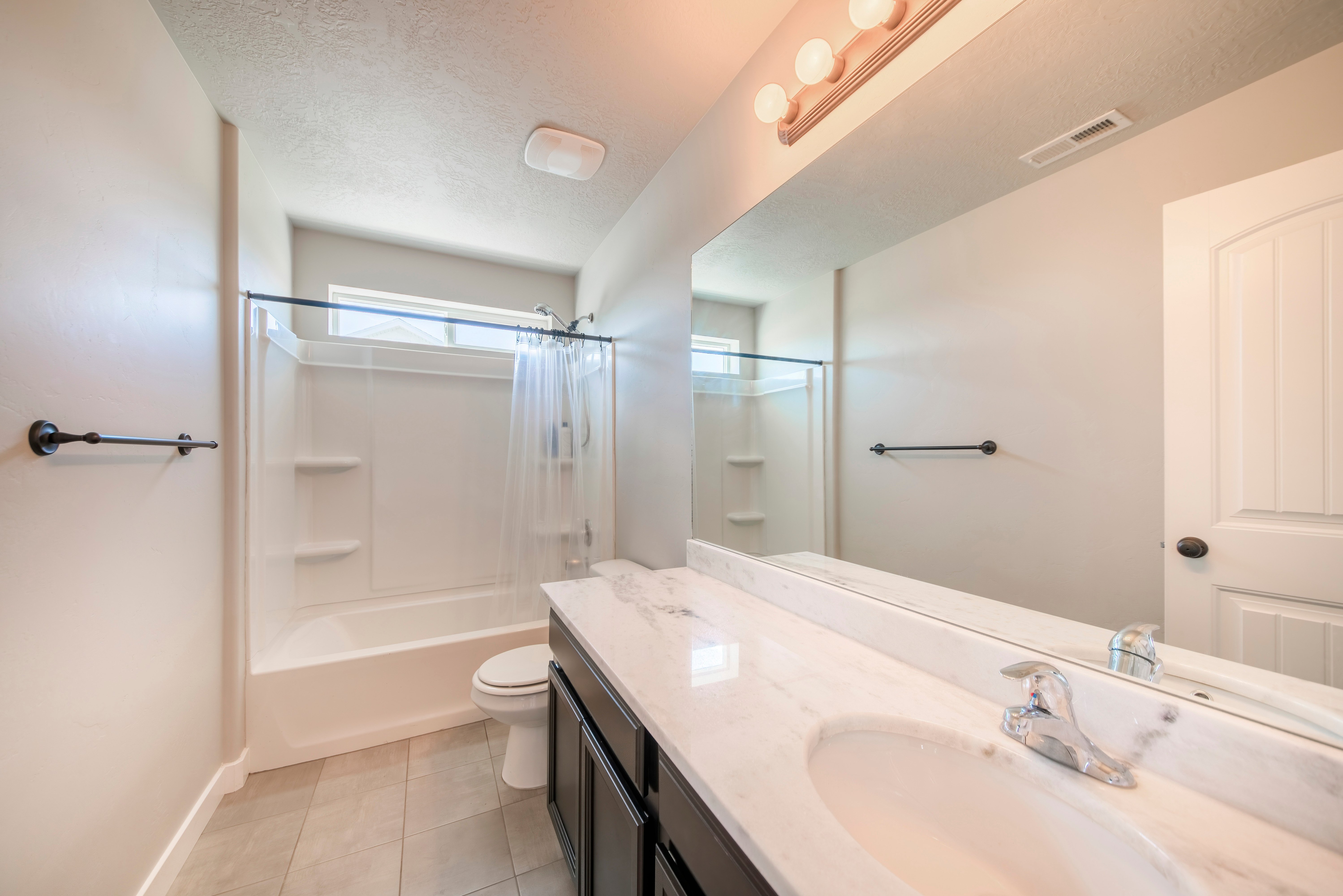
Acrylic Surrounds
Acrylic panels are lightweight, affordable, and fast to install, often in a single day. That makes them a sensible option when speed and upfront cost are the priorities.
The tradeoffs are real. Acrylic is a soft material, which makes it vulnerable to scratching from abrasive cleaners, staining from mineral deposits, and gradual discoloration, particularly with bleach or ammonia based products. Panels can flex under weight, which can lead to cracking, and damaged sections often cannot be spot repaired.
With a typical lifespan of 15 to 20 years, acrylic is a mid term solution rather than a generational one. At resale, buyers tend to read acrylic as functional rather than premium.
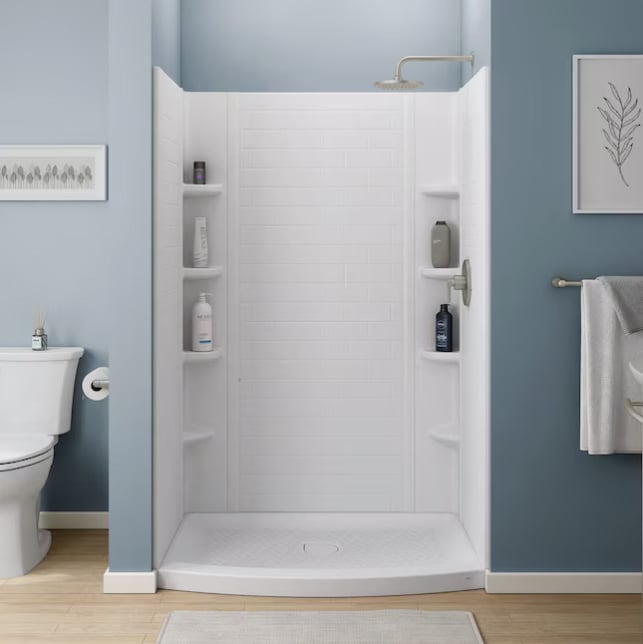
Fiberglass Units
Fiberglass showers are molded prefabricated enclosures made from thin fiberglass reinforced with resin and finished with a gel coat. They are the most affordable option on the market and are common in starter homes, rentals, and quick turnarounds.
Most fiberglass units last 10 to 15 years, the shortest service life of any shower material. The thin construction flexes under normal use, which produces stress cracks around drains and wall joints. Once cracking starts, water can reach the wall cavity behind the unit.
Additional considerations:
- The gel coat surface scratches easily and cannot be buffed or refinished
- In harder water areas of Colorado, mineral content accelerates yellowing, staining, and surface etching
- Repairs are usually visible and temporary; meaningful damage requires full replacement
- Fiberglass is widely read as contractor grade, with limited design flexibility and weak resale appeal
Fiberglass is not a bad product. It serves a purpose when speed and upfront cost are what matter. For long term homeowners, it is a replace sooner material rather than a one time investment.
📝 For a deeper side by side of these materials, see our article LuxStone vs. Plastic, Fiberglass and Tile: The Ultimate Shower Showdown.
What a HomePride Quote Includes
When comparing quotes, what matters most is what is bundled and what is not.
Every HomePride Bath quote includes:
- Complete demolition and disposal
- Manufacturer approved waterproofing systems
- Jobsite protection for your home
- Bathroom specific installation crews
- Limited lifetime warranty support and service
Lower quotes may exclude some of these, or introduce them later as change orders.
The KOHLER Authorized Dealer Advantage
HomePride Bath is one of only two Reveal by KOHLER Authorized Dealers in Colorado.
That designation is a standard rather than a logo. It requires factory training, adherence to specific installation guidelines, and ongoing accountability. It also protects your warranty and ensures access to genuine replacement parts years after installation. Improper installation can void a manufacturer warranty entirely, and most homeowners never learn that until they need to make a claim.
80 Years of Bathroom Specific Installation Experience
Bathrooms are unforgiving. Small mistakes do not stay small.
Our installation team brings more than 80 years of combined experience focused specifically on bathrooms. That shows up in proper slope and drainage, correct waterproofing transitions, ventilation planning, code compliance, and timelines that hold.
A Lifetime Limited Warranty
Most bathroom remodel warranties run one to three years. HomePride offers limited lifetime warranties on many systems. For a buyer, that reduces risk. For a seller, it is a meaningful piece of proof.
15-Year Total Cost of Ownership
Here is the full comparison. Figures reflect a mid size Colorado bathroom. Homeowner time is valued at $50 per hour, because time spent scrubbing grout is a real cost even though no one invoices you for it.
How we calculated this, and where we are estimating.
Installation costs reflect our own project pricing and quotes we regularly see from Colorado competitors.
Cleaning and maintenance costs are based on typical product spend and cleaning frequency for each material.
Time investment reflects the cleaning cadence each surface realistically requires, valued at $50 per hour.
Resale figures are our estimates, not published data. The Cost vs. Value Report measures whole bathroom remodels rather than shower material specifically, so no published source breaks out resale impact by wall system. Our ranges come from what we observe in the Colorado market and from conversations with agents. Treat them as informed estimates and weight them accordingly. For published ROI data on bathroom remodels generally, see our article Is a Bathroom Remodel Worth It? ROI and Value in 2026.
We have deliberately excluded early replacement cost from every total below, even where our own stated lifespans suggest it would apply. See the note following the four breakdowns.
Budget Option 1: Fiberglass Shower
- Initial installation: $11,000
- Annual cleaning products for hard water stain removal: $100 per year x 15 years = $1,500
- Surface repairs for cracks, chips, and discoloration, 3 to 4 times: $1,200
- Total 15-year hard costs: $13,700
- Time investment: 180 hours cleaning plus 60 hours coordinating repairs = 240 hours
- Total real cost including time: $13,700 + $12,000 = $25,700
Budget Option 2: Acrylic Shower Panels
- Initial installation: $12,000
- Annual cleaning and maintenance: $150 per year x 15 years = $2,250
- Surface repairs for scratches and discoloration, 2 to 3 times: $800
- Total 15-year hard costs: $15,050
- Time investment: 130 hours cleaning plus 40 hours coordinating repairs = 170 hours
- Total real cost including time: $15,050 + $8,500 = $23,550
Mid-Range Option: Ceramic Tile Shower
- Initial installation: $12,000
- Annual grout maintenance and cleaning: $300 per year x 15 years = $4,500
- Grout replacement and resealing, twice at years 5 and 10: $1,800
- Reglazing: $1,200
- Total 15-year hard costs: $19,500
- Time investment: 260 hours cleaning plus 16 hours coordinating regrouting = 276 hours
- Total real cost including time: $19,500 + $13,800 = $33,300
Premium Option: KOHLER LuxStone, Onyx, or Samuel Müeller
- Initial installation: $18,500
- Minimal maintenance: $50 per year x 15 years = $750
- Repairs and replacement: $0, covered under a lifetime limited warranty
- Total 15-year hard costs: $19,250
- Time investment: 38 hours cleaning over 15 years
- Total real cost including time: $19,250 + $1,900 = $21,150
A note on what happens if a budget shower fails early
The numbers above assume every shower survives the full 15 years. For premium solid surface that is a conservative assumption. For budget materials it is an optimistic one.
Fiberglass units typically last 10 to 15 years. Acrylic panels typically last 15 to 20. That means a meaningful share of budget showers will need full replacement inside the window we are measuring rather than after it. A mid project replacement runs roughly $14,800 for fiberglass and $16,100 for acrylic in today's dollars, before demolition and disposal of the failed unit.
We left those figures out of the totals, because not every budget shower fails early and we would rather understate our case than overstate it. But the gap you see below is a floor, not a ceiling. If your fiberglass shower cracks in year eleven, the comparison stops being close.
Side-by-Side Comparison
| Material | Initial | 15-Yr Hard Costs | Time Investment | Total Real Cost | Est. Resale Impact |
|---|---|---|---|---|---|
| Fiberglass | $11,000 | $13,700 | 240 hrs ($12,000) | $25,700 | −$1,500 to +$2,000 (mid +$250) |
| Acrylic | $12,000 | $15,050 | 170 hrs ($8,500) | $23,550 | +$2,000 to $6,000 (mid $4,000) |
| Ceramic Tile | $12,000 | $19,500 | 276 hrs ($13,800) | $33,300 | +$5,000 to $8,000 (mid $6,500) |
| Premium Solid Surface | $18,500 | $19,250 | 38 hrs ($1,900) | $21,150 | +$10,000 to $15,000 (mid $12,500) |
🎁 Download our free 15-year cost comparison guide to keep these numbers handy while you gather quotes.
The Complete Picture
Ranked by total real cost, including the value of your time:
- Premium Solid Surface: $21,150 (lowest total cost)
- Acrylic: $23,550 (+$2,400)
- Fiberglass: $25,700 (+$4,550)
- Ceramic Tile: $33,300 (+$12,150)
Net cost after estimated resale impact, using the midpoint of each range:
- Premium Solid Surface: $21,150 minus $12,500 = $8,650 net
- Acrylic: $23,550 minus $4,000 = $19,550 net
- Fiberglass: $25,700 minus $250 = $25,450 net
- Ceramic Tile: $33,300 minus $6,500 = $26,800 net
What the Numbers Actually Say
Step back from the installation quote and look at the full fifteen years, and the ordering flips.
Premium solid surface finishes first on total real cost at $21,150, ahead of acrylic, fiberglass, and ceramic tile once maintenance, repairs, and your own time are counted. Factor in resale and the spread widens considerably.
The material that looks most expensive on day one delivers the lowest true cost of ownership, the strongest resale return, and by a wide margin the smallest maintenance burden.
There is a structural reason for that. Premium solid surface systems eliminate grout lines, which removes the single most common failure point in a shower. They are engineered to tolerate the movement that Colorado's expansive soils produce. And they hold their appearance for decades with very little effort.
Weigh performance, appearance, time, and resale together and the decision becomes less about price and more about sequence. Sometimes the premium option is not the splurge. It is the version you only have to buy once.

Key Takeaways for Colorado Homeowners
Where budget options cost more
Fiberglass
- Shortest lifespan of any option, 10 to 15 years
- Most prone to cracking, yellowing, and staining
- Can actively reduce resale value, since buyers read it as builder grade
- Harder water areas of Colorado accelerate discoloration
Acrylic
- Scratches easily and shows wear quickly
- Typically needs replacement before year twenty
- Modest resale impact
- Mineral deposits cause visible staining in harder water areas
Ceramic Tile
- Highest ongoing maintenance burden, roughly 276 hours over fifteen years
- Grout requires resealing about once a year in a primary shower, more often in hard water
- Roughly 75 percent of inspected tiled showers show issues, most of them moisture related (ASHI Reporter)
Where premium systems win
- Lowest total real cost over fifteen years at $21,150, including the value of your time
- Strongest estimated resale impact, adding $10,000 to $15,000
- 238 fewer hours of maintenance than a tile shower over the same period
- No mid-life replacement, with a service life measured in decades
- Lifetime limited warranty that carries real weight with buyers
- Non-porous surface that resists mineral buildup, which matters most in Colorado's harder water areas
- Cleaning in seconds rather than the 15 to 20 minutes a tile shower typically requires
- Zero grout maintenance, which means zero grout problems
How to Compare Bathroom Remodeling Quotes Fairly
Before choosing on price, ask every contractor the same five questions.
- Is waterproofing included, and is it manufacturer approved? This is the single most consequential line item and the easiest one to leave out of a quote.
- What warranty is provided, and does it transfer? A one year warranty and a transferable lifetime warranty are not the same product.
- Who performs the installation, employees or subcontractors? Ask how many bathrooms specifically the crew has installed.
- What happens if hidden damage is found behind the walls? Get the change order process in writing before you sign anything.
- What is the total project timeline, and how many days will the bathroom be out of service? Those are two different numbers, and any contractor who gives you only one of them is answering a different question than the one you asked.
If two quotes differ by thousands of dollars, the systems behind them usually differ too.
Is a Premium Remodel Right for You?
Not always, and we would rather say so.
A lower cost material probably makes better sense if:
- You are preparing the home for sale in the near term
- Lowest possible upfront investment is your governing priority
- You expect to remodel again within a few years
- The bathroom is a stopgap rather than a long term solution
If longevity and resale strength will not have time to compound, the math genuinely changes, and there is no reason to spend more.
A premium remodel tends to be the better decision if:
- You plan to stay in your home long term
- You want minimal maintenance and fewer ongoing headaches
- You care about protecting or increasing resale value
- You want this to be the last bathroom remodel you do
For homeowners in that second group, premium is not the luxury option. It is the one that ends the cycle.

The Bottom Line
A higher quote does not always mean you are paying more. Often it means you are paying once, instead of paying repeatedly through maintenance, repairs, disruption, and lost value.
If you have already received a quote from us and wondered why it came in higher, we hope this breakdown explains it. Our pricing reflects long term performance, lower maintenance, reduced risk, and stronger resale impact.
Ready to see what this would look like in your home?
Start a no pressure, no obligation conversation.
Frequently Asked Questions About Shower Remodel Materials
Q1. Why are premium bathroom remodel quotes higher than other contractors?
Premium remodels include higher grade materials, certified installation, manufacturer approved waterproofing, longer warranties, and lower long term maintenance requirements. Lower quotes frequently exclude one or more of these, or introduce them later as change orders.
Q2. Is a premium bathroom remodel worth the cost in Colorado?
Over a fifteen year window, premium solid surface systems come out at roughly $21,150 in total real cost against $23,550 for acrylic, $25,700 for fiberglass, and $33,300 for ceramic tile, once maintenance and homeowner time are included. Whether that is worth it depends primarily on how long you plan to stay.
Q3. What is the 15-year cost difference between tile and solid surface showers?
About $12,150 in total real cost, with tile at $33,300 and premium solid surface at $21,150. Most of that difference is maintenance and time rather than the initial quote, since tile requires roughly 276 hours of upkeep over fifteen years compared to 38 for solid surface.
Q4. Do tile showers develop moisture problems?
Frequently, and usually because of installation rather than the tile itself. Writing in the ASHI Reporter, a veteran home inspector estimates that roughly 75 percent of the tiled showers he has inspected show some issue, most of them moisture related, with improper installation as the primary cause.
Q5. How long do fiberglass and acrylic showers last?
Fiberglass typically lasts 10 to 15 years and acrylic 15 to 20. Both commonly need replacement well before a solid surface system would.
Q6. Does a premium shower increase home resale value?
In our experience in the Colorado market, yes, though we want to be clear this is our estimate rather than published data. No industry report breaks out resale impact by shower wall material specifically. What published data does show is that midrange bathroom remodels overall recoup a strong share of their cost at resale, among the highest returns of any interior project.
Q7. How often does shower grout need to be resealed?
Sealer manufacturers generally recommend resealing a primary, everyday shower about once a year, with lower use bathrooms going one to two years between applications. In parts of Colorado with harder water, particularly homes on deep aquifer wells in Douglas County and the eastern plains, mineral content breaks down sealer faster and shortens that interval. Grout also cracks as homes settle on Colorado's expansive soils, which is a separate issue that resealing does not solve.
Q8. When is a premium bathroom remodel not the right choice?
If you are preparing a home for near term sale, prioritizing the lowest possible upfront cost, or treating the bathroom as a temporary fix, a budget material is the more rational choice. Premium delivers the most value for homeowners staying put.
Topics: