
Your Bathroom Is Hiding Something
You scrub the grout. You replace the caulk. You buy the mold-and-mildew spray that promises to fix everything in one pass.
And a couple weeks later … it’s back.
That dark line at the base of the shower wall. That faint musty smell after a hot shower, even when everything looks clean.
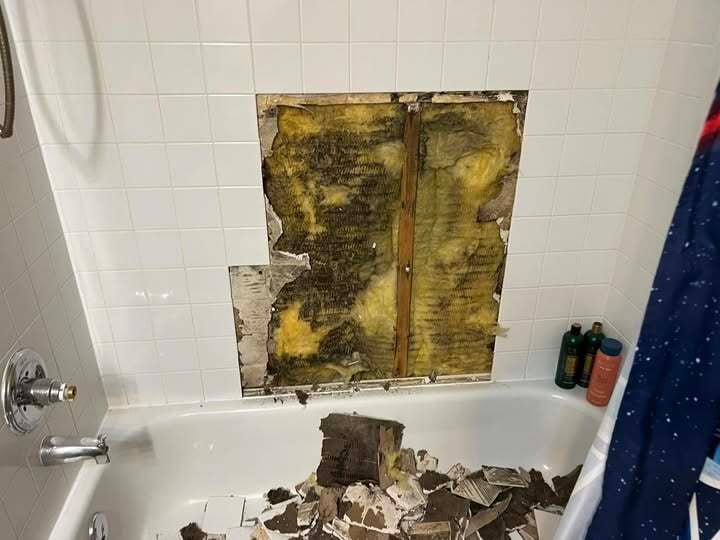
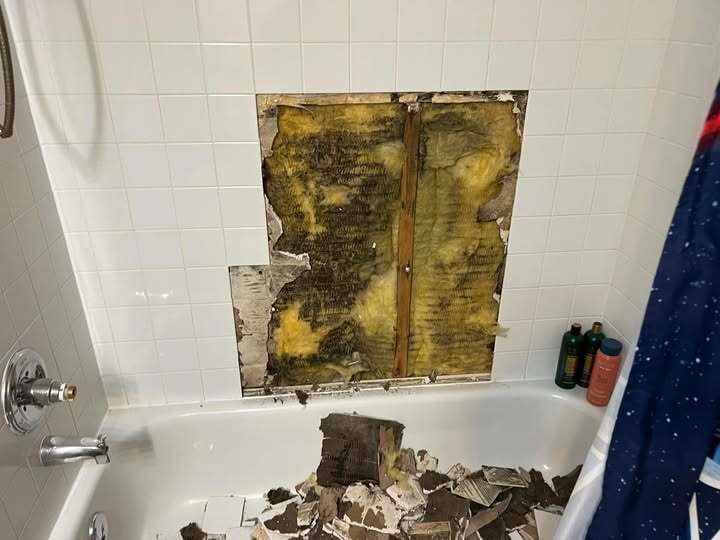
Here’s what most homeowners don’t realize, and what we see every week in Colorado homes: what you can see usually isn’t the full problem. The real issue is what’s happening behind the walls, where mold can spread through drywall and into the framing behind your shower.
That’s where repair costs start climbing fast.
The good news? Your bathroom is already giving you clues. Most homeowners just don’t know how to read them.
If you’ve already tried fixing this once and it keeps coming back, that’s a strong sign the issue isn’t on the surface.
This guide is for homeowners who are done guessing. We’ll walk through what causes mold behind shower walls, how to spot early warning signs, when a repair is enough, when a remodel is the smarter move, and what it all actually costs. These are some of the most common issues we diagnose during bathroom inspections across the Front Range.
No fluff. No pressure. Just clear answers so you can make the right call for your home.
This guide is for homeowners noticing recurring mold, musty odors, loose tile, or signs of moisture around their shower or tub, and who want to understand what’s really causing it.
Why Your Shower Is Ground Zero for Mold
Mold behind shower walls is mold that grows inside the wall cavity when moisture passes through grout, caulk, or failed waterproofing systems and reaches materials like drywall or framing.
Let’s start with what’s really going on.
Mold isn’t a cleaning issue—it’s a moisture issue. When the conditions are right, it grows. And your shower creates those conditions every single day.
In Colorado’s dry climate, many homeowners assume mold isn’t a risk, but bathrooms create their own microclimate where moisture builds quickly.
Mold needs three things: moisture, warmth, and something organic to feed on. Your bathroom provides all three. After a shower, humidity can easily spike above 70%, and that moisture doesn’t just stay on the surface. It works its way into grout, caulk, drywall, and framing.
Here’s the part most people don’t realize: Mold can begin growing behind shower walls within 24 to 48 hours of moisture exposure. In some cases, visible growth can appear within a few days to a couple of weeks.
Here’s something many Colorado homeowners don’t realize:
Homes built in the 1980s–2000s often used Green Board in bathrooms. It’s moisture-resistant drywall, but not waterproof.
That means:
- Direct water exposure breaks it down over time
- It can create the perfect environment for mold
Even newer builder-grade materials like USG Durock cement board improved durability, but still aren’t fully waterproof.
The risk?
A small, hidden leak behind your wall can lead to mold growth long before you ever see visible signs.
At a high level, this comes down to one question:
Is the problem on the surface, or is it coming from behind the wall?
The Four Most Common Causes of Mold Behind Shower Walls
If you understand what causes the problem, you can catch it sooner.
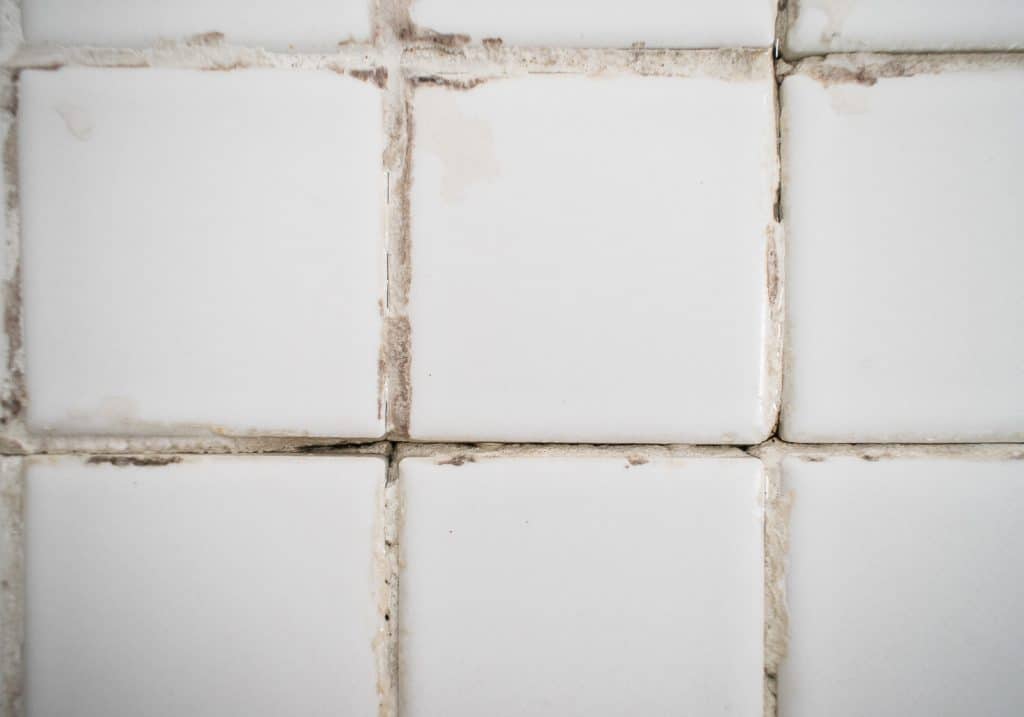
Failed or cracked grout and caulk: Grout is naturally porous. If it’s not sealed—or the seal wears off—water moves right through it. Caulk breaks down over time, and even small gaps can let water in daily. Think of tile and grout like a sponge, not a barrier. Water doesn’t stop at the surface. It slowly moves through.
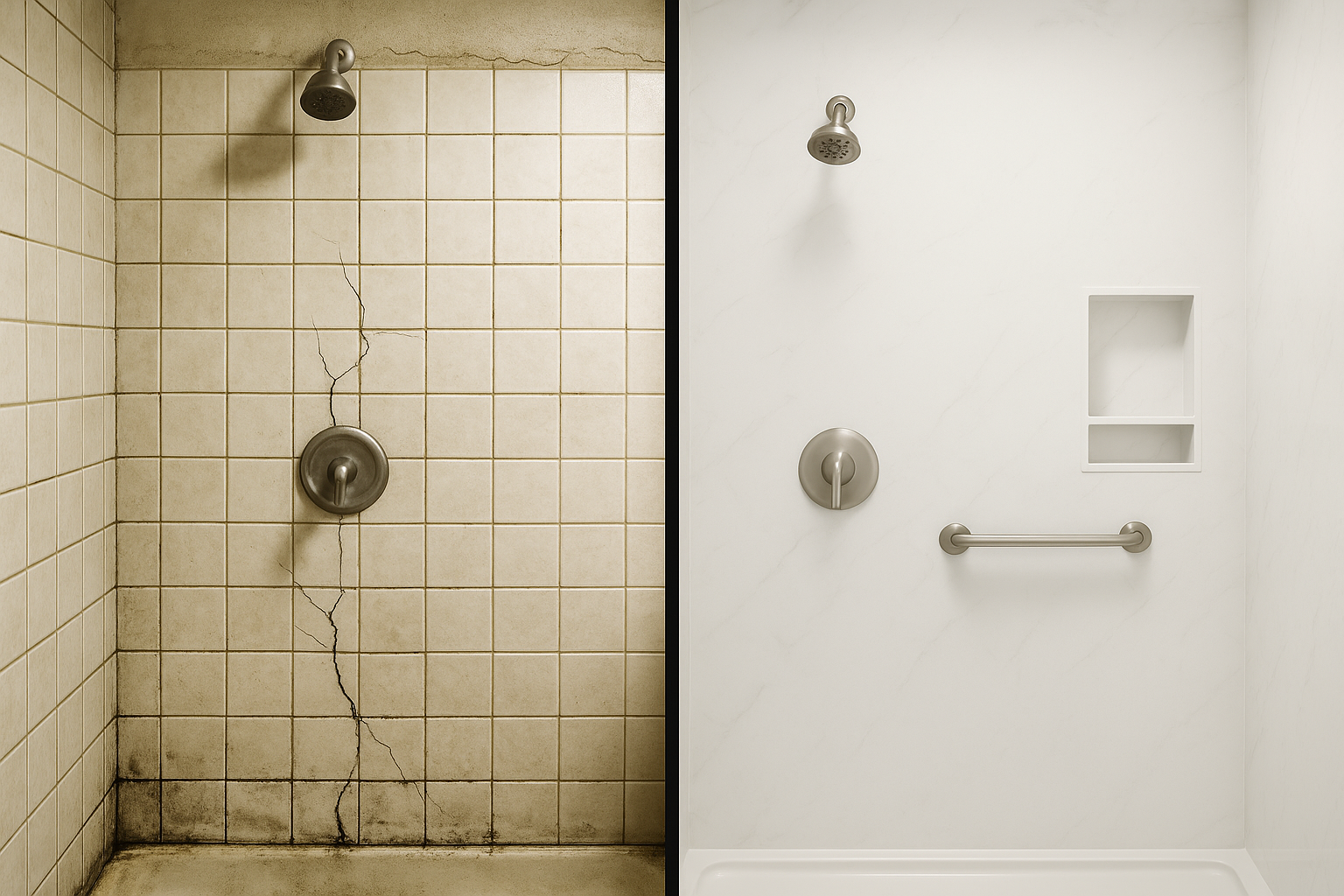
No waterproofing behind the tile: Mold behind tile walls is typically caused by moisture passing through porous grout and reaching non-waterproof materials like drywall. Tile and grout are not waterproof. In older homes, tile was often installed over drywall that absorbs moisture. If your bathroom hasn’t been updated in 20+ years, there’s a good chance the protection behind the walls is outdated—or missing entirely.
A failing shower pan or membrane: The base of your shower is supposed to keep water contained. When that system fails, water leaks into the subfloor and wall cavities, often feeding mold growth for months before you notice anything on the surface.
Leaking supply lines: Even a small pinhole leak inside the wall can feed mold continuously. These are especially dangerous because they’re invisible—and can go on for years.
If you’re seeing soft walls, loose tile, or issues on the other side of the wall, skip patch repairs. If the issue involves soft drywall, loose tile, or signs outside the shower, it’s almost never just a surface repair. Those are signs the problem is already behind the surface.
9 Warning Signs Your Shower Walls Are Hiding Mold
Hidden mold in a bathroom is often first detected through indirect signs like odor, moisture damage, or material failure. This is where most homeowners either catch the problem early—or miss it completely.
- A Musty Smell That Keeps Coming Back
If the smell returns after cleaning, it’s likely not on the surface. It’s inside the wall. Mold releases gases that create that earthy, persistent odor. - Grout That Gets Dirty Again Almost Immediately
If you clean it and it comes back within days, you’re likely dealing with moisture behind the wall continuously feeding it. - Caulk That Won’t Stay Sealed
If it keeps separating, staining, or failing quickly, moisture is pushing from behind, not just sitting on the surface. - Soft, Bubbling, or Warped Walls
If drywall feels soft or looks distorted, it’s already saturated. At that point, mold is almost guaranteed. - Loose or Hollow-Sounding Tiles
Tiles should feel solid. If they don’t, the material behind them is likely breaking down from moisture. - Stains in Unexpected Areas
Discoloration away from the shower itself—on adjacent walls or floors—often points to hidden water movement. - Peeling Paint on the Other Side of the Wall
This is one of the biggest red flags. If paint is bubbling in a nearby room, moisture has already traveled through the wall. - Mold That Follows a Line
If mold appears in a pattern, it’s likely following pipes or framing—meaning the source is inside the wall. - Health Symptoms That Improve When You Leave Home
Ongoing respiratory issues, irritation, or allergies that ease when you’re away can be tied to mold exposure inside the home.
If you’re seeing two or more of these signs at once, there’s a strong chance the issue goes beyond the surface.
How to Do a Quick Self-Inspection
You don’t need a contractor to take a first look.
✅ Close the bathroom door after a hot shower and check for lingering odor.
✅ Press on nearby walls and look for softness.
✅ Inspect grout and caulk for gaps or staining.
✅ Tap tiles and listen for hollow spots.
✅ Check adjacent rooms for signs of moisture.
If you find two or more of these, it’s time to bring in a professional.
A qualified inspection can confirm moisture levels and identify hidden issues without tearing everything apart.
What to Do Next (A Simple 3-Step Plan)
- Look for the signs (use the checklist above)
- Confirm what’s behind the wall with a professional inspection
- Choose the right solution—repair or remodel based on what you find
Once you know what you’re dealing with, the next question is cost—and whether a repair or a full remodel makes more sense.
Mold Remediation Costs
What Does Mold Repair Actually Cost?
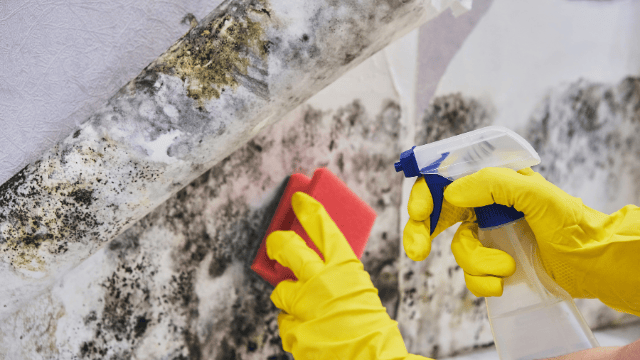
Professional mold remediation in a bathroom typically runs $500 to $2,000 for surface-level issues. But once mold is behind the walls — requiring removal of tile, drywall, and potentially structural elements — costs escalate significantly. According to multiple 2025/2026 pricing guides:
- Behind-wall mold removal: $1,000 to $20,000 depending on spread
- Average remediation project: $1,200 to $3,750, with a national average around $2,364
- Confirmed black mold (Stachybotrys chartarum): Costs may increase due to additional containment and testing requirements.
- Whole-house mold spread: $10,000 to $30,000
These figures don't include the repairs after remediation — replacing drywall, backer board, tile, fixtures, and potentially framing. Those costs are additive.
Homeowners who address the root cause once typically avoid repeat repairs for years. Those who don’t often end up paying for the same problem two or three times.
These ranges are based on current industry estimates and real project data across Colorado.
The Real Cost Comparison
Here’s where many homeowners face a difficult decision: continue repairing the damage, or invest in fixing the system behind it.
At HomePride Bath, we’ve inspected and remodeled hundreds of bathrooms across Colorado, and this is one of the most common hidden issues we see.
Most remediation only removes visible damage—not the underlying moisture issue—so the problem often comes back.
What Most Contractors Won’t Tell You
In many cases, by the time you see mold, the damage behind the wall has already been there for months.
Many quick “repairs” only address what’s visible, and that’s why the problem keeps coming back.
If the waterproofing behind your shower wasn’t installed correctly the first time, no amount of re-caulking or sealing will fix it long-term.
If you spend $5,000–$10,000 on remediation and repairs—but don’t fix the underlying problem—you’re likely facing the same issue again in a few years.
In many cases, putting that money toward a full remodel that solves the root cause is the better long-term investment.
For Colorado homeowners, bathroom remodels typically range:
Basic refresh: $8,000–$15,000
Mid-range remodel: $15,000–$30,000
Primary or luxury bath: $30,000–$76,000+
At this point, the decision comes down to one question:
Is the problem surface-level? Or is it coming from behind the wall?
To learn more about the factors that affect remodel pricing, read our article: 6 Reasons Bathroom Remodel Quotes Vary-and What You’re Really Paying For
When Is It Time to Remodel Instead of Remediate?
Here’s the honest answer.
Remediation may be enough if the issue is truly surface-level, there’s no active leak, and the system behind the walls is still intact.
But a remodel becomes the smarter move when the problem keeps coming back, multiple warning signs show up at once, or the structure itself is affected.
To best protect your home:
The question isn’t “Can this be repaired?”
It’s “Will this problem come back if I do?”
If your bathroom is 15–20 years old and the waterproofing hasn’t been updated, it’s worth seriously considering. Remember, most bathrooms were previously built using green board, a moisture-resistant drywall developed to replace plaster. While it is moisture-resistant and designed to withstand higher humidity, it is not waterproof and will become wet with direct, consistent water contact. Especially in tile showers with aged or cracked grout—or acrylic showers with micro fractures and cracks that water and steam can seep through.
Modern remodeling focuses on building a complete waterproof system behind the wall.
This typically includes:
- A moisture-resistant or waterproof backer board
- A continuous waterproof membrane
- Properly sealed seams and transitions
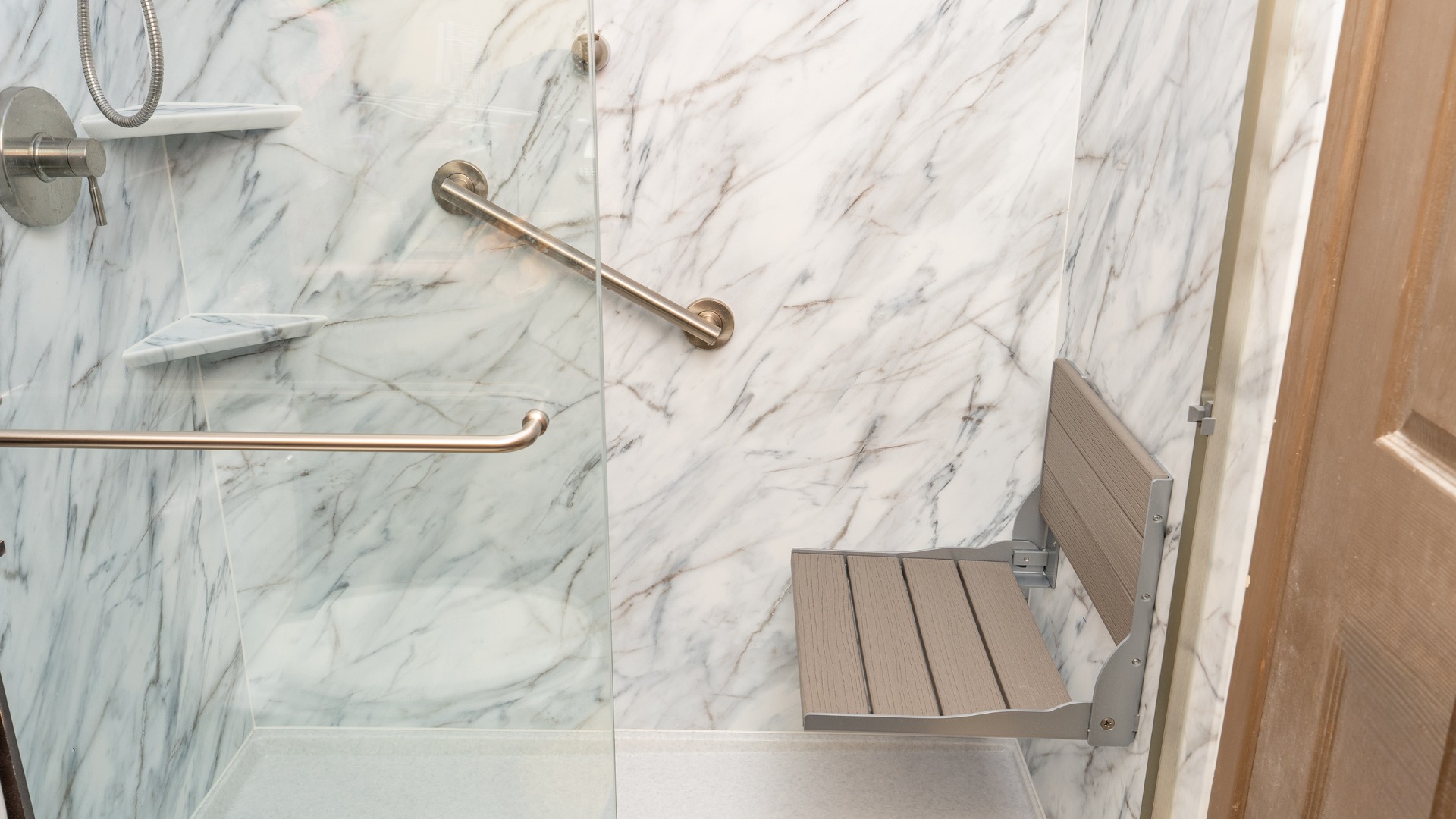
- Non-porous wall surfaces
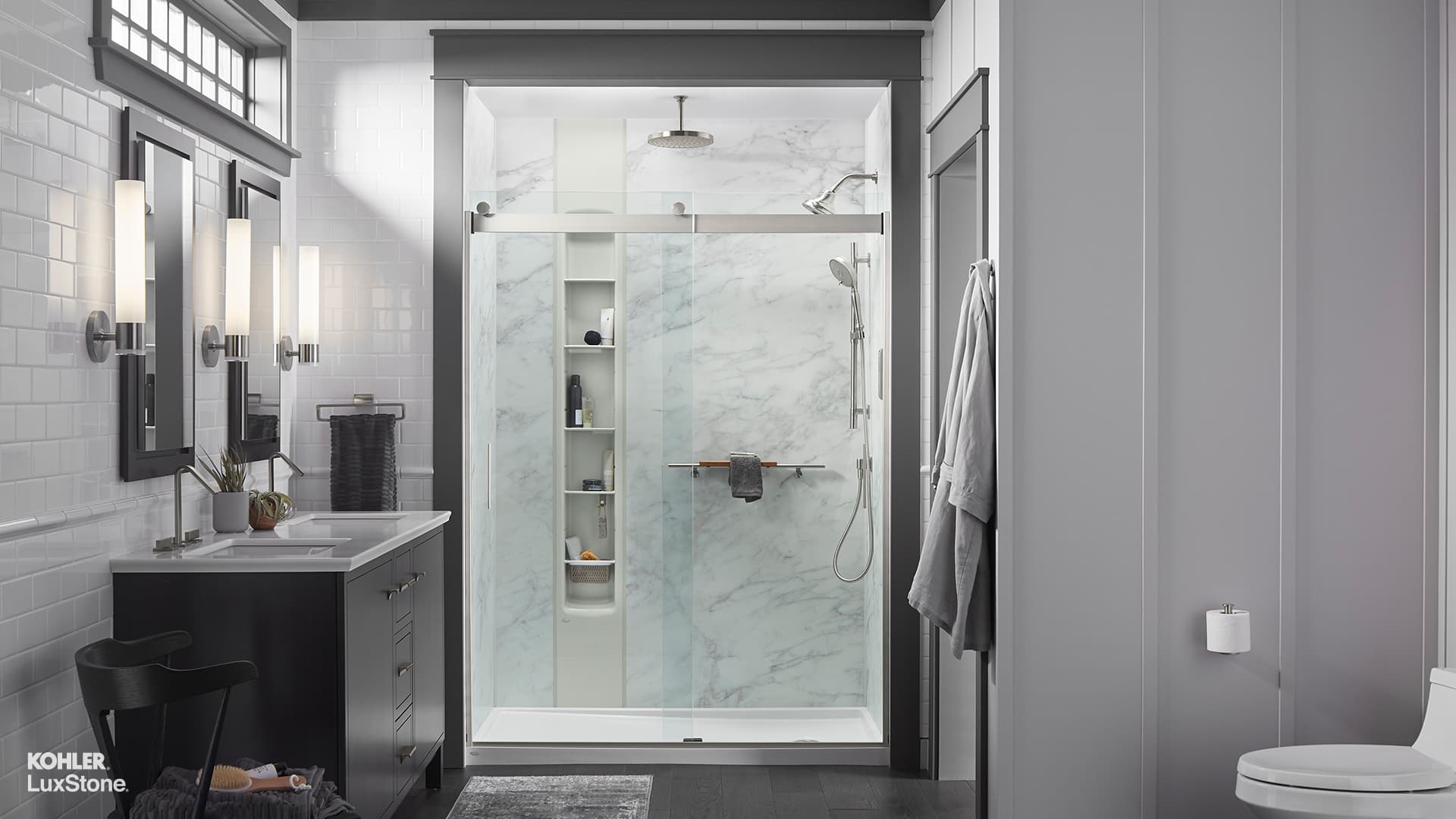
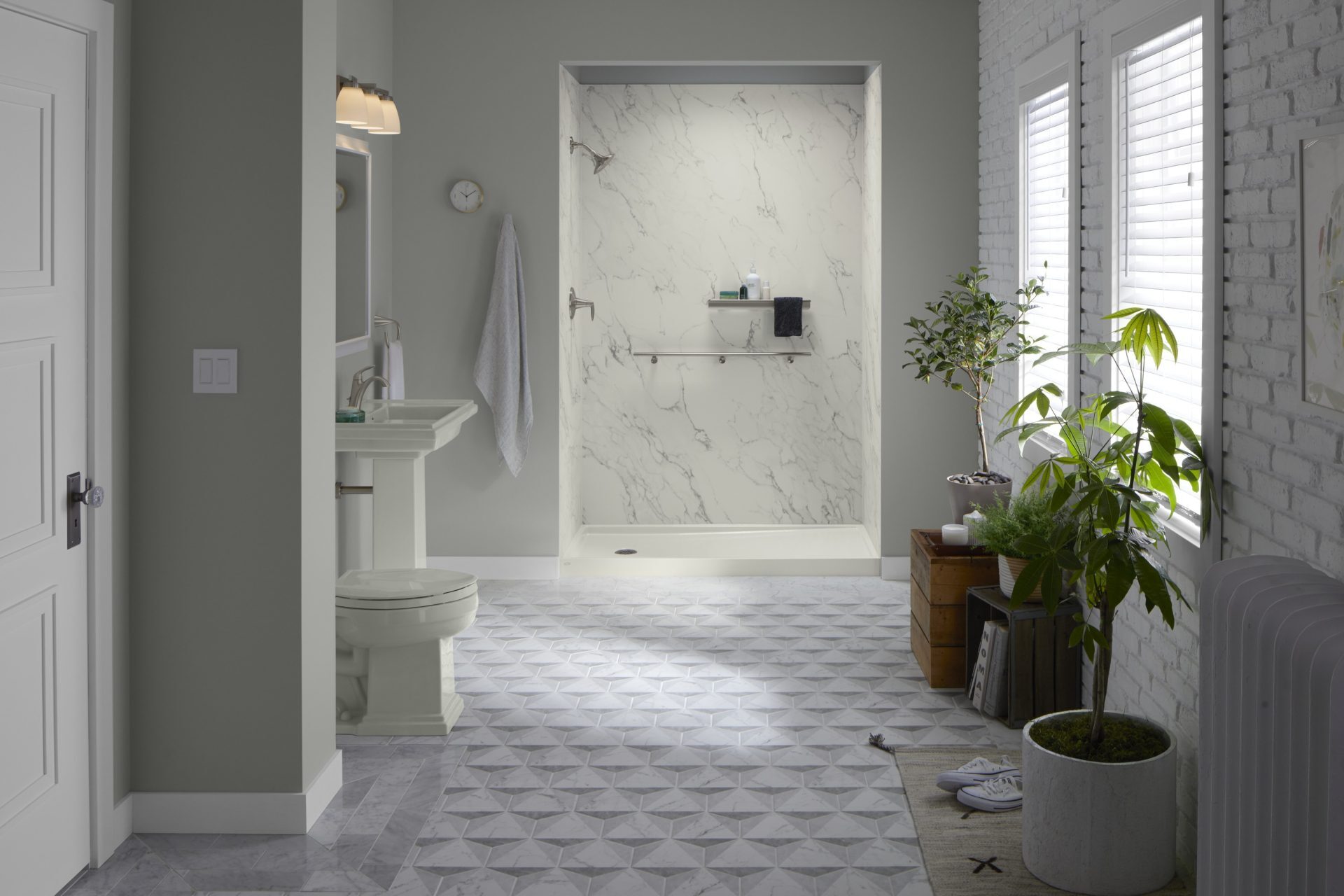
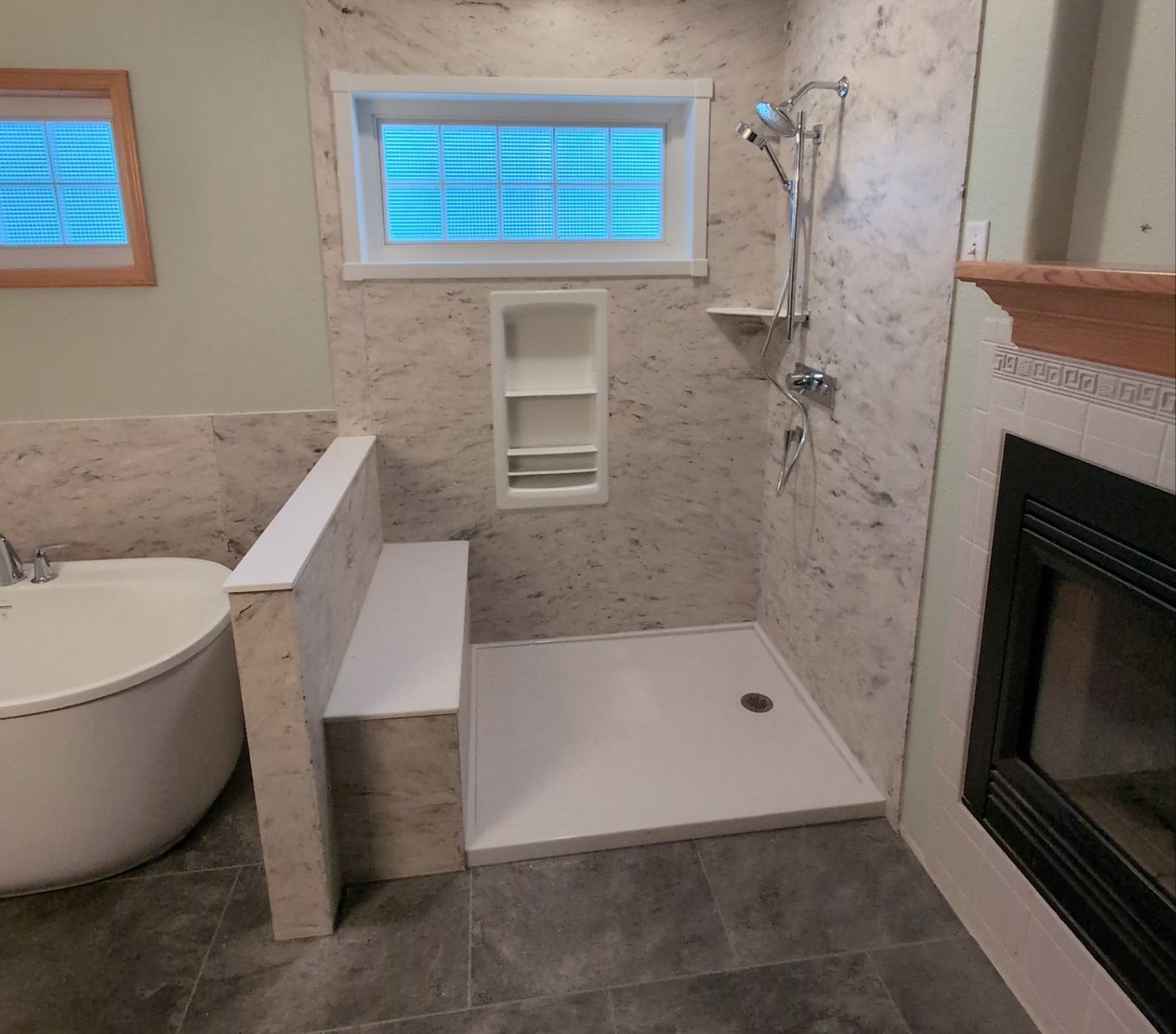
Products like DensShield, RedGard, and solid surface wall systems (such as LuxStone or Onyx) are examples of materials used to create that system—but the key is proper installation.
A properly done remodel doesn’t just fix the problem, it prevents it from happening again.
What a Trusted Remodeling Process Looks Like
A real solution goes beyond surface fixes.
It starts with a full assessment: identifying moisture, leaks, and affected materials.
Then complete removal of anything compromised.
Then rebuilding with proper materials: gypsum-based wall panels like DensShield and liquid membranes like RedGard that create a true waterproofing system. To go a step further, consider solid stone wall panels like Kohler LuxStone or Onyx that also offer waterproof surfaces, and having them correctly installed by highly-trained craftsmen. And of course ensuring adequate ventilation.
The difference between a bathroom that lasts 20 years and one that fails in five usually comes down to what’s behind the tile, not what you see on top.
The key is simple:
identify the signs, confirm what’s behind the wall, and choose the right solution based on the facts.
In simple terms:
If the problem is on the surface, a repair may be enough.
If it’s behind the wall, the only long-term solution is fixing the system itself.
You Deserve a Bathroom That Works for You
You shouldn’t have to wonder what’s happening behind your walls. And you shouldn’t have to keep throwing money at temporary fixes. The earlier you catch the signs, the more control you have over the outcome and the cost.
Most homeowners who face major repairs saw the warning signs months or years before.
You’re already ahead just by reading this. If you’re seeing two or more of these signs, the next step isn’t committing to a remodel. It’s getting clarity.
Schedule a quick, no-pressure inspection to find out exactly what’s happening behind your walls. We’ll help you understand whether it’s a simple fix or something bigger—so you can make the right decision with confidence.
Frequently Asked Questions About Identifying Mold
1. How do I know if there is mold behind my shower walls?
Mold behind shower walls is usually indicated by indirect signs rather than visible growth. Common warning signs include a persistent musty smell, grout or caulk that quickly gets dirty again, soft or warped drywall, loose or hollow-sounding tiles, and peeling paint on the opposite side of the wall. If you notice two or more of these symptoms, there is a strong chance moisture and mold are present behind the surface.
2. Can mold grow behind tile and shower walls?
Yes, mold can grow behind tile and shower walls. Tile and grout are not waterproof, and moisture can pass through small cracks, unsealed grout, or failed caulking. If there is no proper waterproofing system behind the tile, water can reach drywall and framing, creating ideal conditions for mold growth.
3. What causes mold behind shower walls?
The most common causes of mold behind shower walls include cracked or unsealed grout, failing caulk, missing or outdated waterproofing systems, leaking plumbing lines, and damaged shower pans or membranes. Any condition that allows moisture to get behind the surface can lead to mold growth over time.
4. How fast can mold grow behind bathroom walls?
Mold can begin growing in as little as 24 to 48 hours under the right conditions. In a bathroom environment, where humidity is high and materials like drywall are present, visible mold can develop in as little as 3 to 12 days if the moisture source is not addressed.
5. Is it safe to ignore mold behind shower walls?
No, ignoring mold behind shower walls can lead to worsening structural damage and potential health issues. Mold can spread through drywall and framing, increasing repair costs over time. In some cases, prolonged exposure may contribute to respiratory irritation or allergy symptoms.
6. How much does it cost to remove mold behind shower walls?
Mold removal costs vary depending on severity. Surface-level remediation typically costs $500 to $2,000, while mold behind walls can range from $1,000 to $20,000 or more depending on how far it has spread. These costs usually do not include rebuilding the shower or replacing damaged materials.
7. Should I repair mold damage or remodel my shower?
Repair may be enough if the mold is surface-level and there is no ongoing moisture issue. However, if the problem keeps returning, involves structural materials, or is caused by failed waterproofing, a full remodel is often the better long-term solution because it addresses the root cause rather than just the symptoms.
8. What are the signs that a shower needs to be replaced instead of repaired?
A shower likely needs replacement rather than repair if you notice soft drywall, loose tiles, recurring mold, water damage outside the shower area, or issues in older bathrooms with outdated waterproofing. These signs typically indicate that the problem exists behind the walls and will continue unless the system is rebuilt properly.
Topics: