
Quick Answer
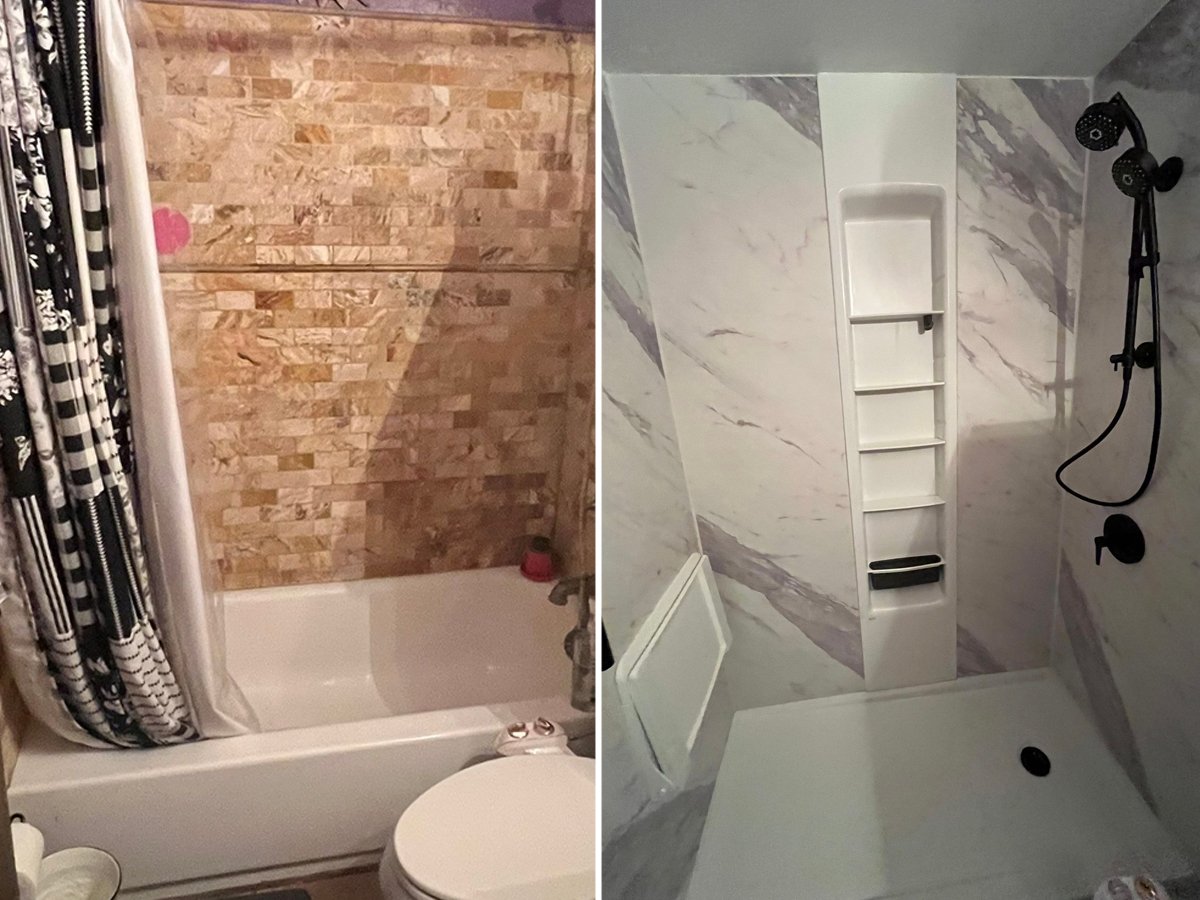
A professionally installed tub-to-shower conversion in Colorado typically costs $14,000 to $24,000 in 2026 when the shower stays within the existing tub footprint. Updating the rest of the bathroom typically costs $20,000 to $30,000, while projects involving layout changes can reach $35,000 to $60,000.
Most footprint-only conversions take two to three days. The biggest cost drivers are the condition behind the old tub, the drain and plumbing changes, the wall system you choose, and the glass.
The simplest rule of thumb is the same one that applies to any bathroom project: the more of your existing bathroom you can keep in place, the more predictable the price tends to be.
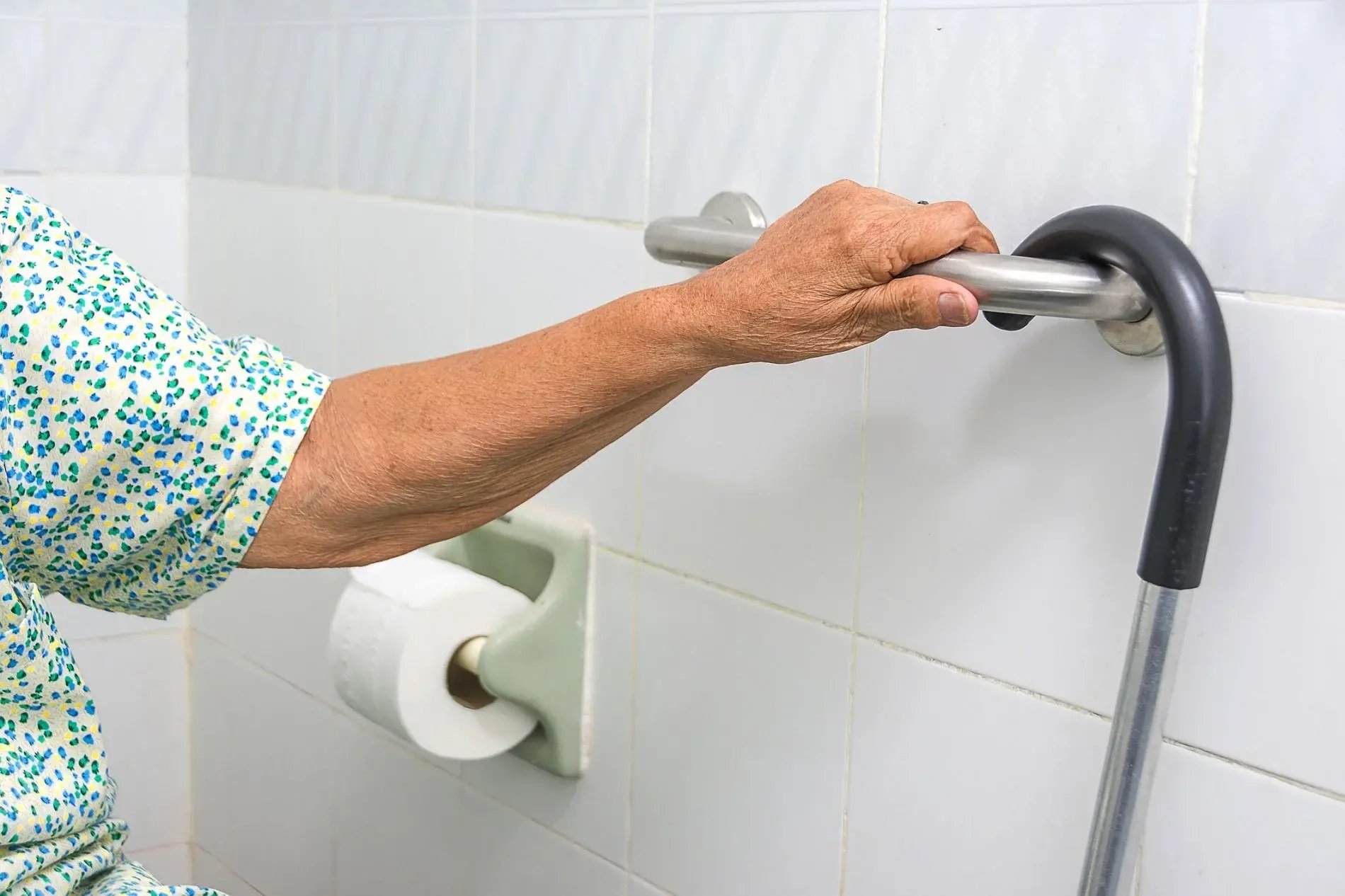
Most homeowners considering a tub-to-shower conversion aren't simply replacing one fixture with another. They may want an easier step into the shower, less grout and maintenance, a more modern bathroom, or a space that will continue working for them as they get older.
The good news is that solving those problems doesn't always require rebuilding the entire bathroom. The scope of the project depends largely on what you want to change and what can stay where it is.
How Much Does a Tub-to-Shower Conversion Cost in Colorado?
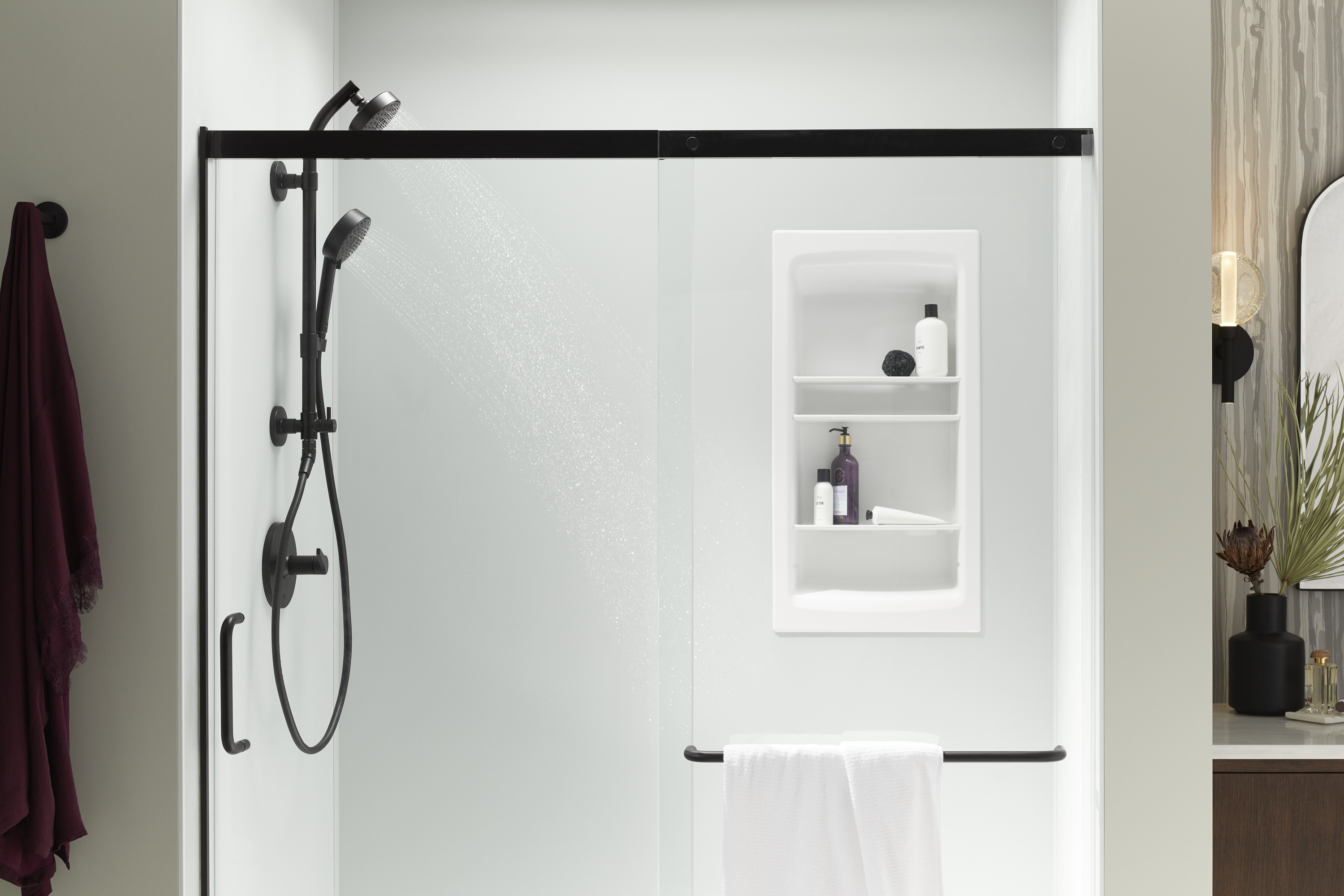
A professionally installed tub-to-shower conversion in Colorado typically costs $14,000 to $24,000 in 2026 when the project stays within the existing tub footprint. Updating the rest of the bathroom typically costs $20,000 to $30,000, while projects involving layout changes can reach $35,000 to $60,000.
|
Project type |
Colorado installed cost |
Typical install timeline |
What changes |
|
1. Tub-to-shower conversion only |
$14,000 to $24,000 |
2 to 3 days |
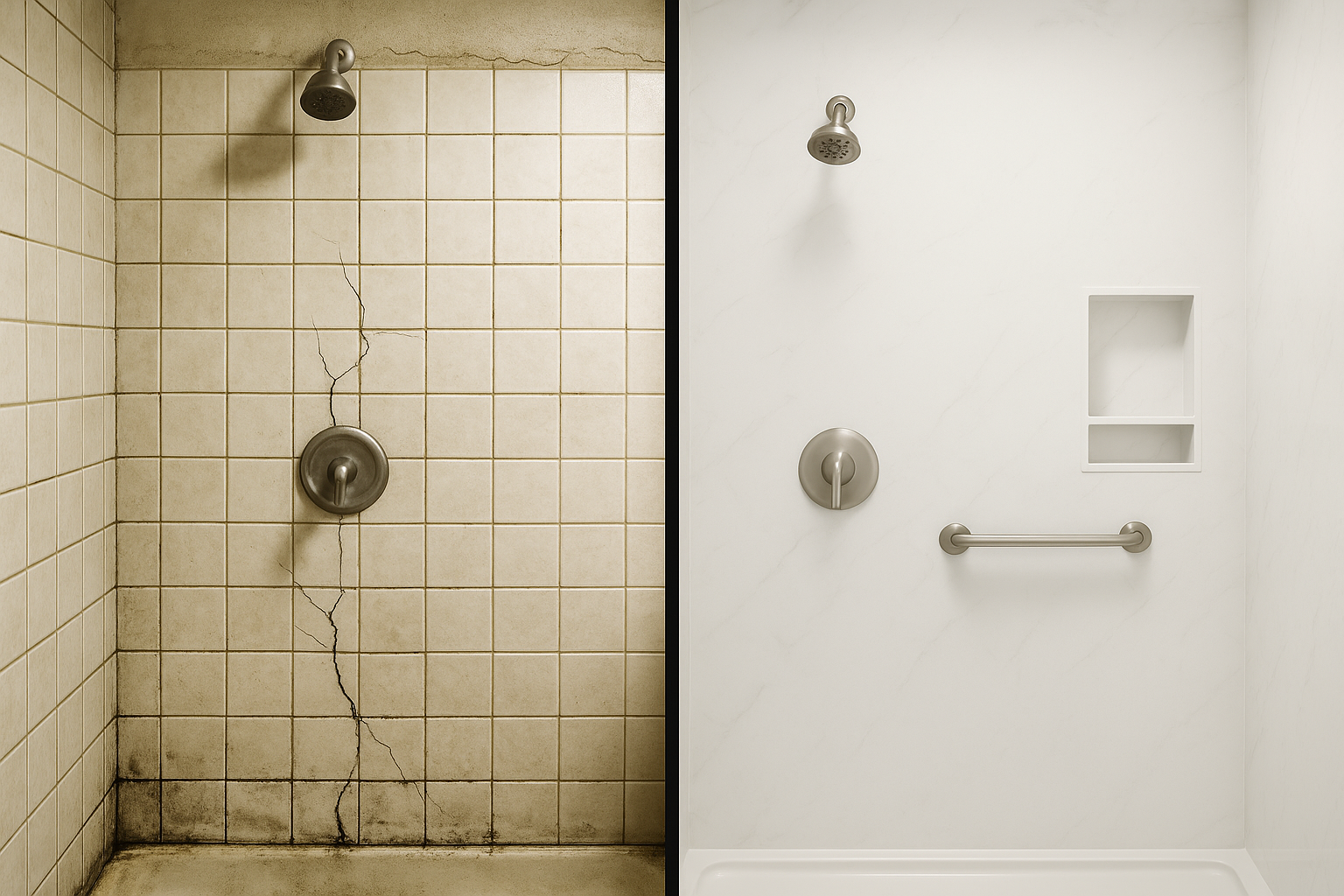
The tub comes out. A new shower base, wall system, valve, fixtures, and glass go into the same footprint. |
|
2. Conversion plus room update |
$20,000 to $30,000 |
3 to 7 days |
The conversion, plus a new vanity, toilet, flooring, and lighting. The layout stays the same. |
|
3. Conversion with layout changes |
$35,000 to $60,000 |
2 to 4 weeks |
Plumbing, electrical, or walls move, and the room is rebuilt around the new shower. |
These are Colorado planning ranges for professionally managed projects, not contractor bids. They match the ranges in our Colorado walk-in shower cost guide, which covers full and luxury remodels in more detail.
Not sure which project type fits your bathroom? Start by looking at what you want to change. If the tub is the only problem, a footprint-only conversion may be enough. If the vanity, flooring, plumbing, or layout also need attention, you're likely looking at a larger remodel. If you'd like help determining your scope, schedule a free in-home consultation.
Why Do Tub-to-Shower Conversion Prices Range From $3,000 to $24,000+?
Tub-to-shower conversion prices vary so widely because the same term describes different scopes of work. A prefabricated kit, a cover-up installation, and a full replacement are not equivalent projects, even though all three may be advertised as a "tub-to-shower conversion."
If you've already researched tub-to-shower conversion costs, you've probably seen much lower figures. Those numbers can be legitimate, but you deserve an honest explanation of why they differ.
Angi reports a national average of $3,000 for a tub-to-shower conversion, with a range of $1,200 to $15,000. This Old House puts the range at $2,000 to $12,000 based on its 2026 homeowner survey. For Denver specifically, Angi lists an average shower installation at $6,169, with most homeowners spending between $1,936 and $10,403.
Those numbers and ours describe different projects. The biggest reason tub-to-shower conversion prices seem inconsistent is that the same term describes three very different methods: prefabricated kits, cover-up installations, and full replacements. Before comparing prices, identify which of these three methods each estimate actually includes.
|
Method |
What it is |
Where it tends to land |
|
Prefabricated kit or stall |
A standard-size base and wall panels, bought as a kit and installed by a homeowner or handyman |
The low end of the national ranges |
|
Insert or liner system |
New wall panels fitted over the existing tile or surround, with a new base where the tub was |
The middle of the national ranges |
|
Full replacement |
The tub and walls are removed to the studs, the cavity is inspected and repaired, and a new base, waterproofing, wall system, valve, and glass are installed |
The top of the national ranges and above |
A note on insert and liner systems. Some companies specialize in custom acrylic inserts and liners that are fitted over your existing walls once the tub is removed. This approach is faster, involves less demolition, and often costs less than a full replacement, which makes it a reasonable fit when the walls behind the old surround are sound. The tradeoff is that the existing wall surface stays in place, so the wall cavity is not opened and inspected. If you have had leaks, soft spots, or recurring mold around the tub, ask any contractor using this method how they will check what is behind the walls before covering them.
HomePride does full replacements. Our $14,000 to $24,000 range includes demolition and disposal, inspection of what is behind the old tub, a base sized to your footprint, waterproofing, a new valve and fixtures, premium solid-surface walls, storage, safety features, and a glass door.
That is not the right project for everyone. If the lowest upfront price is your priority, or you expect to own the home for only a few years, a prefabricated kit will cost less than we do and can be a reasonable choice. If you expect this to be the last shower you install in the home, durability, installation quality, and warranty coverage deserve more weight.
Labor is the other reason quotes vary. Angi estimates that labor accounts for 40% to 60% of a tub-to-shower conversion. Who does the work, how they are trained, and what they do when they find a problem behind the wall all show up in the price. We cover that in more detail in 6 Reasons Bathroom Remodel Quotes Vary.
What Is Included in a Professional Tub-to-Shower Conversion?
A professional tub-to-shower conversion typically includes removing the existing tub, inspecting the exposed wall and floor cavity, adapting the drain, installing a shower base and waterproofing, replacing the valve and fixtures, installing the wall system, and adding glass and selected safety or storage features.
For a footprint-only conversion, the rest of the bathroom stays largely as it is. The scope of work typically includes:
- Removal and disposal of the existing tub and wall surround
- Inspection and repair of the wall cavity, studs, and subfloor
- Drain adaptation for shower use
- A new shower base, sized to the existing tub footprint
- Waterproofing membrane and moisture barrier
- A new mixing valve, showerhead, and handshower
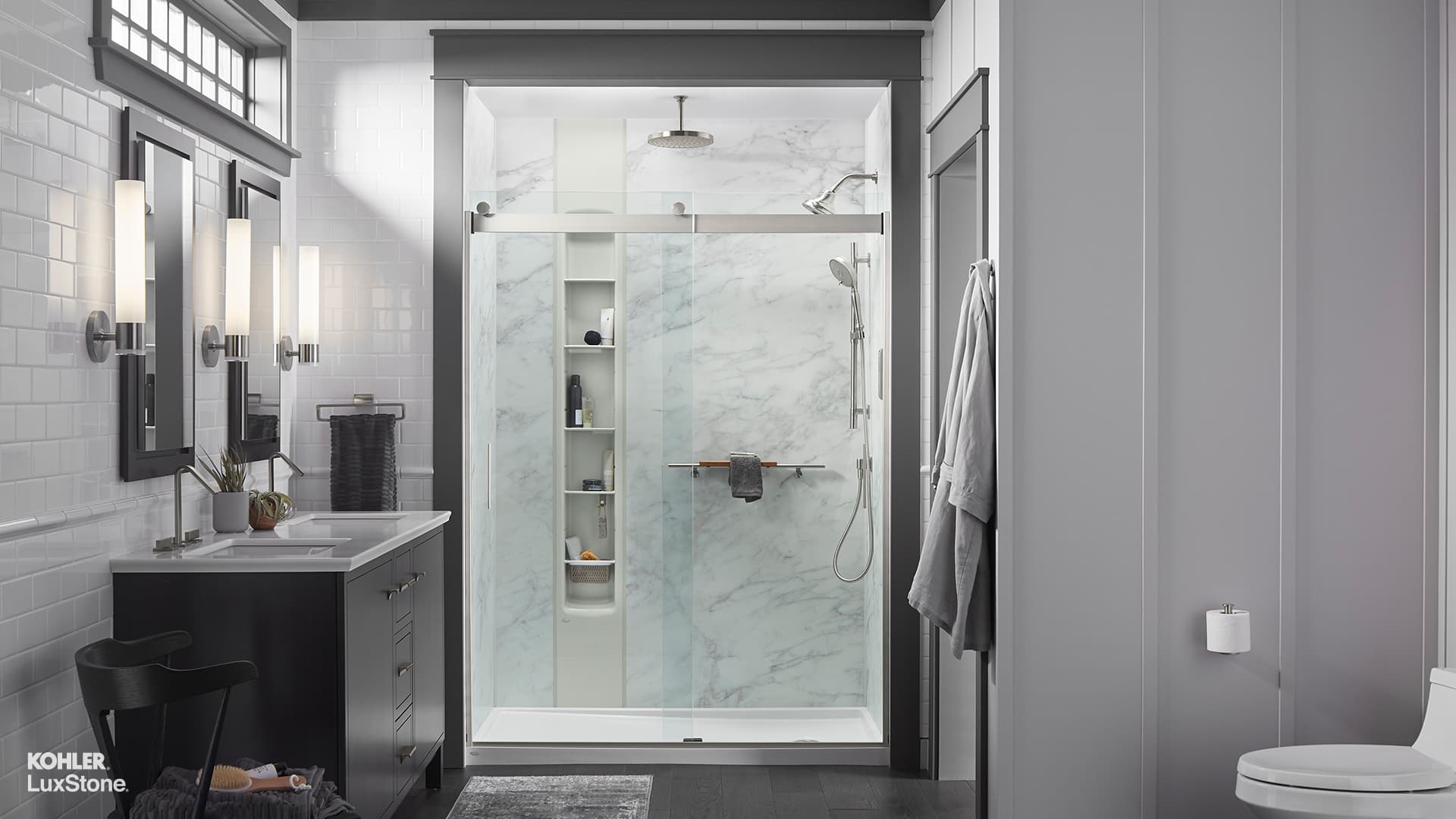
- A wall surround in premium solid surface, seamless and grout-free
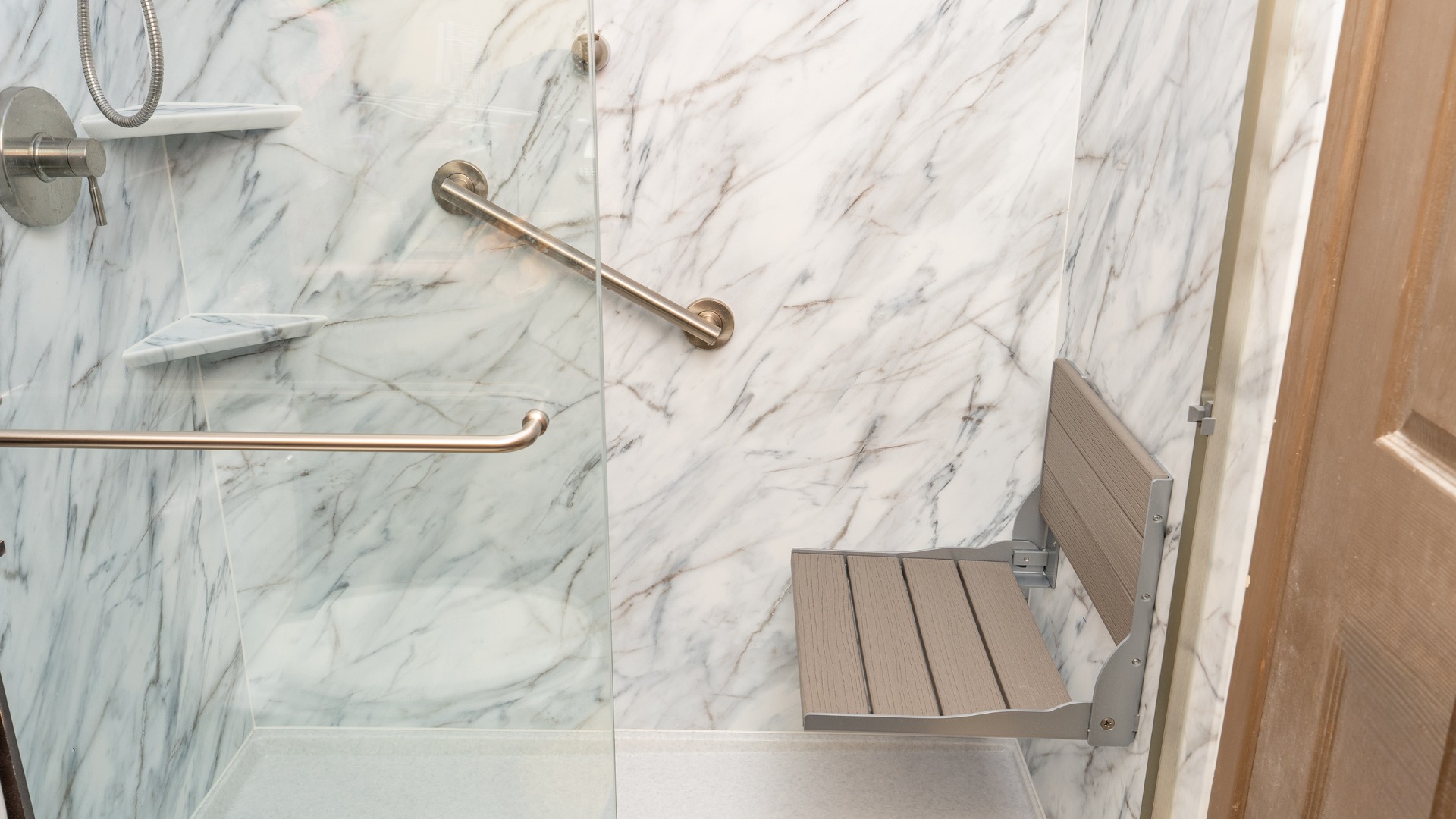
- A bench or fold-away seat, grab bars, and a recessed niche or corner shelving
- A glass door or panel
- Trim, caulk, and final cleanup
The supply lines and valve stay largely where they are. Avoiding major plumbing relocation is one of the most effective ways to control the cost and complexity of the project.
For a step-by-step look at the work itself, see What Happens During a Tub-to-Shower Conversion.
What Affects the Cost of a Tub-to-Shower Conversion?
The biggest tub-to-shower conversion cost factors are drain and plumbing changes, concealed conditions behind the tub, the shower base, wall material, glass, accessibility features, and permit requirements. Two bathrooms of the same size can therefore have very different project costs.
The drain. This is the cost driver most homeowners do not expect. According to Angi, a standard bathtub uses a 1 1/2-inch drain, while a 2-inch drain is standard for a walk-in shower. A conversion usually means a larger drain line, relocated to match the new base. How much work that takes depends on what is under the floor. Plumbing code sets the required size, so ask your contractor how the drain will be handled.
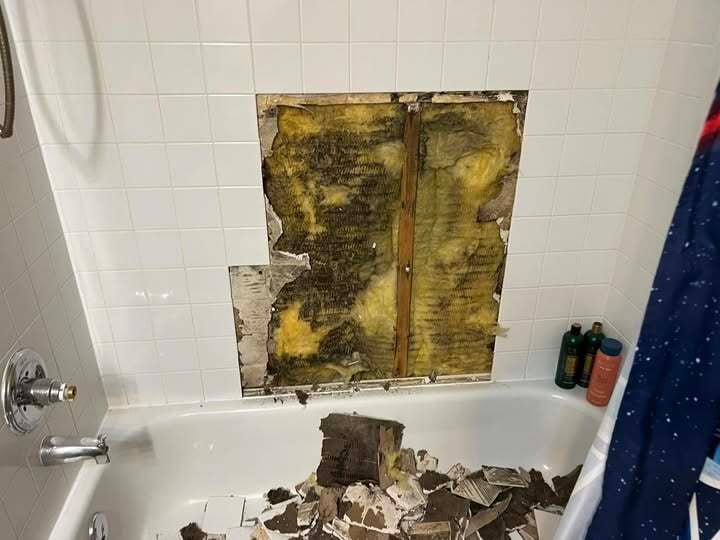
What is behind the old tub. Until the tub is removed, a contractor may not be able to fully evaluate the subfloor, framing, plumbing, or insulation. Water damage, deteriorated framing, or aging plumbing can add work that was not visible at the first visit. Before you sign, ask what happens if the installer discovers water damage, deteriorated framing, or aging plumbing after demolition. Your contract should explain how concealed conditions will be documented, how additional work will be priced, and whether you must approve it before the work proceeds.
The base. A low-profile base that sits on the existing floor is the most predictable option. A curbless, zero-threshold entry requires recessing or re-sloping the floor, which adds framing and plumbing work.
The wall system. A grout-free wall system paired with a prefabricated base installs faster than a fully tiled enclosure. Custom tile, premium solid surface, niches, and built-in benches add material and labor.
The glass. A semi-frameless sliding door costs less than a heavy frameless enclosure. Nationally, Angi puts most shower doors between $600 and $1,350, with a full range of $200 to $2,500.
Comfort and safety features. A seat, grab bars, and a handshower on a slide bar are easier and less disruptive to add while the walls are open. Planned well, they improve convenience today and give the bathroom more flexibility later. Our safe showers page shows what those options look like.
Permits. Requirements vary by municipality and by scope. Because a conversion changes the drain, ask which permits apply to your project. Our guide to bathroom remodeling permits in Colorado explains how the rules differ.
Which Shower Materials Cost More?
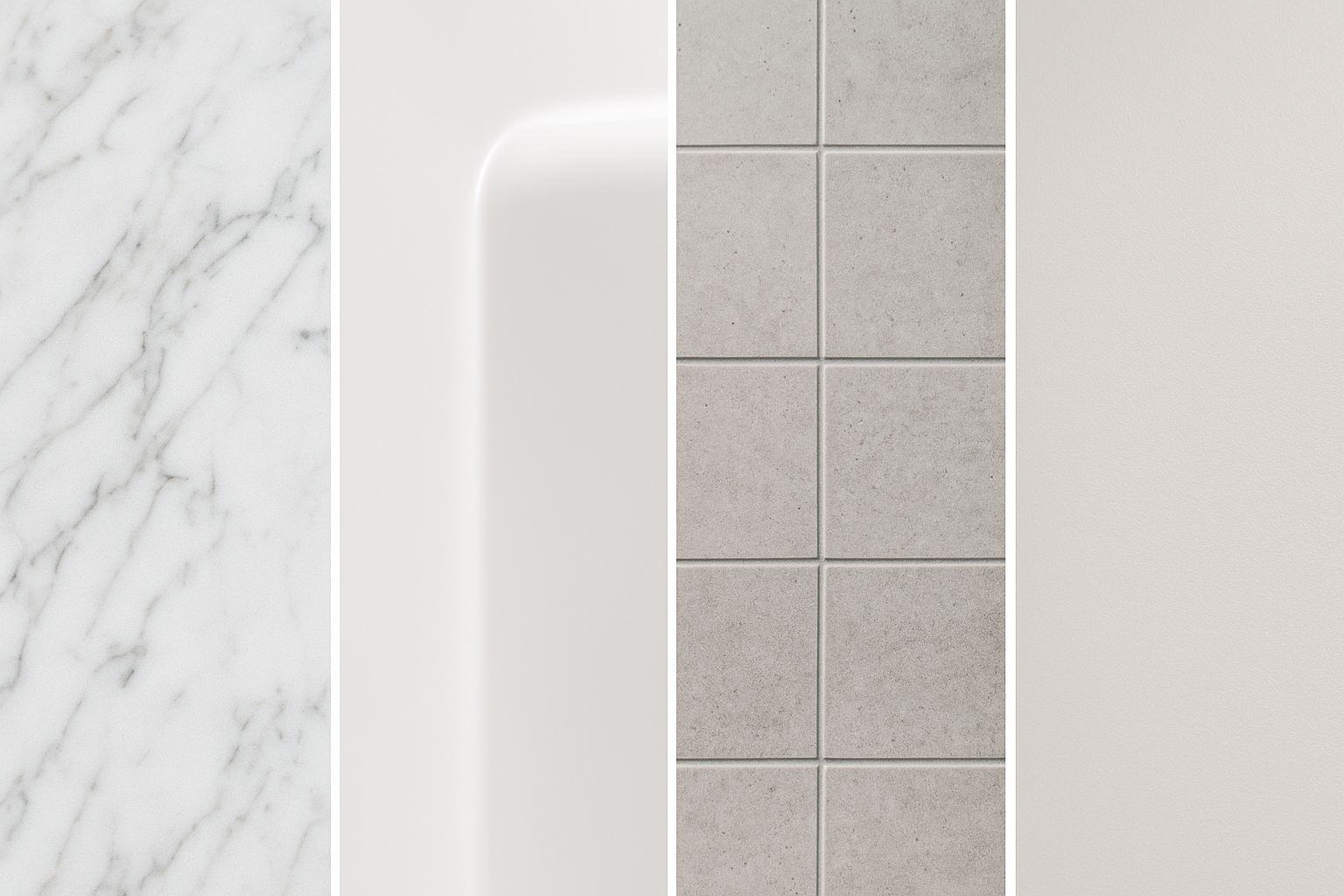
Fiberglass is generally the lowest-cost shower material, followed by acrylic, while premium solid-surface systems and custom tile typically cost more. The best value depends on more than upfront price because maintenance, waterproofing, installation quality, durability, and warranty coverage also affect long-term ownership cost.
Scope sets the floor. Material sets the ceiling. Most homeowners comparing shower systems will encounter four main material categories.
|
Material |
Upfront cost |
Published lifespan or warranty |
Grout |
|
Fiberglass / FRP |
Usually the lowest |
Approximately 10 to 15 years |
None |
|
Acrylic |
Low to moderate |
Approximately 15 to 25 years for quality, properly installed systems |
None |
|
Premium solid surface |
Moderate to high |
Reveal by KOHLER LuxStone walls carry a lifetime limited warranty. Samuel Müeller solid-surface walls carry a 10-year limited residential warranty. Onyx carries its "Yes, Guaranteed Forever" guarantee. |
None |
|
Tile |
Moderate to high, and can be the highest with detailed layouts |
Depends primarily on the waterproofing system behind it |
Yes |
There is no single best material for every homeowner. Fiberglass prioritizes initial cost. Acrylic balances low maintenance with moderate cost. Solid-surface systems prioritize durability, grout-free maintenance, and longer warranty coverage. Tile offers the most design flexibility but adds grout maintenance.
Whatever the finished surface, the quality of the waterproofing and installation behind it plays a major role in how the shower performs over time.
At HomePride, we primarily install premium solid wall systems, including Reveal by KOHLER LuxStone, Onyx, and Samuel Müeller. For a full comparison, read our 15-year cost breakdown of LuxStone, tile, fiberglass, and acrylic.
Is a Tub-to-Shower Conversion Kit Cheaper Than Professional Installation?
A tub-to-shower conversion kit usually costs less upfront than professional installation, but the prices are not directly comparable unless both include demolition, disposal, plumbing changes, repairs, fixtures, glass, labor, and warranty coverage. Kits can make sense when minimizing initial cost is the primary goal.
Angi notes that a prefabricated shower insert sold as part of a kit can cost as little as $225 in Denver, and it puts an installed prefabricated stall at $1,000 to $8,000 nationally. This Old House places prefabricated stalls at $2,000 to $6,000.
Before you compare a kit price to a contractor quote, check what the kit leaves out:
- Removing and disposing of the old tub, which Angi estimates at $150 to $300
- Changing the drain from tub size to shower size
- Repairing anything found behind the old surround
- A new valve, if the existing one is worn or in the wrong position
- Glass, which is often sold separately
When comparing a kit price with a professional quote, ask for the total installed cost of both options. Make sure demolition, disposal, plumbing changes, wall or subfloor repairs, fixtures, glass, labor, and warranty coverage are included before deciding which option actually costs less.
A kit can make sense for a rental, a short ownership horizon, or a confident do-it-yourselfer with plumbing experience. A professionally managed conversion makes more sense when you want the wall cavity inspected, a base fitted to your actual space, and a warranty that covers the finished shower.
How Long Does a Tub-to-Shower Conversion Take?
A straightforward tub-to-shower conversion within the existing footprint typically takes two to three days. Updating the vanity, toilet, flooring, and lighting can extend the project to three to seven days, while moving plumbing or walls can turn it into a two- to four-week full remodel.
Product availability, custom fabrication, permitting, inspections, concealed conditions, and changes to the original scope can all affect the actual schedule.
For a Colorado example, a Littleton homeowner had a traditional tub-and-shower combination replaced with a walk-in shower. The installation took two days. Her verdict: "It's absolutely perfect. I am very happy." Watch the video below, or read Trish McDaniel's testimonial for the full story.
Will Removing the Tub Hurt Your Home's Value?
Removing a bathtub and replacing it with a shower does not automatically reduce a home's value. The potential resale impact depends on the home's overall bathroom mix, buyer preferences, project quality, and whether the removed tub was the home's only bathtub.
The available remodeling data, including the Journal of Light Construction's Cost vs. Value report, generally shows stronger percentage returns for midrange projects than for highly customized upscale renovations. No credible third party publishes resale return broken out by shower wall material, so be cautious of anyone quoting a specific ROI for one material over another.
Two practical points matter more than any percentage:
- If resale is a near-term priority, consider the bathroom mix in the entire home before removing the only bathtub.
- If you plan to stay long term, accessibility, maintenance, and everyday usability may deserve more weight than resale percentage alone.
If you are weighing a shower-only project against a larger one, our comparison of a full bathroom remodel and a wet-area remodel walks through the tradeoffs.
7 Questions to Answer Before Requesting a Tub-to-Shower Quote
Before you compare contractors or estimates, get clear on these seven questions:
- Am I converting only the tub area, or updating the whole bathroom?
- Can the toilet, vanity, and shower valve stay where they are?
- Do I want a low-threshold base or a completely curbless entry?
- How important are low maintenance and eliminating grout?
- Do I want a seat, grab bars, or a handshower now, or the wall support to add them later?
- Is this the home's only bathtub, and how long do I expect to own the home?
- How much room do I have in my budget for unexpected repairs if the installer finds water damage, deteriorated framing, or aging plumbing after the tub comes out?
Your answers determine which project tier, materials, and features make sense. They also make it easier to compare contractor proposals on something more meaningful than price alone.
How Much Should You Budget for a Tub-to-Shower Conversion?
Colorado homeowners should generally budget $14,000 to $24,000 for a professionally installed tub-to-shower conversion within the existing footprint. Budget roughly $20,000 to $30,000 if you're updating the surrounding bathroom and $35,000 to $60,000 if the project requires significant layout, plumbing, electrical, or wall changes.
The important question is not simply "How much does a tub-to-shower conversion cost?" It is "What scope solves the problem with my bathroom?"
That is also why two quotes for what appears to be the same tub-to-shower conversion can be thousands of dollars apart: the price only makes sense when you know exactly what is included.
If the layout works and the rest of the room is in good condition, a footprint-only conversion may deliver the improvement you want without rebuilding the bathroom. If the room has an awkward layout, aging plumbing, or moisture problems, a more comprehensive remodel may make better long-term sense.
Ready to Find Out What Your Conversion Will Cost?
Online pricing guides can help you establish a realistic budget, but they can't tell you what's behind your tub, how your drain is configured, or which project scope makes the most sense for your home. That requires looking at the bathroom itself.
During a free in-home consultation, we evaluate your existing tub area, talk through what you want to improve, identify installation considerations such as the drain and what may be behind the walls, and give you project-specific recommendations and pricing.
Schedule your free in-home bathroom consultation
You can also learn more on our tub-to-shower conversion page.
Frequently Asked Questions About Tub-to-Shower Conversions
1. How much does a tub-to-shower conversion cost in Colorado in 2026?
A professionally installed tub-to-shower conversion in Colorado typically costs $14,000 to $24,000 in 2026 when the new shower stays within the existing tub footprint. Updating the surrounding bathroom typically costs $20,000 to $30,000, while projects involving significant plumbing, wall, or layout changes can reach $35,000 to $60,000.
2. Why do some companies and websites quote far less?
They are usually describing a different method. National guides such as Angi report an average of $3,000, which reflects prefabricated kits and cover-up installations as well as full replacements. A full replacement removes the tub and walls to the studs, inspects and repairs the cavity, and installs a new base, waterproofing, wall system, valve, and glass. When you compare quotes, compare the scope of work first and the price second.
3. How long does a tub-to-shower conversion take?
A conversion within the existing tub footprint typically takes two to three days. Updating the vanity, toilet, and flooring at the same time extends the project to roughly three to seven days. Product availability, permitting, and conditions found behind the old tub can affect the schedule.
4. Do I need a permit to convert a tub to a shower in Colorado?
It depends on the municipality and the work being performed. A conversion changes the drain, and projects involving new or relocated plumbing or electrical fixtures can require permits and inspections. Confirm the requirements for your project with your local building department. Your contractor should be able to explain which permits apply to the proposed scope.
5. Does Medicare pay for a tub-to-shower conversion?
Generally, no. According to the National Council on Aging, Original Medicare treats bathroom changes such as walk-in tubs as home modifications, not durable medical equipment, and does not cover them in most cases. Some Medicare Advantage plans offer limited home modification benefits, and certain state Medicaid waiver programs may help when a modification is medically necessary. We explain the options in our guide to Colorado Medicaid and walk-in showers.
6. Will replacing my only bathtub with a shower hurt resale value?
Removing your home's only bathtub does not automatically reduce its resale value, but it can affect some buyers' preferences. If resale is a near-term priority, consider the bathroom mix throughout the home before removing the only tub. If you plan to stay long term, accessibility, maintenance, and everyday usability may deserve more weight.
7. Can a tub be converted to a curbless shower?
Often, yes. A curbless, zero-threshold entry requires recessing or re-sloping the floor so water drains toward the shower, which adds framing and plumbing work and moves the project toward the higher end of the range. A low-profile base gives you an easy step in with less construction. An in-home evaluation will show which option your floor structure supports.
Sources
- Angi: How Much Does a Tub-to-Shower Conversion Cost? (updated July 8, 2026)
- This Old House: Tub-to-Shower Conversion Cost (2026 homeowner survey)
- Angi: Shower Installation Cost in Denver (updated August 4, 2026)
- Angi: Tub Drain Size (updated July 15, 2026)
- National Council on Aging: Does Medicare Cover Walk-In Tubs?
- HomePride's Colorado walk-in shower cost guide, for all price, timeline, lifespan, and warranty figures
Topics: