

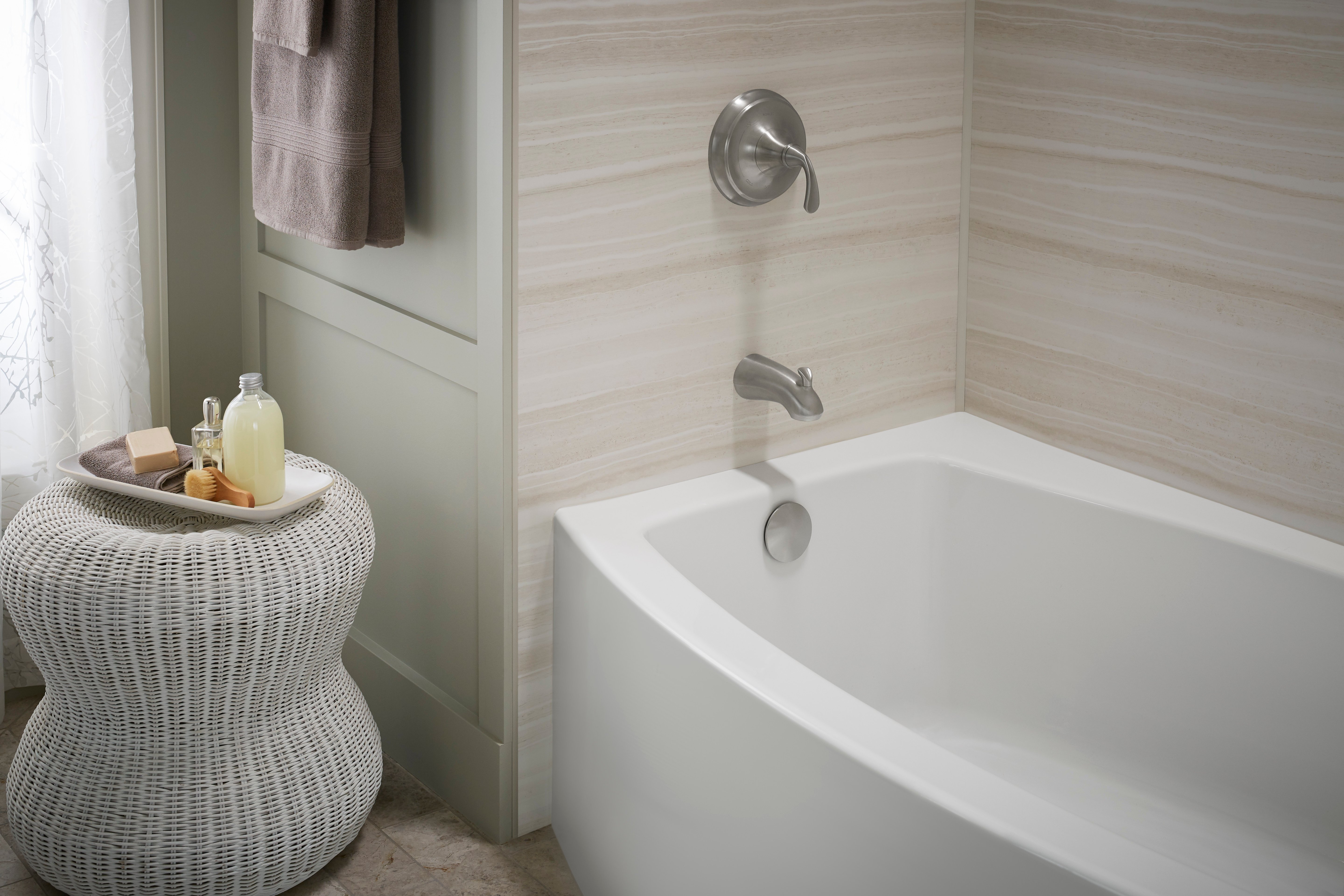
Why we wrote this guide
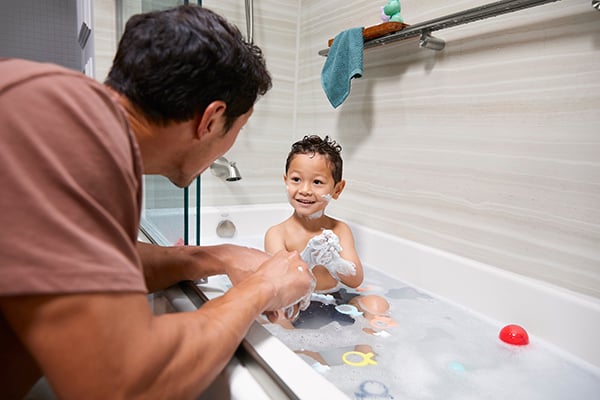
Colorado families ask us about bathtubs more than you might expect. Parents of young children want a tub that makes bath time easier. Homeowners planning to age in place want to keep soaking without the climb. And some people just want back the one room in the house where the day finally slows down.
That last reason goes back a long way. The Great Bath at Mohenjo-daro, in what is now Pakistan, was built around 2500 BC, and historians believe it was used for ritual bathing (Britannica). The ancient Greeks built public bathhouses called balaneia, and archaeologists have found the remains of more than 200 Greek bathing facilities (Lucore and Trümper, Greek Baths and Bathing Culture). Rome's great hot baths, the thermae, took their name from the Greek word for hot, and Roman-style bathing for relaxation as well as hygiene spread across the empire (Ancient Mediterranean Baths and Bathing). In Japan, bathing culture began in the 6th century, when Buddhism arrived and early temples built baths for monks. Those temple baths later opened to the public and became the neighborhood sento (Tokyo Sento Association).
The modern bathtub had a humbler start. In 1883, John Michael Kohler, who owned a small Wisconsin foundry, enameled a cast-iron horse trough and sold it as a bathtub. His one-page catalog said it would "serve as a bathtub" once it was "furnished with four legs." That tub put Kohler in the plumbing business, and the KOHLER products we install today trace back to it (KOHLER history).
For more than 4,000 years, people have treated a bath as more than a way to get clean.
So a bathtub question is rarely just a price question. It's about who will use the tub, how they like to bathe, and what the room around it needs. This guide gives you our real installed prices, explains why HomePride doesn't install a tub on its own, and helps you figure out which option fits the way your family lives.
The short answer
A complete bathtub replacement with HomePride in Colorado typically costs $10,200 to $30,000+ installed in 2026. That covers the tub and the work around it: new walls or a surround, new fixtures, and a deck or splash where the tub needs one. Tub pricing starts at $6,750 for the lowest-cost drop-in tub we install, but that's where a project starts, not what it costs when it's finished. These are HomePride's installed planning prices, not statewide averages.
The challenge isn't just finding a bathtub that fits your budget. It's understanding what the price includes, whether your bathroom needs more work, and which features are worth paying for. Knowing those differences before you request quotes can help you avoid surprises and choose a replacement that makes sense for your home.
Why we don't install a tub by itself
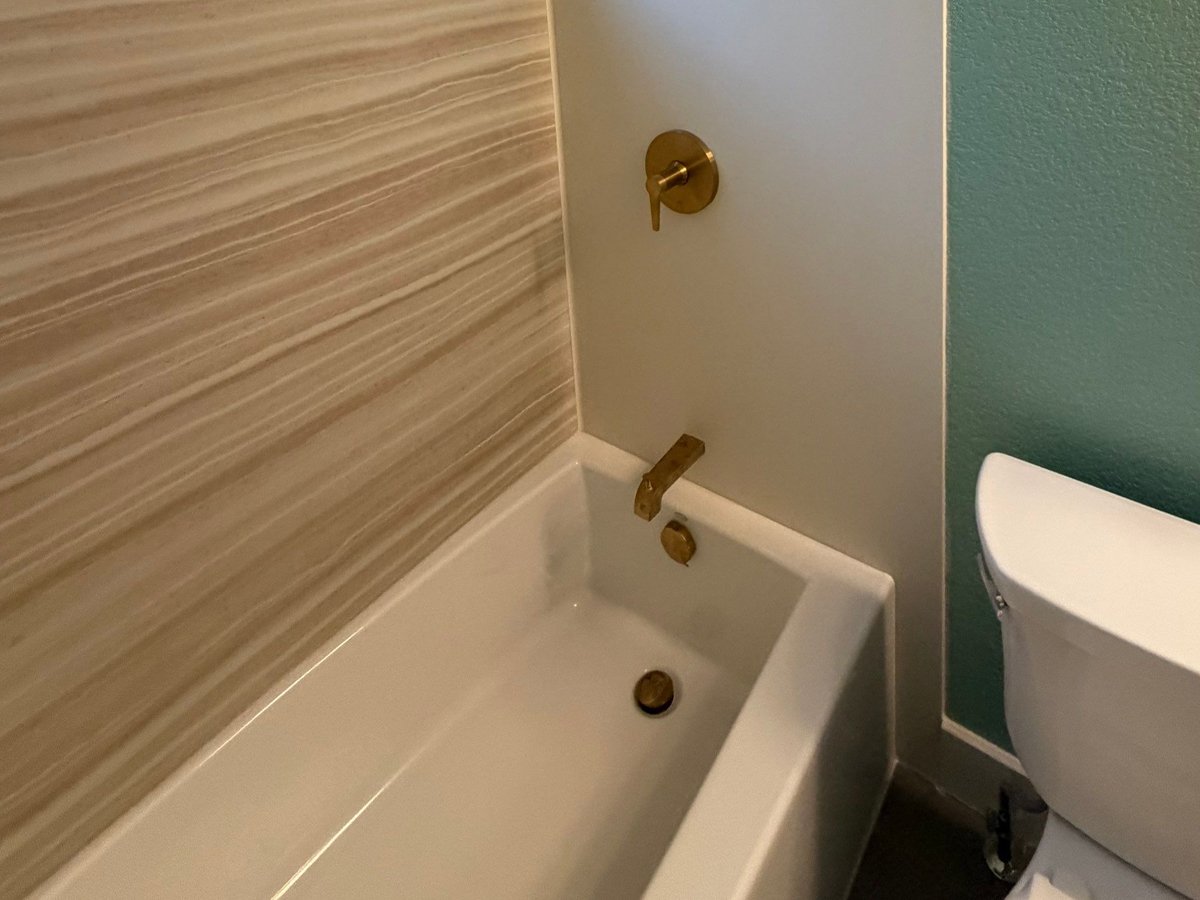
A new tub set against old walls, an old valve, and a worn deck is where leaks, mismatched finishes, and callbacks start. So our standard bathtub install includes new shower walls and fixtures, plus a deck and/or splash when the design calls for it. Many homeowners go further and make the tub part of a bigger update: a new primary bathroom layout, a separate walk-in shower or new flooring.
If all you need is a basic tub swapped into an alcove that's in good shape, we'll tell you that honestly. That's a different kind of job, and we explain when it makes sense later in this guide.
Why online prices look so much lower
You'll see much lower numbers online. Angi puts the average Denver bathtub replacement at $1,200, and This Old House puts the national average at about $2,100. Those averages mostly reflect a basic acrylic or steel tub dropped into the same alcove. The rest of this guide shows what each tub type costs, what those online averages leave out, and how to get a real number for your bathroom.
How much does each type of bathtub cost to replace?
A complete bathtub project with HomePride runs from $10,200 for a drop-in tub with a new deck to $30,000+ for a walk-in bath with an optional wall surround. Tub base prices start at $6,750 for a drop-in, $18,000 for a walk-in bath, $20,700 for a freestanding tub, and $23,000 for a tub/shower combination. Decks, splashes, wall surrounds, plumbing changes and optional features make up the rest of the total.
|
Tub type |
Tub base price, installed |
Common add-ons, installed |
Typical complete project |
|
Drop-in tub |
$6,750 to $7,762 |
Tub deck: $3,450 to $5,750, or deck and splash: $8,050 to $11,500 |
$10,200 to $19,262 |
|
Freestanding tub |
$20,700 to $23,000 |
Jetted system: $3,450 to $5,750 |
$20,700 to $28,750 |
|
Walk-in bath |
$18,000 to $25,000 |
Wall surround (KOHLER, Onyx or Samuel Müeller): $3,450 to $6,900 |
$21,450 to $31,900 |
|
Tub/shower combo |
$23,000 to $28,750 |
New walls included |
$23,000 to $28,750 |
A note about drop-in tub pricing: The $6,750 starting price covers the tub and its standard installation, but a drop-in tub always sits in a supporting deck. That's why a finished drop-in project with HomePride typically runs $10,200 to $19,262. Building a new deck lands you at the lower end, and adding a matching splash wall moves you toward the top. Your designer can tell you what your bathroom can accommodate.
How we developed these prices: The HomePride pricing ranges in this guide are based on the bathtub products, installation requirements and configurations we use to prepare our 2026 project estimates. They're meant to help Colorado homeowners plan a budget before an in-home assessment. Actual quotes depend on the products you select, your bathroom's condition and the scope of work.
How much does a drop-in bathtub cost?
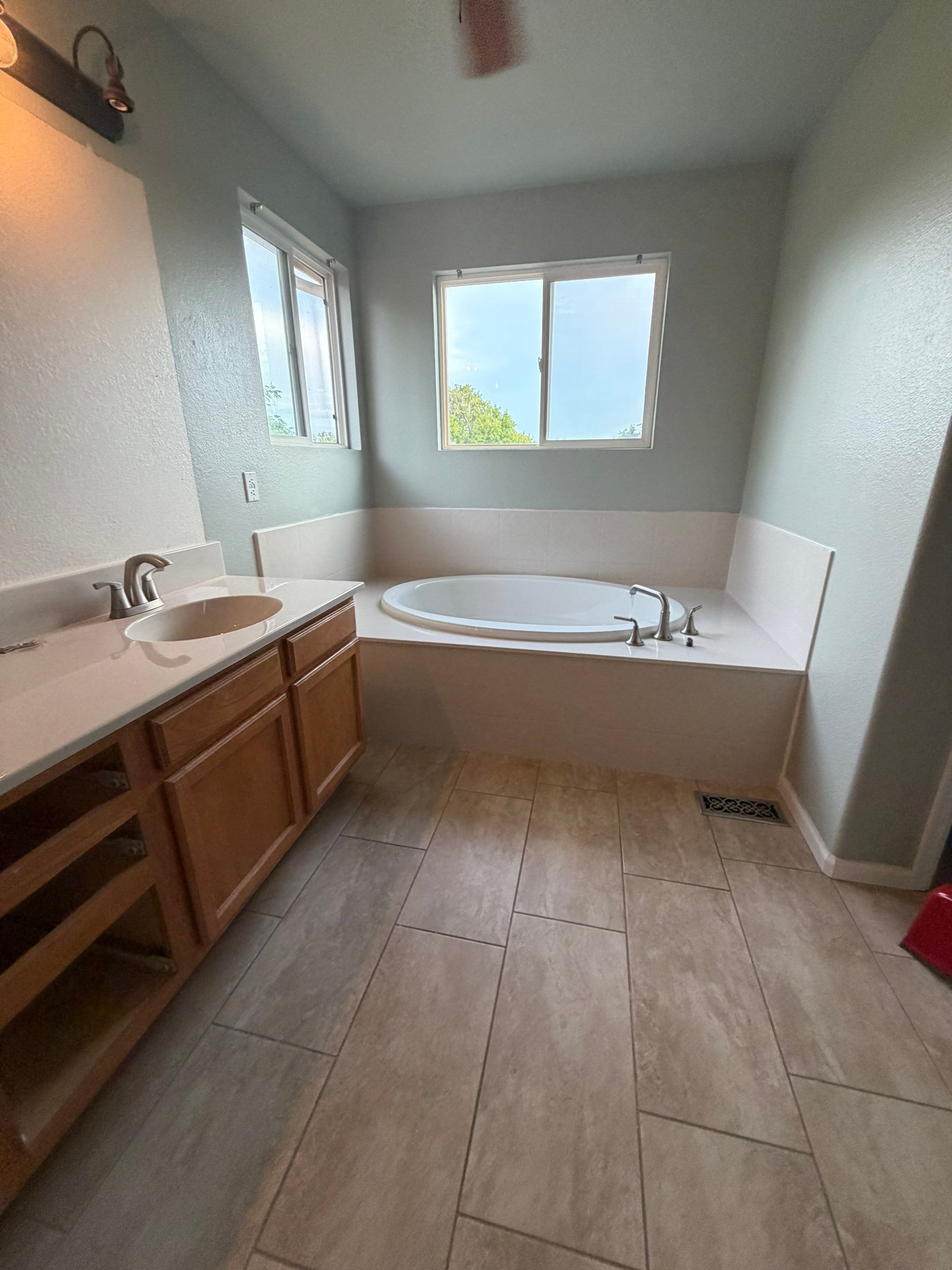
A complete drop-in tub project with HomePride costs $10,200 to $19,262, including the tub and a new deck, with or without a splash. A drop-in tub sits inside a built deck, which gives it a finished look with room around its edges. It's worth considering if you enjoy soaking baths and want a more traditional built-in design. Adding a matching splash wall raises the price, but it creates a more cohesive bathing area that's easier to keep clean.
How much does a freestanding tub cost?
A freestanding tub costs $20,700 to $23,000 installed with HomePride, or up to $28,750 with a jetted system. A freestanding tub stands on its own rather than inside a deck or alcove. It's a popular choice for homeowners who want a soaking tub as the centerpiece of a primary bathroom. These tubs need more open floor space, and installation may involve plumbing changes or floor preparation.
A Parker homeowner's story
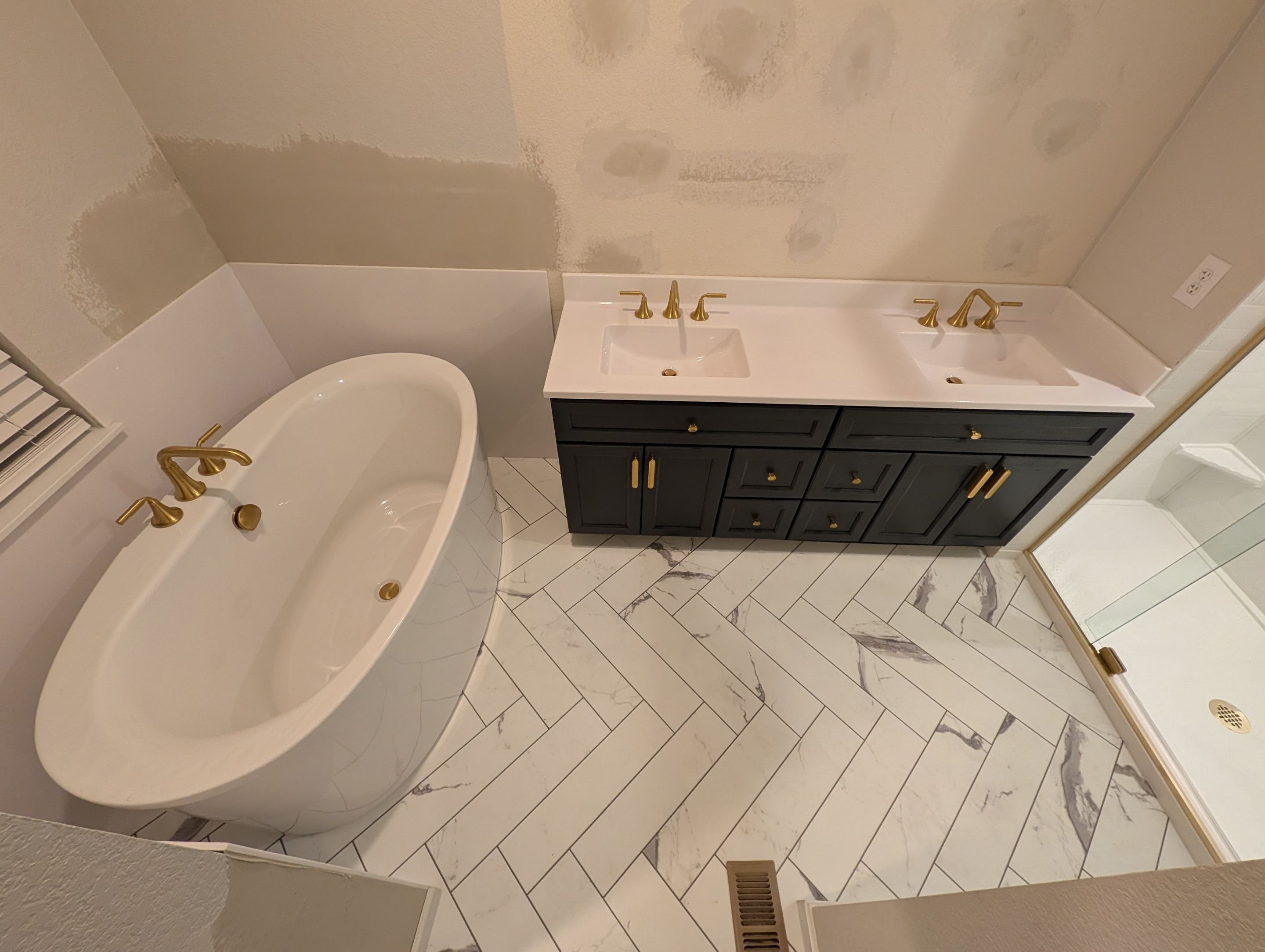
For one Parker homeowner, the tub was the whole point. She works in professional sports, where the days are long and the pressure rarely lets up, and a long soak is how she resets. When her family planned their primary bathroom, keeping a soaking tub wasn't up for debate.
The finished room centers on a freestanding tub with brushed gold fixtures. It's a good picture of how most of our tub projects actually come together: the tub is the heart of a larger remodel, built around the way someone wants to live, not a stand-alone swap.
How much does a walk-in bath cost?
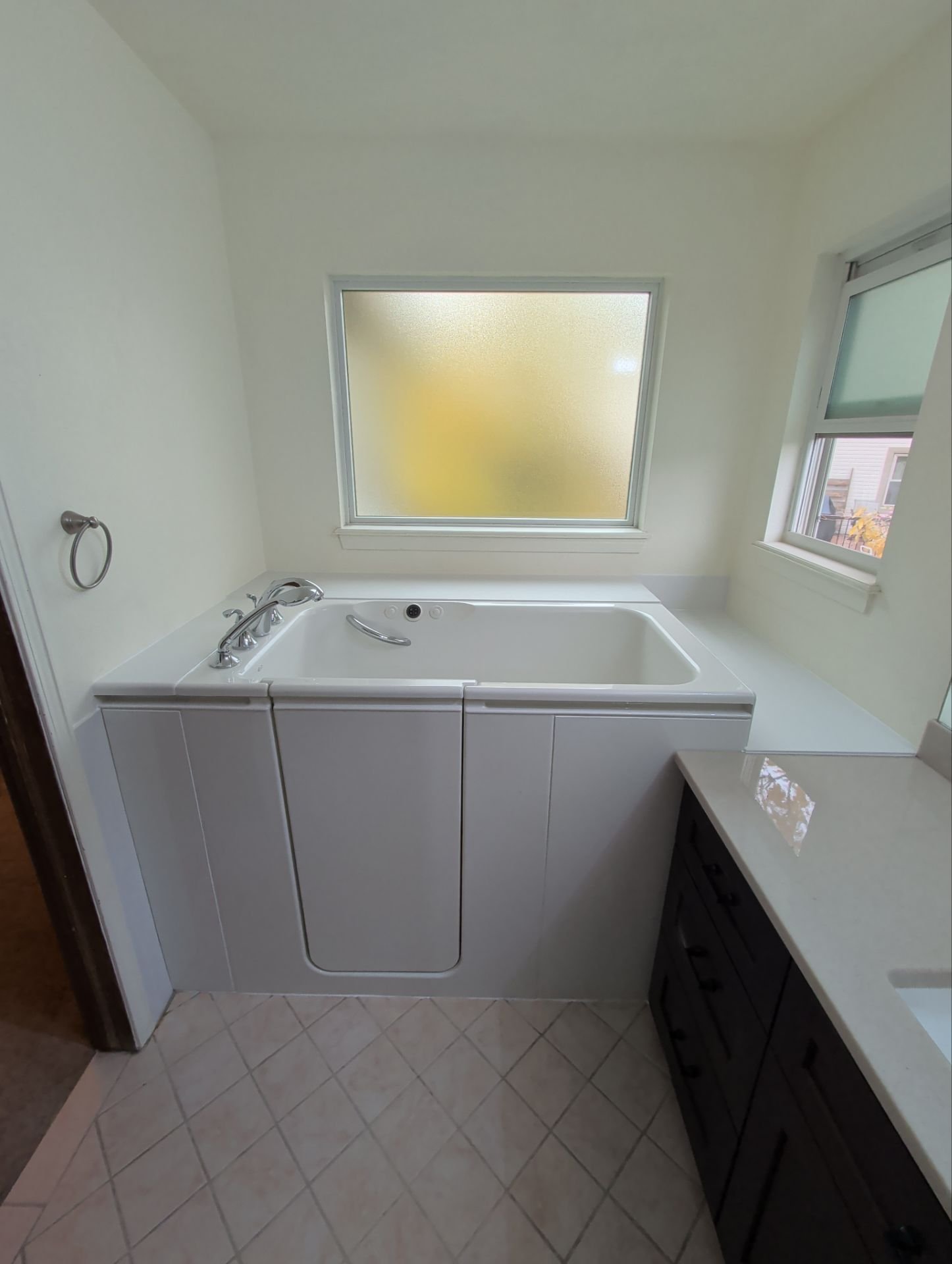
A walk-in bath generally costs $18,000 to $25,000 installed with HomePride, or $30,000+ with an optional wall surround. A walk-in bath has a door, a low step-in and a built-in seat, so you can bathe without climbing over a tub wall. That matters: a CDC study of emergency room visits found that about 68% of nonfatal bathroom injuries happened in or around the tub or shower, most of them falls, and that injury rates rise sharply with age (CDC, MMWR). It fits homeowners planning to age in place or recovering from surgery.
KOHLER walk-in baths carry a Lifetime Limited Warranty for as long as the original owner lives in the home, when installed by a KOHLER-certified installer. Adding a wall surround finishes the bathing area and removes grout lines to clean. Compare models in our guide to the 5 best modern walk-in tubs.
What real walk-in tub quotes look like in Colorado
To show what homeowners actually see, here are two recent walk-in tub quotes from other Colorado remodelers, with names removed:
- A Northern Colorado company quoted $19,760 for a walk-in tub with a new wall system, heated seat and air massage. The quote started at a "retail" price of $23,699 before a $3,939 "corporate discount."
- A national bath remodeling brand quoted $27,836 for a tub-to-walk-in conversion that kept the existing tile walls. The quote started at $35,951, then applied a promotion with an expiration date, a discount available only at the time of the appointment, and a friends and family discount.
Both final prices fall in the same range as our own walk-in bath projects. The difference is in how you get there.
One trade-off to consider: A walk-in bath's door must stay closed while the tub holds water. That means you'll typically sit inside while it fills and wait for it to drain before opening the door. For homeowners who have trouble sitting for long periods or prefer a quick shower, a low-threshold walk-in shower with a built-in seat may be more practical. The right choice depends on how you like to bathe and what makes you feel safest.
How much does a tub/shower combo cost?
A tub/shower combo costs $23,000 to $28,750 with HomePride, with new walls included. It replaces the old tub and its walls together, so you keep a bathtub for kids or resale and get a shower in the same footprint. It's the most common choice for a family's main bathroom.

Why are online bathtub replacement prices so much lower?
Online estimates usually cover less work than a complete bathing-area project. A basic replacement may reuse the existing plumbing and walls, while a complete project includes demolition, waterproofing, new wall materials, new fixtures and plumbing updates. Compare the included work before you compare prices.
What does "installed cost" mean? Installed cost is the price of the bathtub plus the labor and materials in the quoted installation. Depending on the project, that can include removing the old tub, waterproofing, plumbing connections, wall materials and finishing work. Always confirm the exact scope in your written estimate.
|
Source |
Average |
Typical range |
Tub-type price estimates reported by source |
|
$1,200 |
$315 to $2,500 |
Freestanding $1,500 to $4,000; jetted $1,000 to $4,000; walk-in $4,000 to $22,100 |
|
|
About $2,100 |
Not given as one range |
Freestanding $2,500 to $10,000; jetted $2,400 to $5,600; walk-in $2,000 to $12,000 |
Important: These sources use different pricing methods and project scopes. Some figures describe bathtub products, while others include installation or additional work. Don't compare them directly with HomePride's complete installed project estimates without reviewing what's included.
Labor costs also vary by scope. Angi puts labor at $500 to $2,000 for most Denver jobs, and This Old House adds $200 to $1,200 for removing and disposing of the old tub, and $50 to $500 for permits.
What you're paying for. The difference between a basic tub swap and a complete bathing-area remodel usually comes down to what's included. A lower-cost job may install a standard acrylic or fiberglass tub in the existing alcove and leave the walls and plumbing largely unchanged.
HomePride's bathtub projects include removing the existing tub, waterproofing, valve installation and plumbing connections, new walls and fixtures, and professional installation of the tub and any deck, splash or surround. Depending on the product and configuration, you can choose KOHLER and Onyx materials designed for long-term durability and easier maintenance.
Manufacturer warranties also vary by product. KOHLER walk-in baths, for example, have a Lifetime Limited Warranty subject to its terms and conditions. Onyx Collection products are backed by the manufacturer's Yes, Guaranteed Forever promise.
When you compare quotes, don't focus only on the final number. Ask what each contractor includes, what could cost extra, and which warranties apply to the materials and installation. Our guide to 6 reasons bathroom remodel quotes vary explains those differences in more detail.
When a lower-cost replacement makes sense. An alcove bathtub sits between three walls, usually with a shower above it. If your plumbing and walls are in good condition, swapping in a similar acrylic or fiberglass tub may be a practical, lower-cost option. That's not the kind of project HomePride takes on, and that's OK. Not every bathroom needs a complete remodel.
The important question is whether an estimate covers the work your bathroom actually requires. Some lower quotes exclude wall replacement, plumbing upgrades, waterproofing or repairs to hidden damage. Those exclusions aren't necessarily problems, but they should be explained before work begins. A good contractor helps you understand the trade-offs instead of pushing you toward the most expensive option.
What factors affect bathtub replacement costs?
The five main factors are tub type, surrounding materials, optional features, hidden damage and plumbing changes. A project that reuses the existing plumbing and supporting structure generally needs less work than one with a new deck, wall surround, relocated drain or subfloor repairs.
- The tub type. Tub pricing starts at $6,750 for a drop-in, and a finished drop-in project runs $10,200 or more. Walk-in baths start at $18,000, and freestanding tubs and tub/shower combos start above $20,000. Choosing the type is the largest single decision.
- What surrounds the tub. A drop-in tub needs a deck, and adding a splash wall can more than double its base price. Many homeowners pair their walk-in bath with optional Reveal by KOHLER LuxStone wall panels, which give the bathing area a finished look and are easier to keep clean. Grout-free walls cost more up front but skip the regrouting tile needs over time; see our 15-year cost breakdown of LuxStone vs. tile, fiberglass and acrylic.
- Features. Jets add $3,450 to $5,750 to a freestanding tub. Walk-in baths vary with door style, seat height and hydrotherapy options.
- What's behind the walls and under the floor. Older Colorado bathrooms may hide aging plumbing, poor waterproofing or moisture-damaged subfloors that only show up during demolition. A slow leak behind a tub wall can go unnoticed for years. The EPA recommends drying water-damaged materials within 24 to 48 hours to help prevent mold growth (EPA). See our guide to five hidden problems in older Colorado bathrooms.
- Whether the plumbing moves. Keeping the existing drain and valve locations generally reduces installation work. Moving a tub across the room, or changing an alcove layout to fit a freestanding tub, may require rerouting supply and drain lines. Permit requirements and fees vary by Colorado municipality; see our guide to bathroom remodeling permits in Colorado.
What should you budget for unexpected costs? For an older bathroom, consider setting aside an extra 10% to 20% for conditions that may not be visible until demolition. If you're planning a $23,000 tub/shower replacement, that means keeping another $2,300 to $4,600 available, for a total planning budget of $25,300 to $27,600.
You may never need that reserve. It's a personal budgeting precaution, not an automatic addition to your contractor's estimate. Ask how unforeseen conditions are handled and whether any extra work needs your written approval before it proceeds.
How do you choose the right bathtub replacement for your home?
The right choice depends on how you bathe, your bathroom's space, accessibility needs and your total installed budget. Drop-in tubs suit traditional soaking layouts, freestanding tubs need open floor space, walk-in baths support seated bathing, and tub/shower combinations keep both functions. If easier shower access matters most, a tub-to-shower conversion may be the better choice.
|
If your priority is... |
Consider... |
|
A traditional soaking tub with the lowest HomePride starting price |
Drop-in bathtub |
|
A centerpiece for a spacious primary bathroom |
Freestanding bathtub |
|
Seated bathing with a lower step-in |
Walk-in bath |
|
Keeping both a bathtub and shower for everyday use |
Tub/shower combination |
|
Easier shower access without stepping over a tub wall |
Tub-to-shower conversion |
Your bathroom's layout matters too. A tub that fits your budget may still need plumbing work, floor preparation or new surrounding materials to fit your space. Before choosing a model, ask yourself three questions:
- How will you use it? Think about who uses the bathroom, how often anyone takes baths, and whether accessibility is becoming more important.
- What can your bathroom accommodate? Consider floor space, where the plumbing sits and whether the walls or deck need replacing.
- What's your total installed budget? Compare complete project costs, not the price of the tub alone.
Answering these gives you a clearer picture of what your bathroom needs, which features matter and what you can reasonably expect to spend. That puts you in a better position to compare estimates and decide with confidence, without paying for features you don't need.
Should you replace your bathtub or convert it to a shower?
Replace your bathtub if your household takes baths or needs to keep a tub for family use. Consider a tub-to-shower conversion if easier entry, more shower space or accessibility is the priority. HomePride's 2026 tub-to-shower conversions typically cost $14,000 to $24,000, compared with $10,200 to $30,000+ for a complete bathtub project.
The final cost depends on wall materials, fixtures, accessibility features and installation requirements. Because many conversions fit within the tub's existing footprint, they may not require a full bathroom redesign. For a detailed breakdown, see our tub-to-shower conversion cost guide.
Keep a tub if:
- It's the only tub in a home with young children
- You plan to sell soon and buyers in your area expect at least one bathtub
- You use the tub to soak, for hydrotherapy or for pain relief
Convert to a shower if:
- Stepping over the tub wall is getting harder
- The tub mostly holds a shower curtain
- You want a lower threshold, a built-in seat and grab bars now rather than later
Getting out of the tub is where many bathroom injuries happen. The CDC found that bathing, showering and climbing out of the tub or shower were the riskiest bathroom activities, and it recommends grab bars inside and outside the tub along with non-slip surfaces (CDC, MMWR). If safety is the main concern but you still want to bathe, a walk-in bath gives you both: a low step-in and a seat, plus a full soak.
What should you ask before hiring a bathtub replacement contractor?
Ask whether the written estimate includes demolition, disposal, waterproofing, plumbing work, the new tub and the surrounding materials. Also confirm how unexpected repairs are approved, which warranties apply and who does the installation. These five questions help you compare what competing quotes actually cover:
- Is this the complete installed price? Ask for a written estimate showing what's included, what's excluded and what could trigger an extra charge.
- What happens to the existing tub, walls and plumbing? Confirm whether demolition, disposal, waterproofing, plumbing connections and surrounding materials are included.
- What happens if hidden damage is discovered? Ask how water damage, deteriorated subfloors or outdated plumbing would be evaluated, priced and approved before extra work begins.
- Which products and warranties am I getting? Ask for the manufacturer, model and warranty information for the tub, wall materials and fixtures. Ask separately about workmanship coverage.
- Who will do the installation? Confirm the contractor's insurance, licensing, installation experience and who is responsible for fixing problems after the project.
A trustworthy contractor should answer these clearly, even while you're still comparing companies. To check a company before you call, our guide to the 6 best review sites for home contractors shows how in about 15 minutes.

Frequently asked questions
How much does bathtub replacement cost in Colorado? A complete bathtub replacement with HomePride costs $10,200 to $30,000+ installed. Typically, a drop-in tub project runs $10,200 to $19,262 with a deck or splash, a freestanding tub $20,700 to $28,750, a walk-in bath $18,000 to $25,000, or $30,000+ with an optional wall surround, and a tub/shower combo $23,000 to $28,750.
How much does it cost to replace a bathtub? A basic tub swap may cost a few thousand dollars when the existing plumbing and walls stay in place. Projects with premium tubs, new walls, new fixtures, waterproofing or plumbing changes cost considerably more. With HomePride, complete bathtub projects range from $10,200 to $30,000+, depending on the type of tub, materials, and the scope.
Does HomePride replace just the bathtub? No. Our standard bathtub install includes new shower walls and fixtures, plus a deck and/or splash when the design calls for one. Tub pricing starts at $6,750, but that's the starting price of the tub, not a finished project.
What is the cost to replace a bathtub and surround? A tub/shower combo that replaces the tub and its walls together costs $23,000 to $28,750 with HomePride. For a walk-in bath, a wall surround in KOHLER, Onyx or Samuel Müeller materials adds $3,450 to $6,900.
What is the lowest-cost bathtub replacement option? With HomePride, a drop-in tub is the lowest-cost option: the tub starts at $6,750, and a complete project with a new deck starts at $10,200. If you only need a basic acrylic or fiberglass tub swapped into an alcove that's in good condition, a simpler tub-only replacement from another installer may cost less.
How much does a freestanding tub cost to install? A freestanding tub costs $20,700 to $23,000 installed with HomePride. Adding jets raises the total to as much as $28,750.
How much does a walk-in tub cost installed? A walk-in bath costs $18,000 to $25,000 installed with HomePride, or $30,000+ with an optional wall surround. Some Colorado homeowners qualify for help through Medicaid waiver programs; see does Colorado Medicaid cover walk-in showers and home modifications.
Is it cheaper to replace a tub or convert it to a shower? A tub-to-shower conversion with HomePride runs $14,000 to $24,000. That costs less than most complete tub projects and overlaps with the upper range of a drop-in project. The right choice depends on whether anyone in the home still takes baths.
Why are online bathtub replacement averages so low? Averages from Angi and This Old House mostly reflect a basic tub dropped into the existing alcove, without new walls, waterproofing or a deck. A full bathing-area replacement with a branded tub costs more.
How to read a remodeling quote (and spot a lowball price)
Some advertised prices and online estimates are set low on purpose. Their job is to get your name, phone number and address so a sales team can follow up. The real number usually arrives later, after an in-home visit.
Once you have a quote in hand, watch for these patterns:
- An inflated "retail" price. A large starting number makes the discount look bigger than it is.
- Discounts with a deadline. "Good until the end of the month" or "today only" pricing is designed to keep you from comparing quotes.
- A smaller scope than it looks. A lower price may keep your existing walls, leave out the door, or have you supply parts yourself. Compare what's included, not just the total.
A fair quote should be the same price tomorrow as it is today, and it should list exactly what you're paying for. That's how we write ours.
Find out what your bathtub replacement could cost
People have been building their days around a good soak for more than 4,000 years. Whether your tub is for bath time with the kids, a safer way to keep bathing as you age, or the quiet end to a long day, the right choice depends on your bathroom, your priorities and your budget.
You don't have to make that decision without reliable information.
Still researching your options? Start with our online bathroom pricing tool to explore a realistic planning range for your project.
Ready for a specific price? A HomePride designer can visit your home, measure your space, explain your options and give you a written estimate based on your bathroom and the products you choose. The consultation is free, and there's no obligation to move forward.
Schedule your free consultation or call (303) 558-5225.
HomePride Bath & Shower Systems is a Reveal by KOHLER Authorized Dealer serving homeowners across Colorado and in Cheyenne, Wyoming.
Sources
- Angi: How Much Does Bathtub Replacement Cost in Denver? (updated July 8, 2026)
- This Old House: Bathtub Installation Cost (updated March 5, 2026)
- CDC, MMWR: Nonfatal Bathroom Injuries Among Persons Aged 15 and Older, United States, 2008 (June 10, 2011)
- U.S. EPA: Mold Remediation Guide, Chapter 4
- KOHLER Walk-In Bath Lifetime Limited Warranty (PDF)
- Onyx Collection: Yes, Guaranteed Forever
- Encyclopaedia Britannica: Great Bath, Mohenjo-daro
- Lucore and Trümper, eds.: Greek Baths and Bathing Culture (2013)
- Ancient Mediterranean Baths and Bathing
- Tokyo Sento Association: Sento History
- KOHLER: History
- HomePride planning ranges: material pricing plus labor and installation
- Search data: Semrush, US database, Nov 6, 2026
