
Why We Wrote This Guide
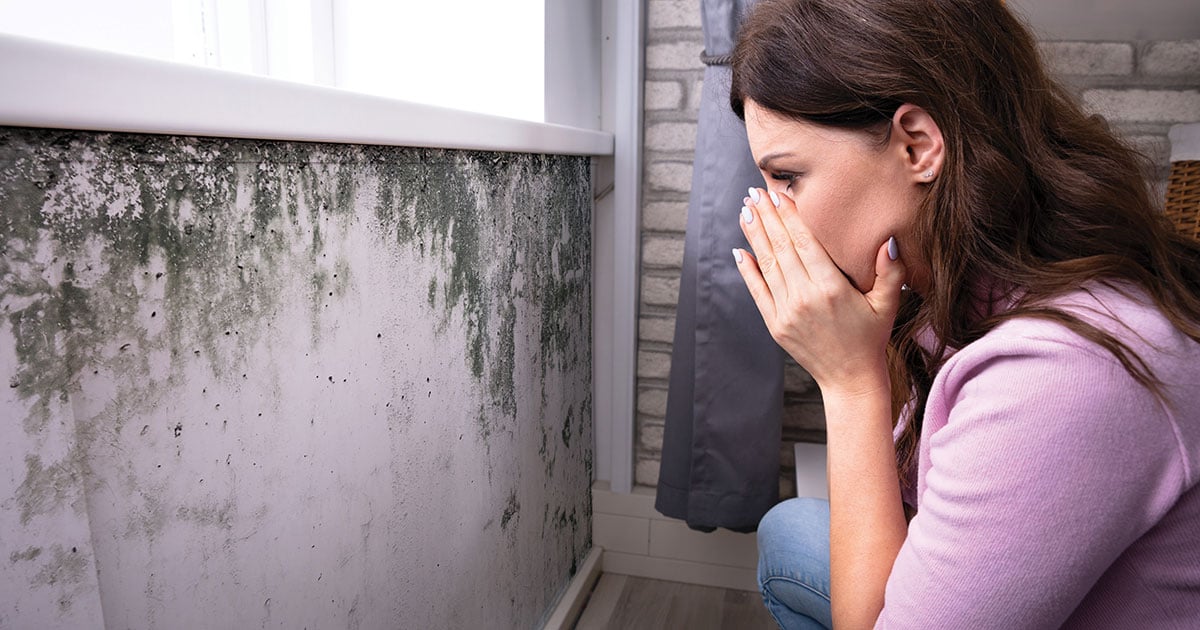
At HomePride, we've worked in thousands of bathrooms across Colorado and Wyoming. One thing we've learned is that homeowners are often given incomplete, and in some cases exaggerated information about mold and mildew issues.
We've seen and heard of bathroom walls flagged by contractors as "dangerous mold problems" based solely on a moisture meter reading. We've also seen genuine mold issues ignored until they became expensive repairs.
That's why we created this guide: to help you understand the difference, know when a problem is serious, and make informed decisions based on facts rather than concern.
We don't believe homeowners should be pressured into expensive decisions based on fear.
Our goal is simple:
Help you understand the problem.
Help you evaluate your options.
Help you choose the solution that's right for your home. Even if that solution isn't a remodel.
The Moisture Meter Myth
Imagine a contractor places a moisture meter against your bathroom wall.
The reading comes back elevated.
Before you know it, you're hearing phrases like:
- Hidden mold
- Structural damage
- Immediate remediation
Or you spot something gray and powdery on your shower grout and start wondering if your family is at risk. Here's what many homeowners aren't told:
A moisture reading is evidence of moisture, not evidence of mold.
Moreover, what homeowners see in bathrooms, on window sills, and in poorly ventilated spaces is mildew — not mold. And mildew, while worth addressing, is a surface-level issue you can usually clean up yourself on a Saturday afternoon.
That doesn't mean mold isn't real, or that it can't be a genuine problem when it appears. It can. But knowing the actual difference between the two — what they look like, how they behave, what they do to your health, and what it actually takes to remove them — puts you in a far better position than vague alarm.
This guide gives you a clear, honest breakdown. No scare tactics. Just the facts Colorado homeowners need.
Mold vs. Mildew: Quick Answer
If you're looking for the short version of this article:
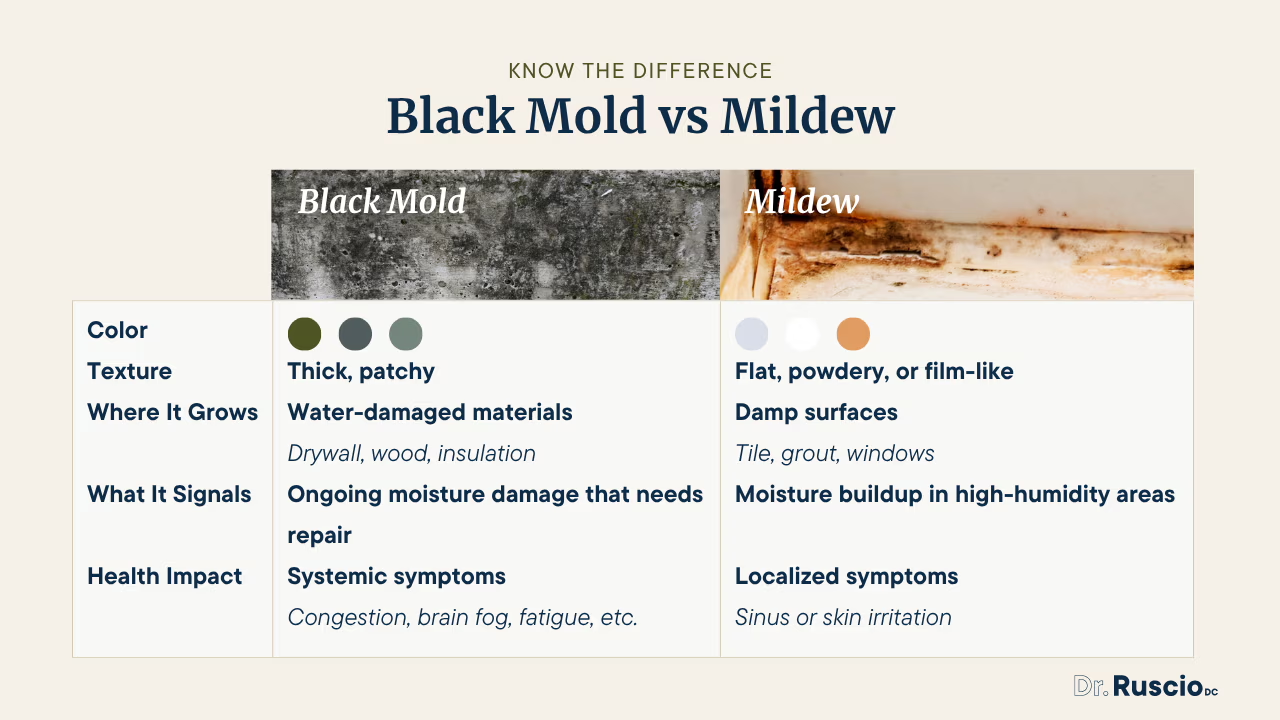
- Mildew is usually white or gray, stays on the surface, and is often easy to clean yourself.
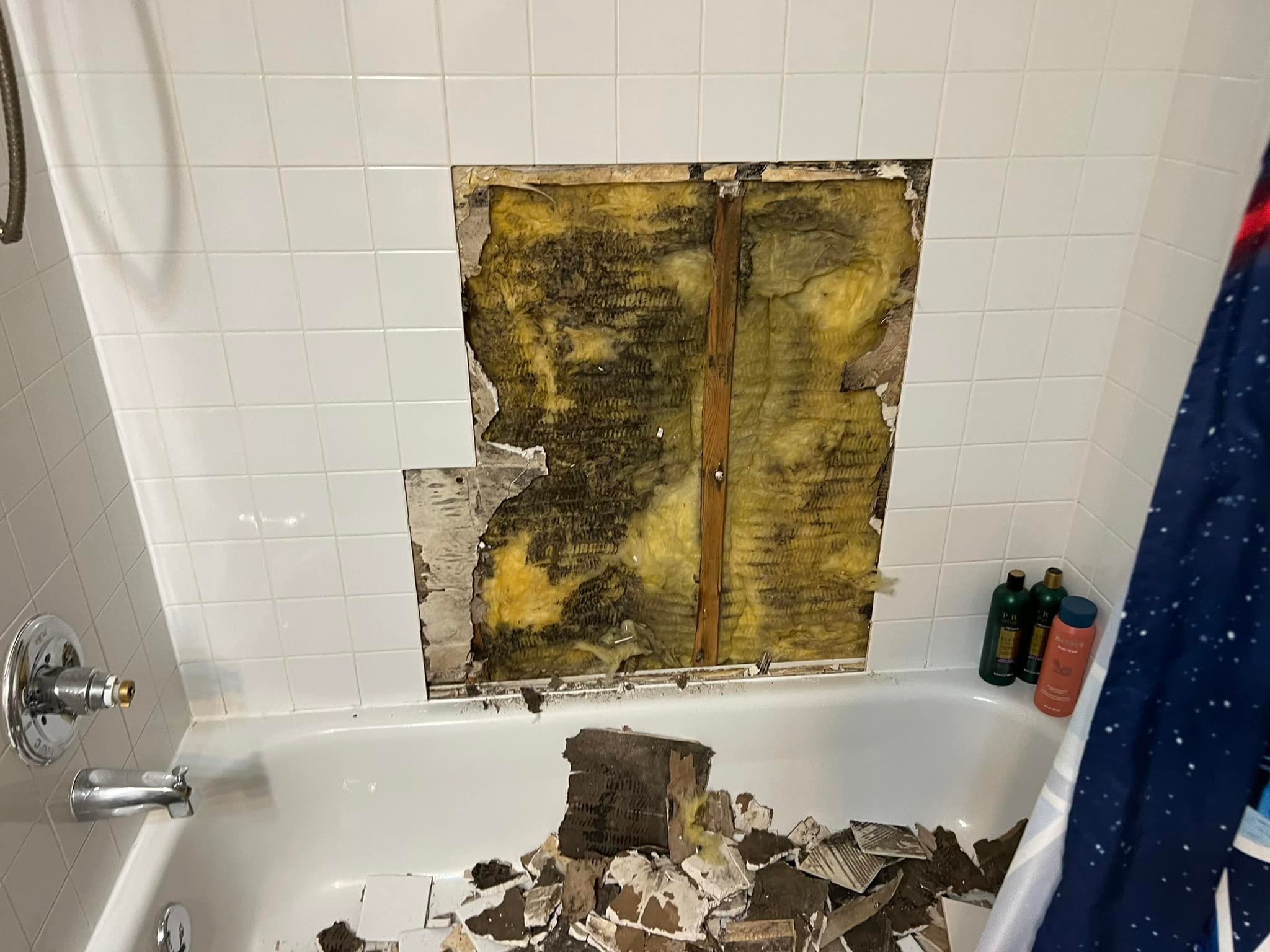
- Mold typically appears darker, penetrates porous materials, and may require professional remediation.
- Moisture causes both mold and mildew, but moisture itself is not mold.
- Mold can begin growing within 24 to 48 hours of water intrusion, according to the EPA.
- The EPA generally recommends professional evaluation when mold affects more than 10 square feet
First: What Are Mold and Mildew, Really?
Both mold and mildew are fungi. They reproduce through spores, thrive in damp environments, and feed on organic materials like drywall paper, wood, and fabric. That's where most of the similarity ends.
What Is Mold?
Mold is a fungus that penetrates porous materials such as drywall, wood, carpet, and grout. Unlike mildew, mold can grow below the surface and may create structural and health concerns if left untreated. Common household mold varieties include:
• Aspergillus — common in homes, may trigger allergic reactions
• Penicillium — can grow on wallpaper, carpets, and insulation
• Stachybotrys chartarum — commonly called "black mold," the most concerning variety and the one that typically requires professional remediation
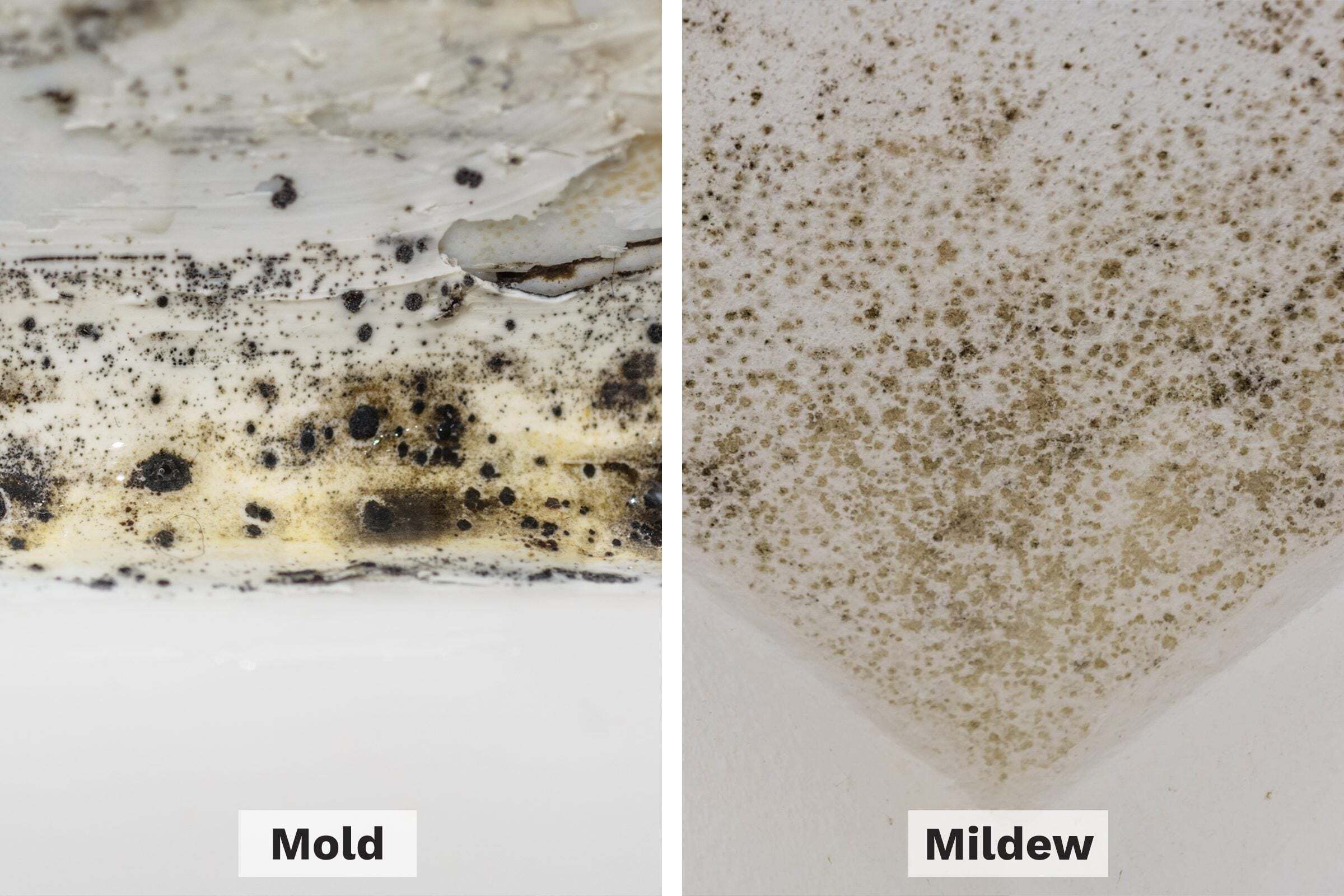
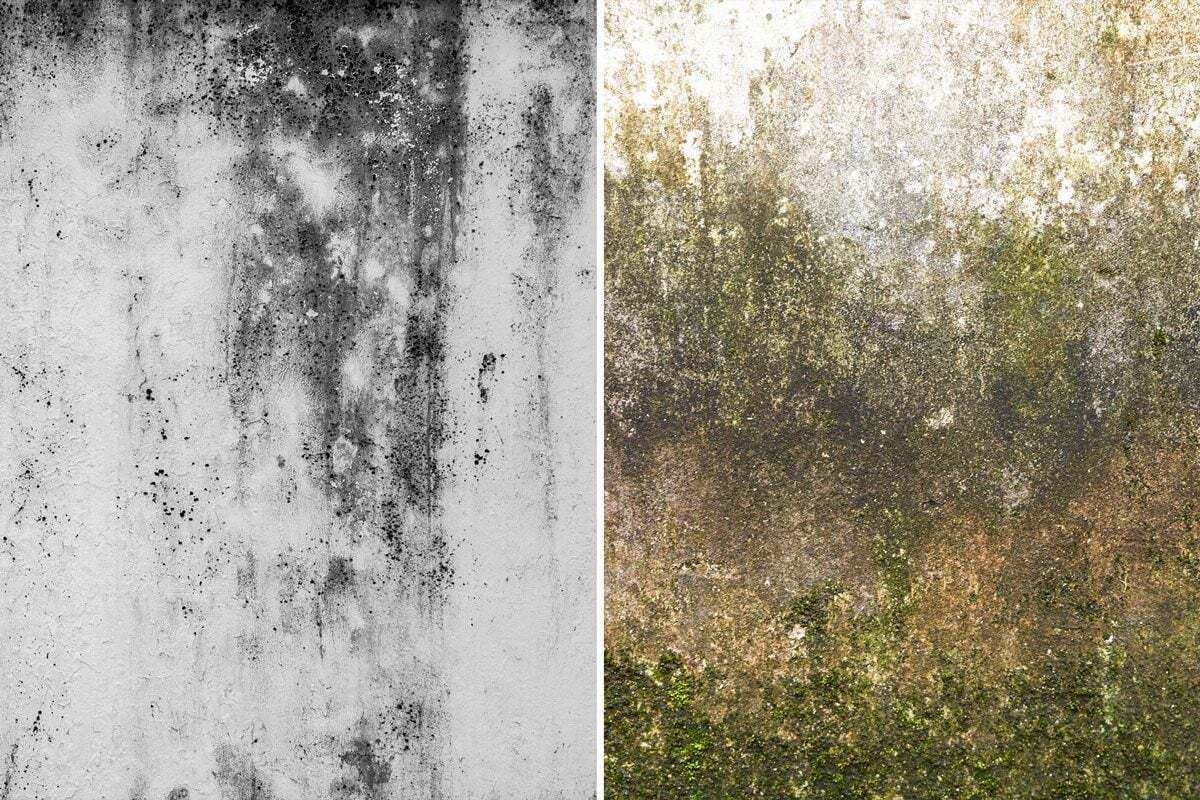
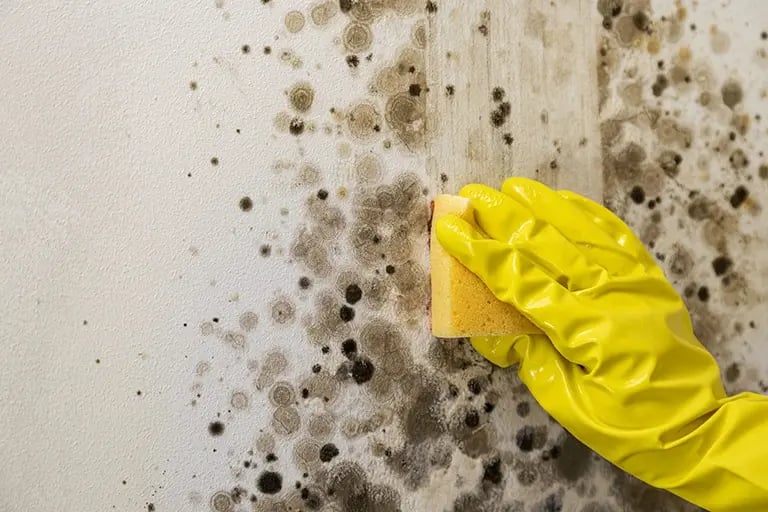
Mold colonies appear in darker colors — black, dark green, gray, or brown — and tend to look fuzzy, slimy, or raised. It has a strong, earthy, musty odor. Critically, mold can begin to grow within 24 to 48 hours after water intrusion, according to the Environmental Protection Agency (EPA).
What Is Mildew?
Mildew is a surface-level fungal growth that commonly appears white, gray, or yellow. It is generally easier to clean than mold because it does not penetrate deeply into materials. In the home, it appears as flat, powdery, or downy growth that's typically white or light gray, sometimes yellowing with age.
You're most likely to find it on shower walls, tile grout, window sills, fabric, and other areas where moisture sits on a surface without fully drying. It doesn't embed into materials the way mold does, which is why it's far easier to clean and far less damaging when caught.
FEMA classifies mildew as an early-stage mold that is easier to treat and less hazardous than fully developed mold infestations — a useful framing for homeowners trying to assess what they're dealing with.
What Is the Difference Between Mold and Mildew?
The biggest difference is where they grow.
Mildew remains on the surface of materials and is usually easier to clean.
Mold can penetrate porous materials such as drywall, wood, and grout, making it more difficult to remove and potentially more damaging.
While both thrive in moisture, mold generally presents greater structural and health concerns than mildew.
Mold vs. Mildew: Side-by-Side Comparison
Use this table as your quick reference when you're trying to identify what you're looking at.
|
Feature |
Mold |
Mildew |
|
What it is |
A broad category of multicellular fungi that penetrates porous surfaces |
A surface-level fungal growth (technically a subset of mold, but far milder) |
|
Appearance |
Fuzzy, slimy, or raised — black, dark green, gray, brown, or white patches |
Flat or powdery — white or light gray, sometimes turning yellow |
|
Texture |
Fuzzy, slimy, or raised |
Flat, powdery, or downy |
|
Where it grows |
Deep in drywall, grout, wood framing, carpet, insulation |
On surfaces — shower walls, tile, window sills, fabric |
|
Odor |
Strong, musty, earthy smell |
Mild musty smell or no noticeable odor |
|
Penetration |
Penetrates into porous materials — harder to fully remove |
Stays on the surface — doesn't embed into materials |
|
Health risk |
Moderate to serious — respiratory issues, asthma, neurological symptoms with prolonged exposure to toxic strains |
Low to mild — can irritate allergies and respiratory sensitivity, especially in poor ventilation |
|
Structural risk |
High — ongoing moisture can eventually cause wood decay if left unaddressed |
Low — primarily cosmetic damage |
|
DIY removal? |
Only if under 10 sq ft on non-porous surfaces and no suspected black mold (EPA guideline) |
Yes — usually handled with household cleaners and good ventilation |
|
When to call a pro |
Mold over 10 sq ft, inside walls, near HVAC, black mold suspected, or health symptoms present |
Rarely — unless mildew is unusually widespread or recurring despite treatment |
If You Only Remember Three Things
If you're trying to determine whether you have a serious problem, focus on these three points:
- Most visible bathroom growth is mildew, not dangerous mold.
- Moisture causes mold, but moisture itself is not mold.
- If growth covers more than 10 square feet, keeps returning, or appears inside walls, it's time to bring in a professional.
How to Tell the Difference: The 5-Second Visual Test
You don't need a professional inspection to make an initial assessment. Here's a practical framework for what you see in front of you:
|
Quick Visual Identification Guide It's likely MILDEW if it: • Looks flat, powdery, or chalky (not raised or fuzzy) • Is white, light gray, or pale yellow • Is on a non-porous surface like tile, glass, or sealed fixtures • Wipes away easily with a damp cloth or cleaner • Has no strong smell or only a faint musty scent It may be MOLD if it: • Looks fuzzy, slimy, or raised off the surface • Is dark — black, dark green, dark gray, or brown • Has a strong, persistent musty or earthy smell • Returns shortly after you've cleaned it from the same spot • Is on a porous surface like drywall, grout, wood, or unsealed tile • Appears after a known water leak, flood, or extended moisture event |
A note on the bleach test: you may have heard that dabbing a drop of bleach on a spot and watching if the color fades indicates mold. While this can give a rough signal (mold loses color; dirt stays dark), it's not conclusive and doesn't tell you the type or extent of growth. For anything beyond surface-level identification, a professional assessment is the reliable path.
The Truth About Moisture Readings and "Hidden Mold"
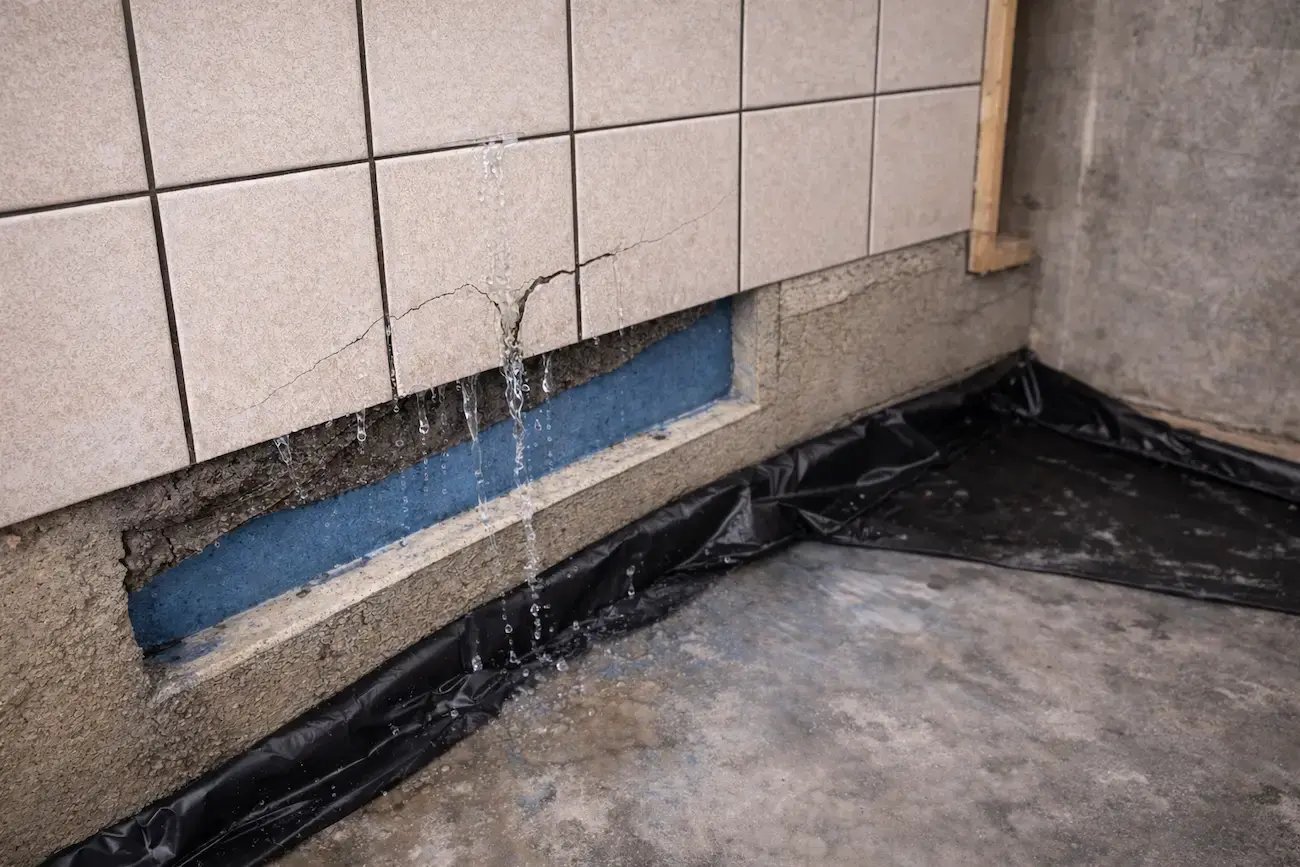
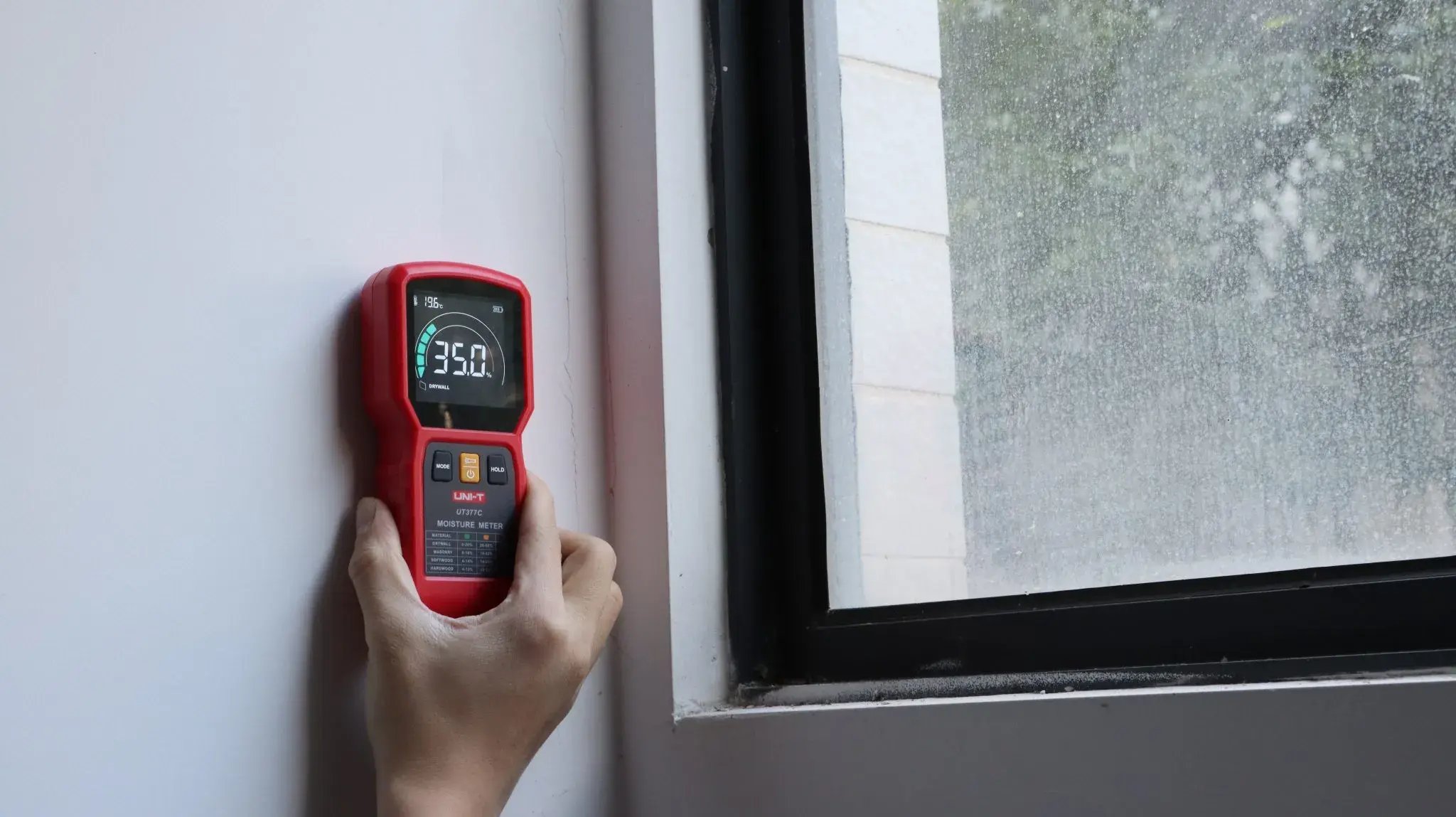
Here's a tactic some contractors use that's worth understanding: they run a moisture meter along your walls, find elevated readings, and tell you there's likely mold hiding behind the surface. This creates urgency — and often a large remediation estimate.
What they don't always tell you: moisture behind a wall is not the same as mold behind a wall.
Elevated moisture readings mean exactly what they say: there is moisture present. Moisture can come from many sources — normal seasonal humidity changes, brief condensation events, a recently resolved leak, or simply the fact that your bathroom walls absorb steam from showers. Moisture is a condition that can lead to mold growth. It is not itself mold.
|
What the Science Actually Says Surface mold on wood framing does not affect the strength or long-term durability of wood. Mold sitting on the surface of lumber doesn't cause rot or weaken structure. Wood decay fungi — the type that actually compromise structural integrity — require wood moisture content above approximately 28% by weight for more than a week before they can take hold. In other words: moisture is the condition to watch. Actual structural damage requires sustained, significant moisture over time — not a single elevated reading from a moisture meter. |
This doesn't mean you should ignore moisture. You absolutely shouldn't. Moisture is the primary variable you can control — manage it, and you prevent both mildew and mold from establishing in the first place. But a moisture reading alone should not trigger an expensive remediation project without additional visible or tested evidence of actual mold growth.
If a contractor finds elevated moisture, the right next step is to identify and address the moisture source — not to assume mold without supporting evidence. A reputable professional will show you visible growth, explain where they suspect hidden growth and why, and give you options that match the actual scope of the problem.
Health Risks: Mold vs. Mildew
Both mold and mildew release spores into the air. Both can affect people with allergies, asthma, or respiratory sensitivity. But the severity differs significantly — and that distinction matters when you're deciding how urgently to act.
Is Mildew Dangerous?
Mildew is primarily a nuisance-level health concern for most people. The CDC notes that exposure to mold and other indoor fungal growth can contribute to sneezing, coughing, wheezing, and asthma symptoms in sensitive individuals. Common responses include:
• Nasal congestion or runny nose
• Sneezing and mild coughing
• Throat irritation
• Worsened allergy symptoms in sensitive individuals
For most healthy adults, mildew in a bathroom presents a manageable annoyance rather than a health emergency. That said, people with pre-existing respiratory conditions, young children, the elderly, or anyone with a compromised immune system should treat even mildew with prompt attention.
Is Mold Dangerous?
Mold — particularly toxic varieties like Stachybotrys chartarum (black mold) — carries more significant health implications, especially with prolonged exposure. A peer-reviewed analysis cited by The World Health Organization’s Indoor Air Guidelines found that indoor dampness and mold increase the risk of respiratory health problems by 30 to 50 percent.
Potential effects of mold exposure include:
• Persistent coughing and wheezing
• Asthma flare-ups and difficulty breathing
• Eye and skin irritation
• Chronic fatigue and headaches
• Neurological symptoms with prolonged exposure to toxic mold (memory difficulties, mood changes)
• Lung infections in people with weakened immune systems
|
Who Is Most Vulnerable? The following groups should take any suspected mold exposure seriously and consult a healthcare provider if symptoms arise: • Infants and young children • Adults over 65 • People with asthma, COPD, or chronic respiratory conditions • Immunocompromised individuals (chemotherapy patients, organ transplant recipients, people with HIV/AIDS) |
It's also worth noting that the EPA and CDC do not set numeric indoor mold spore limits. Air sampling can provide useful data in an investigation, but there is no federal threshold that defines how many spores constitute a "mold problem." The practical standard remains: visible mold growth and confirmed moisture intrusion are the key indicators, not air sample numbers alone.
Colorado-Specific Factors: Why Our Dry Climate Doesn't Make You Immune
Colorado's reputation as a dry, sunny state leads many homeowners to assume they don't need to worry about mold. This is a misconception worth clearing up.
Yes, Colorado's average outdoor humidity is low. But several regional factors create indoor moisture conditions that can still support mold and mildew growth:
Snowmelt and Seasonal Moisture
During winter and early spring, snowmelt and ice accumulation can lead to moisture buildup in basements, crawl spaces, and around roofing materials. If drainage isn't directing water away from the foundation, or if there are gaps in flashing or sealing, moisture infiltration follows.
Rapid Temperature Swings
Colorado's dramatic temperature fluctuations — 40-degree swings in a single day are not unusual on the Front Range — create condensation on interior surfaces. Windows, pipes, and poorly insulated walls are common sites where this condensation accumulates, providing the moisture that mold and mildew need.
Bathroom Steam Without Adequate Ventilation
Even in dry climates, a bathroom produces significant moisture every time someone showers. If exhaust fans aren't functioning properly or running long enough, that steam has nowhere to go. It settles on walls, tile grout, and caulk — the most common sites for mildew in Colorado homes.
The Dry Air Misconception
Here's the irony: Colorado's dry climate actually makes some homeowners more vulnerable to mold problems, not less. Because the outdoor air is so dry, many homes run humidifiers. Over-humidification, combined with poor ventilation in bathrooms or laundry areas, can push indoor humidity into the range where mold thrives.
|
What Humidity Prevents Mold Growth? The EPA recommends keeping indoor humidity between 30% and 50% to help limit mold growth for Colorado homes — low enough to prevent mold and mildew growth, high enough to protect wood flooring, trim, and furniture from cracking. If indoor humidity is high, a dehumidifier may help, and air conditioners help reduce indoor humidity. A hygrometer (available at most hardware stores for under $20) gives you an accurate reading. |
How to Remove Mildew and Mold: Practical Steps
Removing Mildew (Usually a DIY Project)
For mildew on tile, grout, shower walls, and similar hard surfaces, the process is straightforward:
1. Ventilate the area — open a window or run the exhaust fan before you begin.
2. Apply your cleaner — white vinegar (undiluted), a commercial mildew remover, or a diluted bleach solution (1 cup bleach to 1 gallon of water) all work. Never mix bleach and ammonia.
3. Scrub thoroughly — use a stiff brush on grout and textured surfaces.
4. Rinse and dry completely — incomplete drying is the most common reason mildew returns quickly.
5. Address ventilation — if mildew is recurring, improve exhaust fan performance or extend its runtime to at least 20 minutes after showering.
Can You Remove Mold Yourself?
The EPA provides clear guidance: homeowners can handle mold cleanup themselves when the affected area is less than 10 square feet — roughly the size of a bathtub surround. For anything larger, or under any of the following conditions, professional remediation is the appropriate path:
• The mold covers more than 10 square feet
• The mold is inside walls, under flooring, or in the HVAC system
• You suspect black mold (Stachybotrys chartarum)
• The mold was caused by contaminated water (sewage backup, flooding)
• Anyone in your household has respiratory conditions or a compromised immune system
• The mold returns after previous cleanup attempts
For small, confirmed surface mold on non-porous materials, follow the same process as mildew but add personal protective equipment: an N95 respirator, safety goggles, and rubber gloves. Do not attempt to paint over mold — it hides the problem without solving it.
What Mold Remediation Typically Costs
Costs vary based on the size of the affected area and whether materials need to be removed.
Professional mold remediation costs vary significantly based on scope. According to Angi's 2025 national cost data, most homeowners pay between $1,125 and $3,345, with an average of $2,225 — though costs range considerably by location and severity:
- Surface mold in a bathroom (accessible, non-porous): $500–$1,000
- Moderate remediation involving drywall removal: $2,000–$6,000
- Large-scale remediation after significant water damage or whole-house involvement: $10,000–$30,000+
The most important factor isn't the mold itself—it's identifying and correcting the moisture source causing the problem.
Removal comparison at a glance:
|
Step |
Mildew Removal (DIY) |
Mold Removal (Use Caution) |
|
Products |
White vinegar, commercial mildew cleaner, diluted bleach solution (1 cup bleach to 1 gallon water) |
EPA-registered fungicidal cleaner, professional-grade biocide, containment required for large areas |
|
Tools needed |
Scrub brush, spray bottle, rubber gloves, ventilation |
N95 respirator or higher, eye protection, gloves, HEPA vacuum, containment sheeting for larger jobs |
|
Surface type |
Non-porous surfaces (tile, glass, sealed fixtures) |
Non-porous: clean and dry. Porous (drywall, wood): may require removal and replacement |
|
Key step |
Scrub surface, rinse, dry completely — ensure ventilation to prevent return |
Fix the moisture source first — cleaning without addressing the cause guarantees regrowth |
|
After treatment |
Improve ventilation; run exhaust fan 20+ minutes after showers |
Inspect for hidden moisture; may need humidity testing or professional assessment |
Prevention: How to Stop Both Before They Start
The single most effective thing you can do is control moisture. Both mold and mildew require it to survive. Remove moisture, and you remove the problem.
In the Bathroom
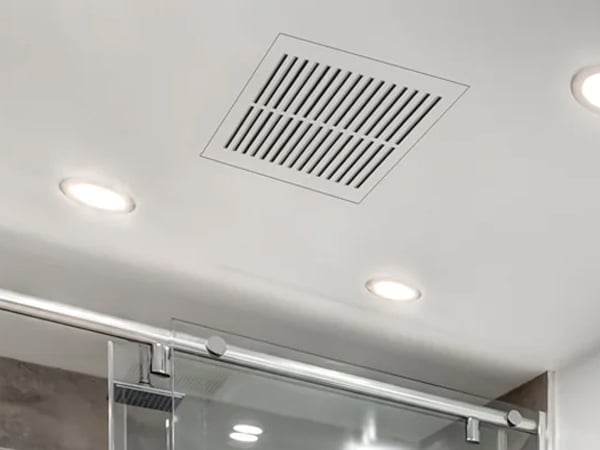
• Run your exhaust fan during every shower and for at least 20 minutes after
• Ensure your exhaust fan is properly vented to the exterior — not just into the attic
• Wipe down shower walls after use with a squeegee
• Re-caulk around the tub or shower when caulk shows cracking or discoloration — compromised caulk allows moisture to reach the wall behind it
• Leave the shower door or curtain open after use to allow the interior to dry
Throughout the Home
• Keep indoor humidity between 30% and 50% using a hygrometer to monitor
• Address any plumbing leaks promptly — mold can begin growing within 24 to 48 hours of water intrusion
• Inspect basement and crawl space areas seasonally, particularly after snowmelt
• Ensure gutters and downspouts direct water at least 6 feet from the foundation
• If you run a humidifier, check that it isn't pushing humidity above 50%
When Cleaning Stops Solving the Problem
If you've cleaned the same mildew stain ten times and it keeps returning, the issue may not be your cleaning routine.
It may be your bathroom itself.
Older showers often rely on grout joints, caulk seams, and porous materials that trap moisture and create ideal conditions for mildew growth. Grout is porous by nature, and even sealed grout eventually degrades over time.
In those situations, cleaning addresses the symptom, not the cause.
For many homeowners planning to stay in their homes long term, reducing maintenance becomes just as important as improving appearance. A bathroom that requires less scrubbing, fewer repairs, and less ongoing upkeep can make everyday life easier for years to come.
A modern shower system designed with non-porous, grout-free materials can dramatically reduce the maintenance required to keep your bathroom clean and healthy.
Products like KOHLER LuxStone surrounds use a solid-surface, grout-free design that removes the primary locations where moisture collects and mildew takes hold.
A Common Example We See
Recently, a Colorado homeowner contacted us after repeatedly cleaning what they believed was mold around their shower enclosure.
The issue turned out to be recurring mildew caused by deteriorated grout and poor ventilation, not a hidden mold infestation.
After improving ventilation and replacing the aging shower surround with a grout-free system, the homeowner eliminated the recurring problem and significantly reduced cleaning time.
Every situation is different, but it's a good example of why identifying the root cause matters more than treating the symptom.
If you're dealing with persistent bathroom moisture problems and you're also considering whether your bathroom still serves your safety and comfort needs well — particularly for aging in place or mobility — that's a worthwhile conversation to have with a bathroom specialist.
|
HomePride Can Help As Colorado's original certified KOHLER dealer with over 2,000 installations completed across Colorado and Cheyenne, Wyoming, HomePride specializes in tub-to-shower conversions, walk-in bath installations, and full bathroom remodels using KOHLER LuxStone surrounds that eliminate grout lines and the moisture problems that come with them. If recurring mildew or moisture in your bathroom is a persistent issue, we're happy to walk you through what a modern bathroom surround can do — no pressure, no scare tactics, just honest information. Request a free in-home consultation at homepridebath.com. |
Common Myths About Mold and Mildew
Myth: "If I can smell something musty, I definitely have dangerous mold."
A musty smell can indicate mildew, surface mold, or simply accumulated moisture. It warrants investigation — but a smell alone doesn't confirm dangerous mold growth. Look for visible growth, check for moisture sources, and assess the area systematically before reaching a conclusion.
Myth: "All black growth is black mold."
Not all dark-colored growth is Stachybotrys chartarum (the toxic "black mold"). Many types of mold appear dark. Conversely, black mold can appear in shades of dark green or dark gray. Color alone is not a reliable identifier. If you suspect black mold, have a professional assess it rather than relying on visual identification.
Myth: "Bleach kills mold completely."
Bleach is effective on non-porous surfaces. On porous materials like drywall, grout, and wood, bleach doesn't penetrate deeply enough to reach the roots of mold growth. The water in bleach can even add moisture to porous materials, potentially worsening the condition. For porous materials with mold, removal and replacement — not surface cleaning — is the appropriate response.
Myth: "Colorado is too dry for mold to be a real concern."
As covered earlier, Colorado's dry outdoor climate doesn't protect interior spaces from moisture. Bathrooms, kitchens, basements, and crawl spaces regularly see humidity levels that support both mildew and mold growth, especially when ventilation is inadequate or when water intrusion occurs.
Myth: "A moisture reading behind my wall means I have mold."
Moisture is a condition. Mold is a result of sustained moisture combined with organic material and time. A single elevated moisture reading is a signal to find and address the moisture source — not confirmation of mold. Visible growth, musty odor, and the history of the moisture event all factor into a proper assessment.
Key Takeaways
- Most visible bathroom growth is mildew, not dangerous mold.
- Moisture causes mold, but moisture itself is not mold.
- Mold can begin growing within 24 to 48 hours after water intrusion.
- Indoor humidity should generally remain between 30% and 50%.
- Mold larger than 10 square feet should generally be professionally evaluated.
- Addressing the moisture source is more important than cleaning alone.
The Bottom Line
Most of what Colorado homeowners encounter in their bathrooms is mildew — a surface fungus that's genuinely manageable with the right cleaner, good ventilation, and a few minutes of effort. It's worth addressing, but it's not the crisis some contractors make it out to be.
Mold is a different matter. When you have actual mold growth — particularly in porous materials, inside walls, or anywhere near your HVAC system — it deserves prompt, appropriate attention. The EPA's 10-square-foot guideline gives you a clear starting point for when to DIY and when to bring in a professional.
In both cases, the real solution isn't the cleaner you use — it's addressing the moisture source that allowed growth to happen in the first place. Fix the moisture, and you fix the problem.
If your bathroom's design is making moisture management difficult, whether through aging grout, failed caulk, or a tub or shower that no longer drains or ventilates the way it should, that's worth a broader conversation. A better bathroom doesn't just look nicer. It's actively easier to keep healthy.
Ready for a Bathroom That's Easier to Maintain?
Most mildew problems can be solved with better cleaning habits, improved ventilation, and moisture control.
But when recurring moisture issues stem from aging grout, failing caulk, or an outdated shower system, a bathroom renovation may be the most effective long-term solution.
Imagine a bathroom that's easier to clean, dries faster, requires less maintenance, and is designed to support your lifestyle for years to come.
At HomePride, we help Colorado homeowners create bathrooms that are safer, easier to maintain, and built for long-term comfort and performance.
If you'd like an honest assessment of your bathroom, schedule a free in-home consultation.
No pressure.
No scare tactics.
Just practical guidance from a team that's helped thousands of homeowners make informed decisions.
Frequently Asked Questions About Mold and Mildew
Q1. What is the difference between mold and mildew?
Mold is a multicellular fungus that penetrates porous materials like drywall and wood, appears fuzzy or slimy in dark colors, and can pose serious health risks with prolonged exposure. Mildew is a surface-level fungal growth that stays on top of materials, appears flat and powdery in lighter colors, and is far easier to clean with household products. Both thrive in moisture; both are preventable.
Q2. Is mildew dangerous?
Mildew is generally a low-level health concern. It can trigger mild respiratory irritation, sneezing, and worsened allergy symptoms — particularly in sensitive individuals. It's not considered a serious health threat for most healthy adults, but it should still be cleaned promptly and its moisture source addressed to prevent it from progressing.
Q3. Can mildew turn into mold?
Yes. Mildew that is left untreated in a persistently moist environment can progress into more serious mold growth over time. This is why addressing the moisture source — not just cleaning the visible growth — is the most important step.
Q4. How do I know if I have mold or mildew in my bathroom?
Look at the texture and color. Mildew is flat, powdery, and light-colored (white, gray, or pale yellow). Mold is fuzzy, slimy, or raised, and tends to be darker — black, green, brown, or gray. Mildew wipes away easily; mold on porous surfaces may return even after cleaning. A strong, persistent musty odor is a stronger indicator of mold than mildew.
Q5. Can I remove mold myself?
The EPA recommends homeowners handle mold cleanup themselves only when the affected area is less than 10 square feet and the mold is on a non-porous surface. Larger infestations, mold inside walls or HVAC systems, suspected black mold, or mold in homes with vulnerable occupants should be handled by a professional remediation contractor.
Q6. What kills mold and mildew in a bathroom?
For mildew: white vinegar, commercial mildew cleaners, or a diluted bleach solution (1 cup bleach to 1 gallon water) are all effective on hard, non-porous surfaces. For mold on non-porous surfaces under 10 square feet: the same solutions with proper PPE (N95 mask, gloves, eye protection). For mold on porous surfaces, cleaning is generally insufficient — the affected material typically needs to be removed and replaced.
Q7. How do I prevent mildew in a Colorado bathroom?
Run your exhaust fan during every shower and for at least 20 minutes after. Ensure it vents to the exterior. Wipe down wet surfaces after use. Keep indoor humidity between 30% and 50%. Re-caulk when caulk shows deterioration. And if mildew is persistently recurring despite cleaning and ventilation improvements, consider whether your shower or tub surround design is contributing to the problem.
Q8. Does Colorado's dry climate protect against mold?
Not reliably. While Colorado's outdoor air is dry, bathrooms, basements, and crawl spaces regularly develop the moisture conditions that support mold and mildew growth. Snowmelt, condensation from temperature swings, and inadequate bathroom ventilation are common contributors. Dry outdoor air is not a substitute for managing indoor moisture deliberately.
Reviewed for Accuracy
This article was reviewed for factual accuracy using guidance and resources from:
- U.S. Environmental Protection Agency (EPA)
- Centers for Disease Control and Prevention (CDC)
- World Health Organization (WHO)
- Federal Emergency Management Agency (FEMA)
Last reviewed: June 11, 2026
Topics: